
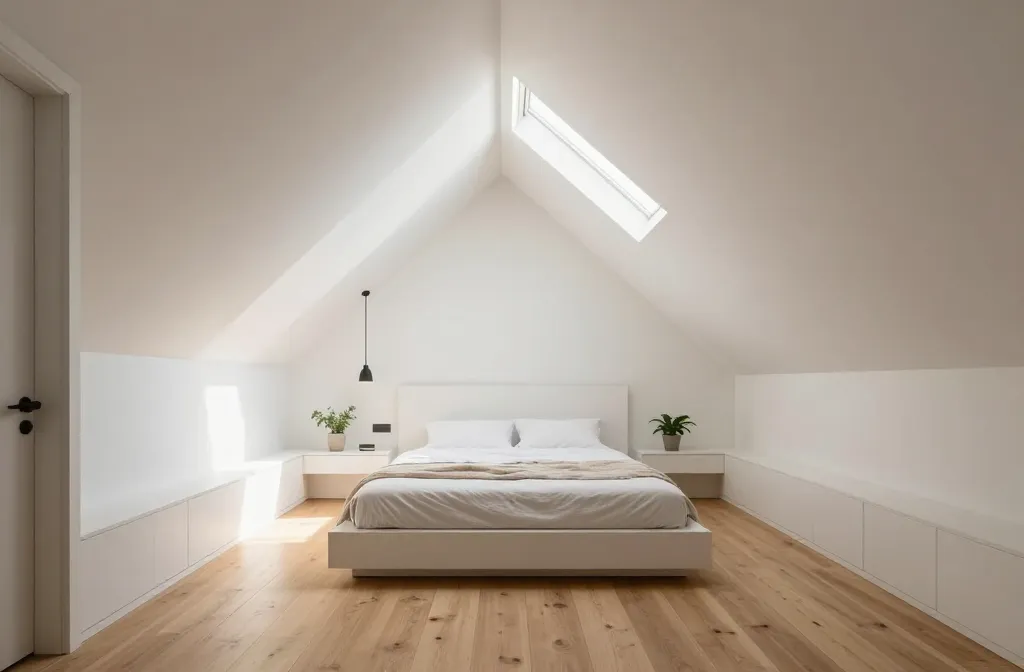
Tiny attic bedroom giving you big headaches? Good news: those sloped ceilings and weird corners can become pure magic. These nine ideas squeeze serious style and function out of every inch. Ready to turn “ugh” into “omg, cozy sanctuary” in a weekend or two?
Let’s dive into the smartest moves—no fluff, just creative tips that actually work in real homes.
1. Build Low, Wall-to-Wall Storage Nooks
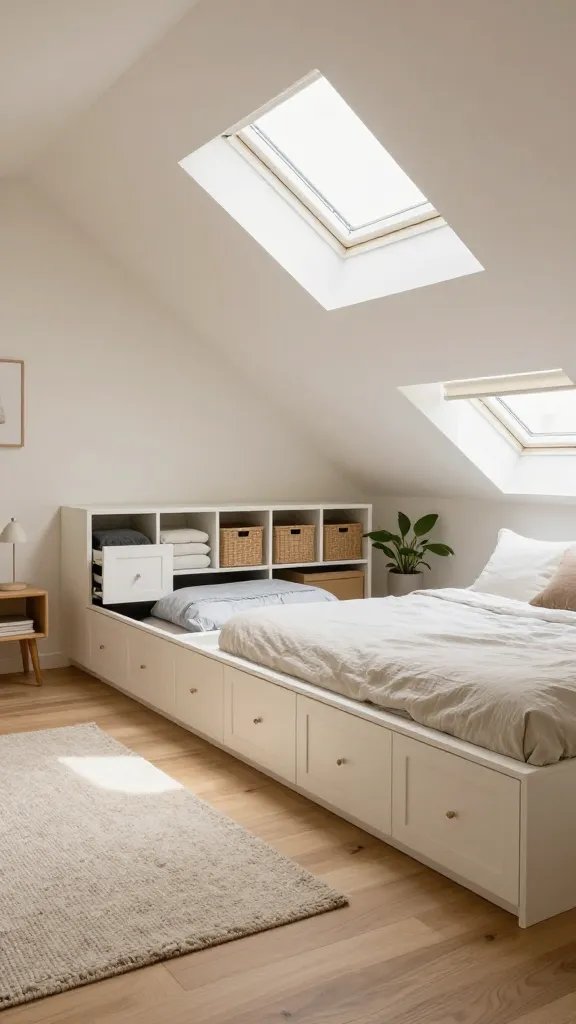
Sloped ceilings make standard dressers useless, but they create prime real estate for custom low storage. Think built-in drawers, cubbies, and toe-kick cabinets that hug the eaves. You’ll stash tons without crowding the room.
Smart Layout Tips
- Run storage the full length of the knee wall for a seamless look.
- Add lift-up lids on deep sections for off-season bedding.
- Use soft-close slides so nothing rattles in the quiet loft.
Finish with the same paint as your walls for a clean, integrated feel. The benefit? Extra storage without devouring floor space—perfect for small attics that need every inch to pull its weight.
2. Float the Bed Under the Slope (But Center the Headboard)
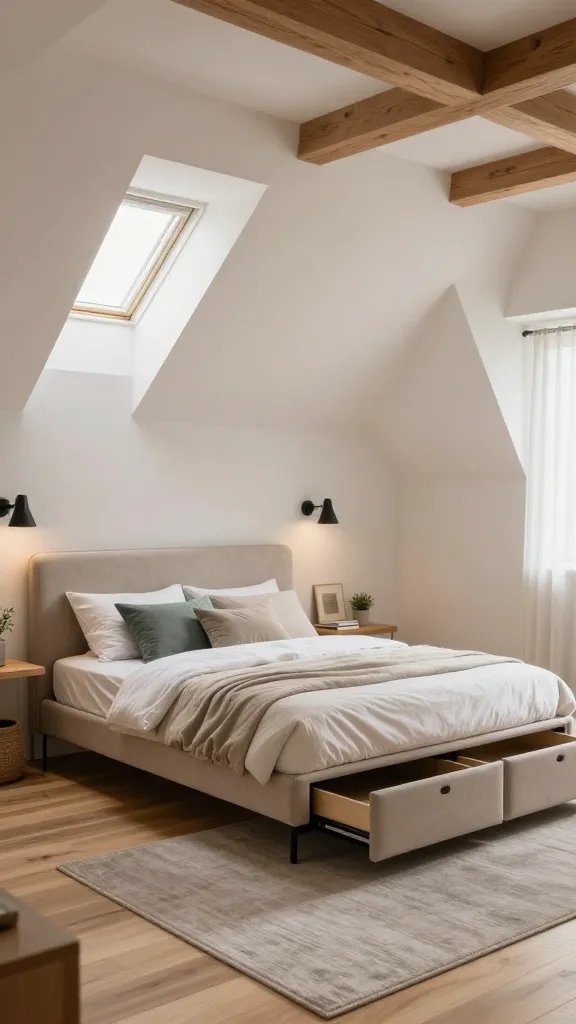
You can tuck a bed under the eaves and still make it feel intentional. Mount a low, wide headboard that floats a few inches from the wall for breathing room. This trick looks polished and protects your head from that sharp ceiling angle.
Pro Moves
- Choose a platform bed with integrated drawers for double-duty function.
- Use a slim, upholstered headboard that spans wider than the mattress—instant visual balance.
- Skip tall bedside tables; try wall-mounted ledges or swing-arm sconces.
This setup maximizes floor area for walking while turning an awkward slope into a cozy, cocoon-y backdrop. IMO, it’s the fastest “ahh” upgrade you can make.
3. Paint the Ceiling and Walls the Same Color
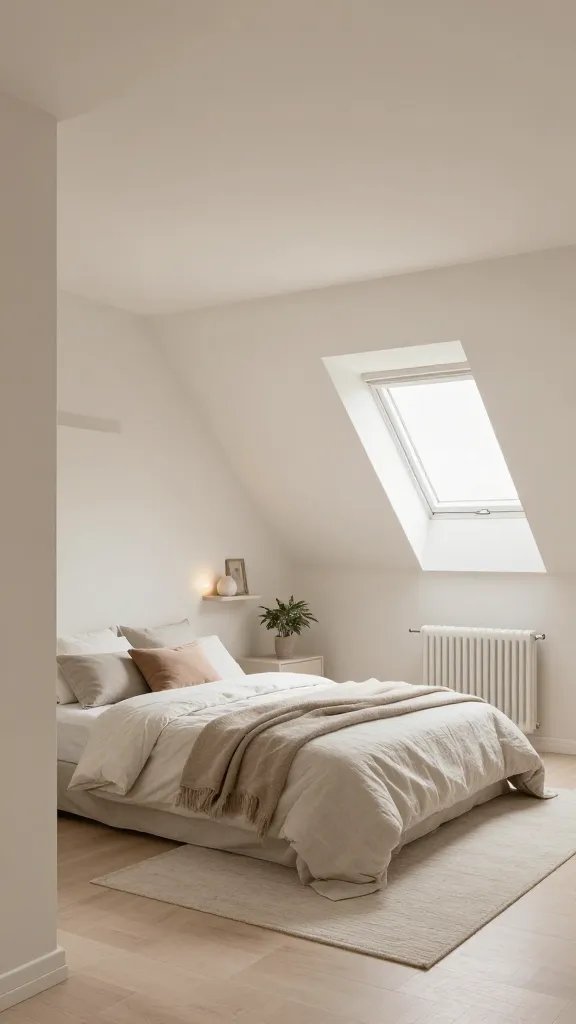
Choppy angles can make a small attic feel like a geometry test. One-color coverage smooths the lines and visually enlarges the space. Go with a soft, light shade that bounces light—warm white, misty gray, or pale sage.
Color + Sheen Guide
- Whites: Alabaster, Swiss Coffee, Cloud Cover for warmth.
- Color-Washed Neutrals: Pale greige, mushroom, soft clay for depth.
- Sheen: Eggshell or matte to hide imperfections on slopes.
You’ll get a serene, seamless envelope that makes the ceiling feel higher and the room calmer. Bonus: fewer cut lines, faster painting day.
4. Add Skylights or Sun Tunnels Where It Counts
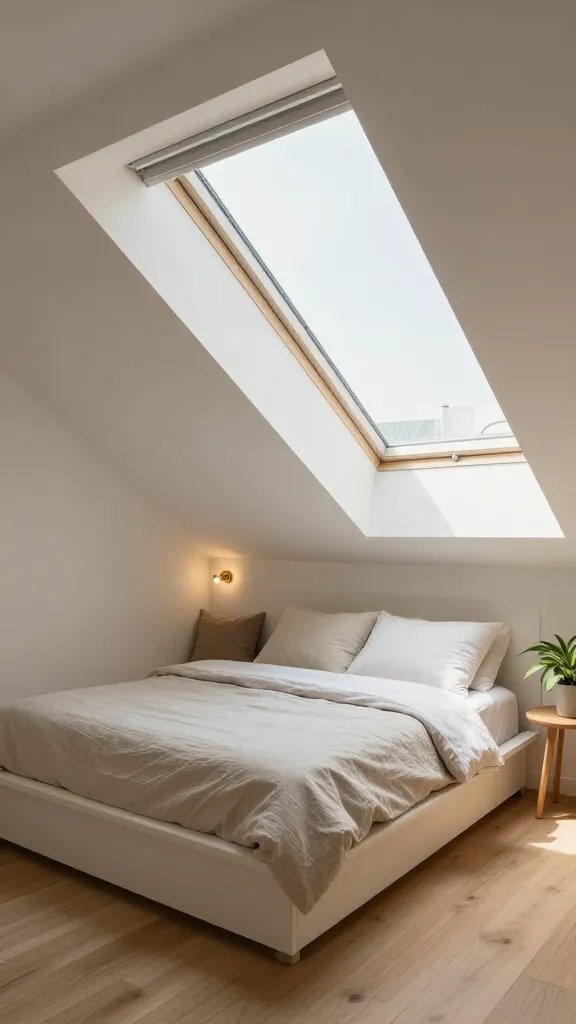
Attics love natural light like plants love water. A well-placed skylight over the bed or reading nook floods the space, and a vented model helps with stuffiness. If rafters won’t allow a skylight, try a solar tube (sun tunnel) for smaller footprints.
Placement Pointers
- Align skylights between rafters to minimize framing changes.
- Opt for shades or tint to prevent the “sun-in-your-eyes” situation.
- Add a small wall sconce nearby for nighttime balance.
More daylight equals bigger-feeling space—seriously. It also highlights wood grains, textiles, and that cute rug you definitely deserve.
5. Zone With Rugs, Not Walls
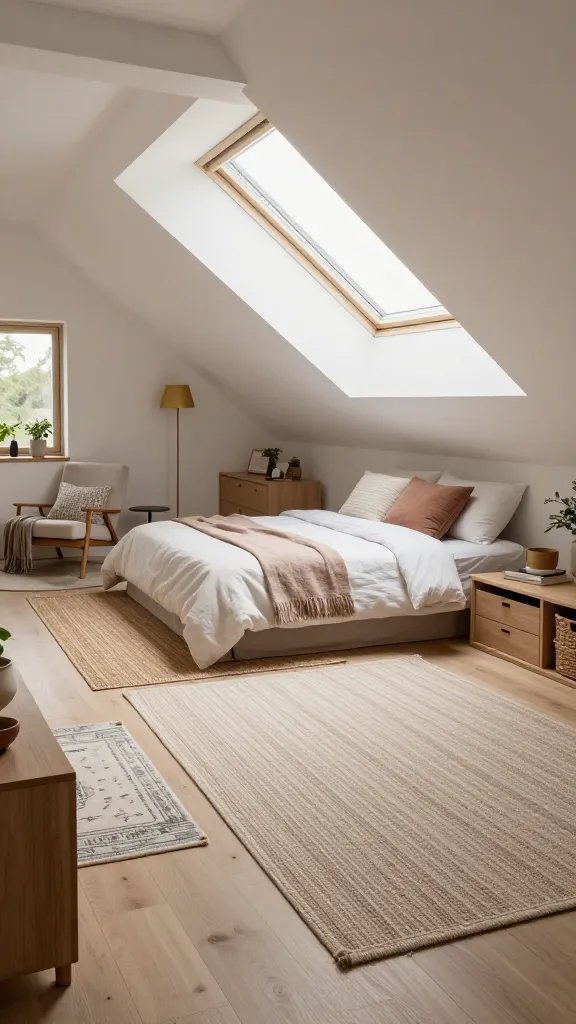
In tiny attics, walls steal light and legroom. Rugs carve out “mini rooms” without blocking anything. Use a plush runner by the bed, a flatweave near storage, and a round rug for a reading corner.
Layering Ideas
- Anchor the bed with a 5×8 or 6×9 rug that peeks out on at least two sides.
- Try a washable rug under the vanity or dressing spot—clutch for makeup mishaps.
- Mix textures: jute base + cozy wool topper = instant dimension.
Rugs guide the eye, reduce echo, and make the whole attic feel curated. Use this when your footprint is weird but you crave definition.
6. Choose Slim, Low-Profile Furniture That Works Hard
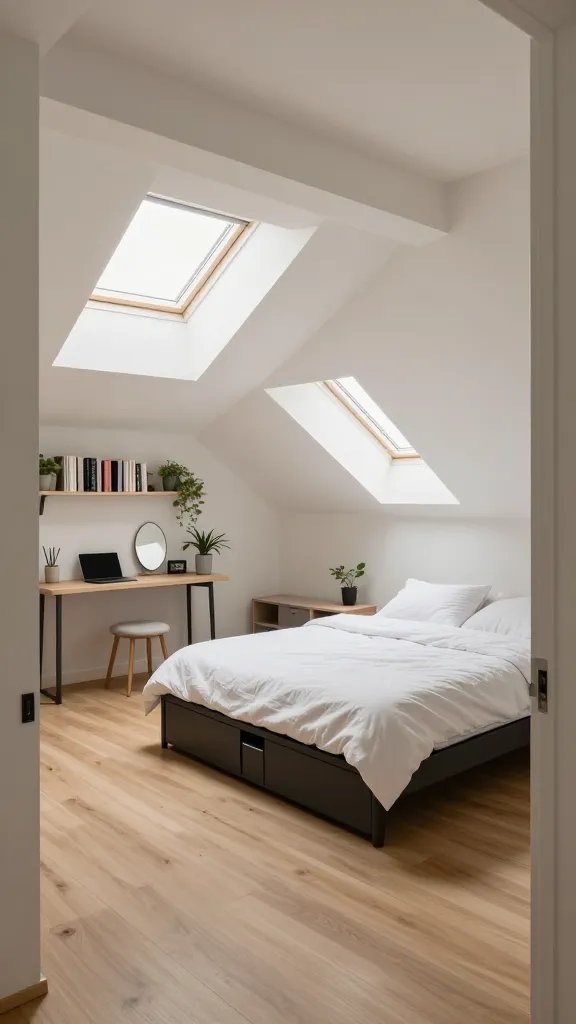
Bulky pieces suffocate an attic. Instead, pick low, airy silhouettes that keep sightlines open. Think spindle beds, leggy benches, and petite chests that don’t jab the slope.
Space-Savvy Picks
- Underbed drawers or roll-out bins for off-season clothes.
- Narrow console as a vanity or desk under the lowest pitch.
- Wall-mounted shelves for books and plants—no floor real estate needed.
The result? Furniture that looks light but secretly hauls storage duties. Great for minimalists and collectors alike.
7. Use Vertical Lines and Paneling to “Lift” the Room
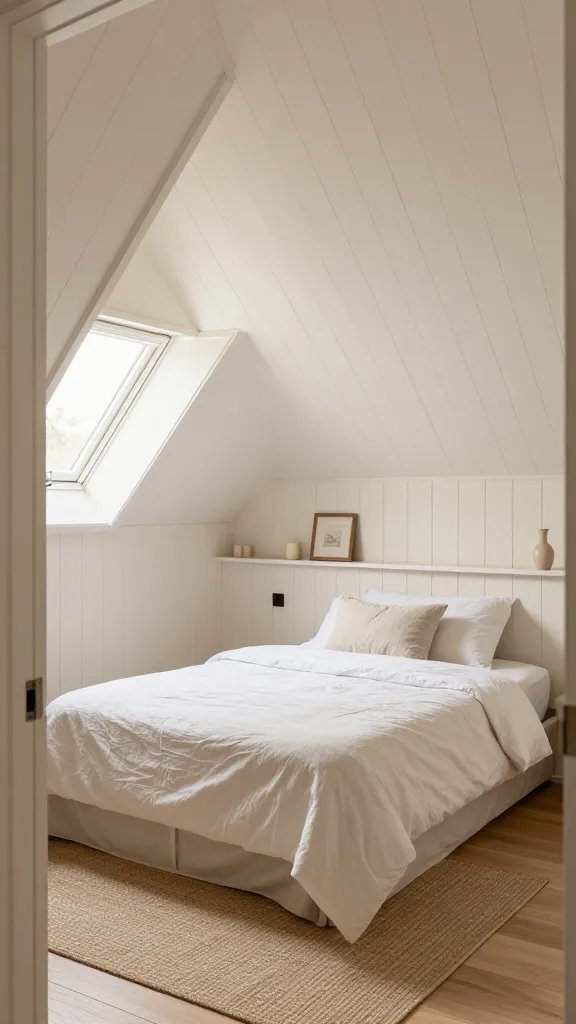
When ceilings lean, you fight back with vertical rhythm. Beadboard, shiplap, or batten strips draw the eye up and add character. It’s like instant architecture for bland drywall.
Installation Notes
- Run panels vertically on short knee walls to elongate them.
- Paint ceiling and paneling the same color for a seamless wrap.
- Cap knee walls with a simple ledge—hello, spot for frames and candles.
This trick adds cozy cottage vibes without crowding the room. Use it when your attic feels flat or “builder basic.”
8. Layer Lighting: Sconces, Strips, and Soft Glow
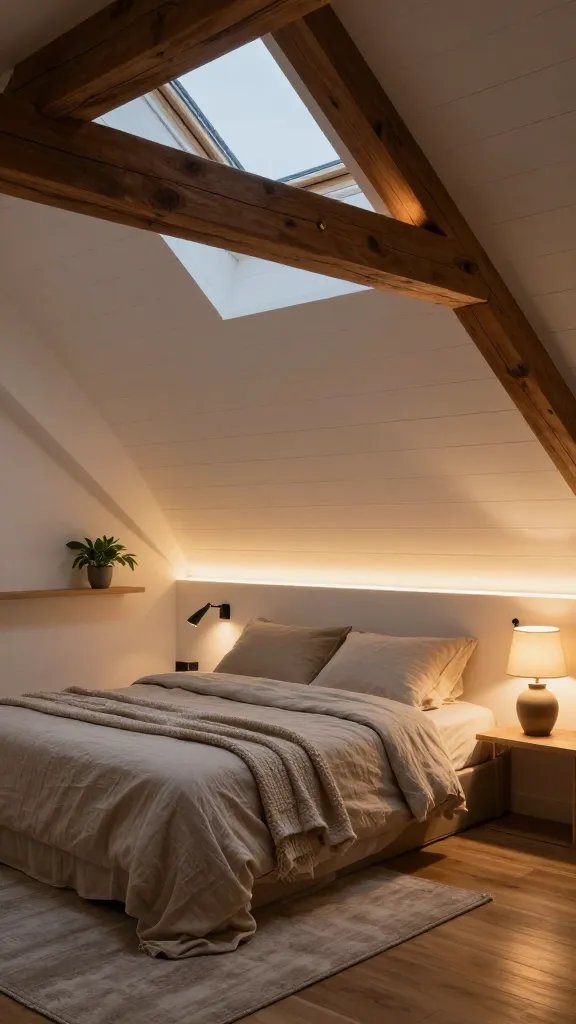
Overhead fixtures alone won’t cut it with slopes and shadows. Layer light at different heights so every corner feels intentional. Sconces, cove LEDs, and small lamps create depth and warmth.
Lighting Game Plan
- Wall sconces: Mount low and adjustable for reading in bed.
- LED strip lights: Hide under knee-wall ledges or beams for a subtle wash.
- Mini lamp: Perch on a narrow ledge for soft, hotel-level glow.
Good lighting makes small spaces feel luxe—trust me, it’s the easiest mood upgrade on the list. FYI: dimmers are non-negotiable.
9. Style With Cozy, Low-Contrast Textiles
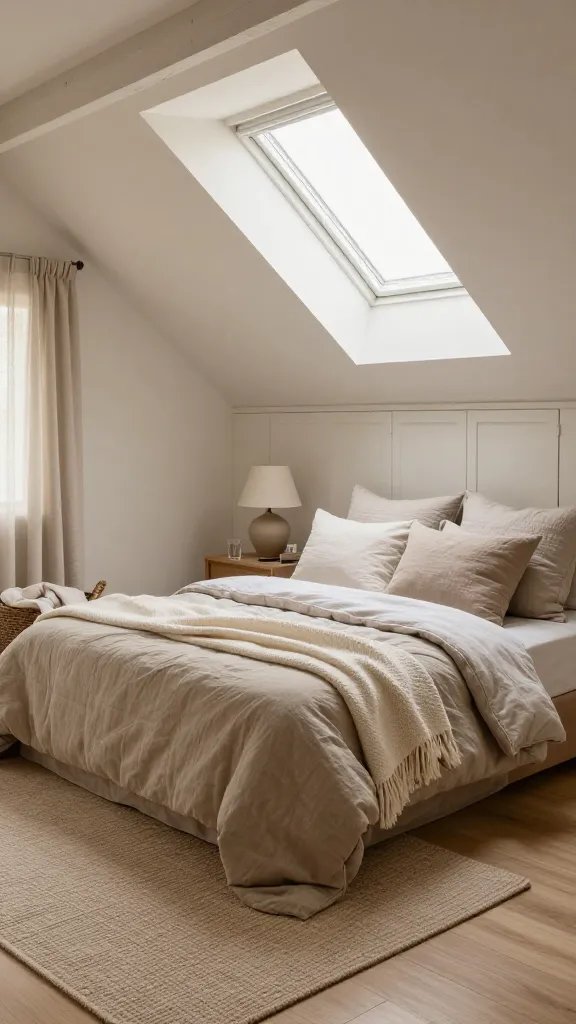
Harsh contrasts emphasize odd angles. Keep fabrics in a tight color family to calm the chaos and pump up the coziness. Mix nubby linens, chunk-knit throws, and lightweight quilts for that layered “I live here” feeling.
Textile Checklist
- Two sets of pillow shams: one textured, one smooth.
- Breathable linen duvet in a muted tone.
- Oversized throw for the foot of the bed—bonus points for fringe.
Low-contrast layers make the room feel bigger and more restful. It’s the final polish that turns “attic” into “retreat.”
Ready to make that sloped-ceiling space your favorite room? Start with one or two ideas, then build from there. Small moves pay off huge up top—before you know it, your attic will be the coziest flex in your whole home.