
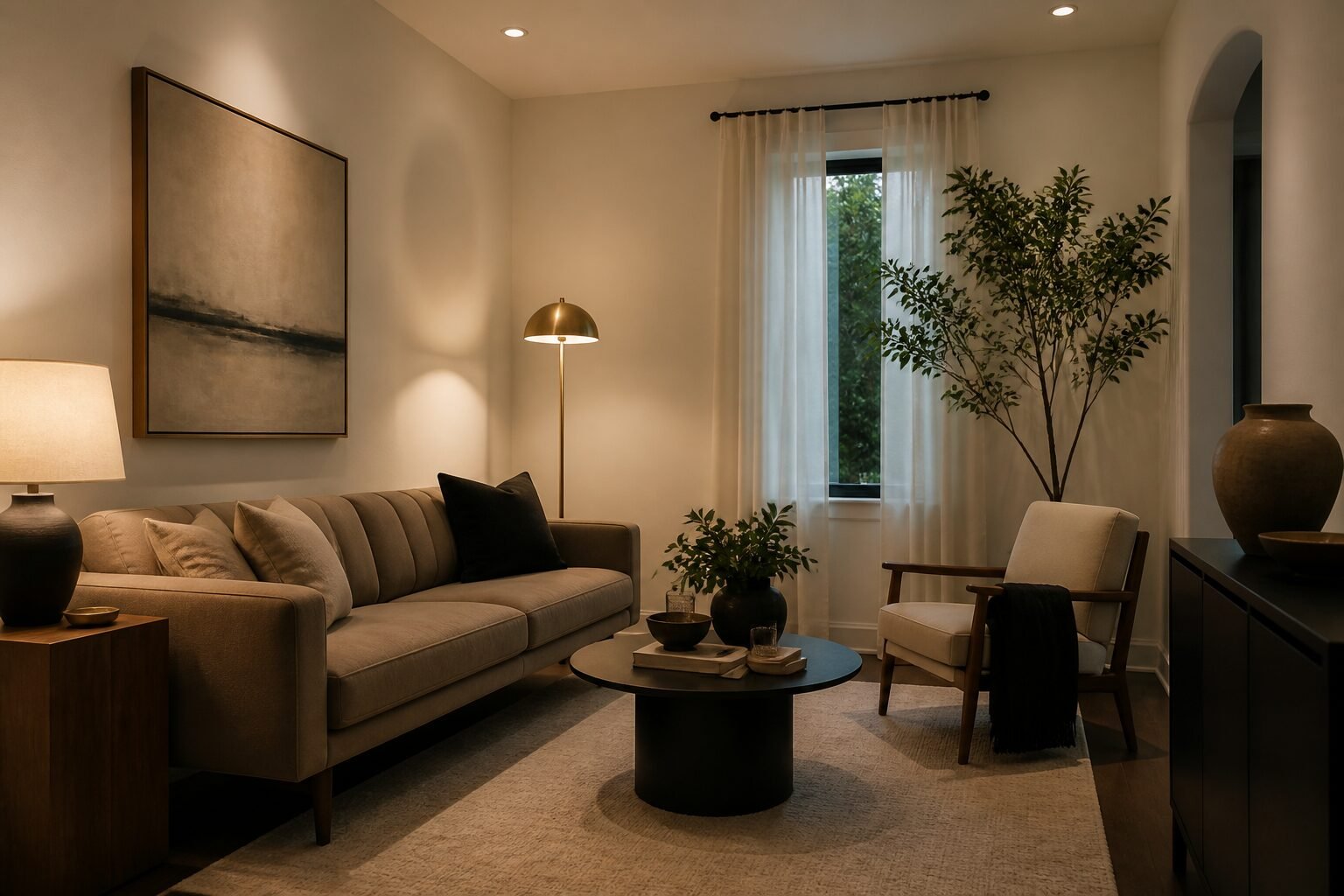
Not every room gets dreamy sunlight.
Basements, interior offices, shady corners—sometimes you’re working with gloom and grit. So what do you slap on the walls—blinding white or full-on cave mode? I’ve got you.
Here are the smartest neutral (and neutral-adjacent) paint picks that actually look great in low light—plus why they work and when to use them.
First, Fix The Lighting (If You Can)
You can’t paint your way out of pitch black. If you can, layer artificial light before you even open a paint can.
- Overhead + Task + Ambient: Mix pot lights, floor lamps, and table lamps.
- Bulb Color Temperature: Try 2700K–3000K for warm, cozy light; 3500K for neutral.
- Dimmers = Lifesavers: Adjust vibe without repainting. FYI, game changer.
Can’t add light? No worries. The colors below still pull their weight in darker digs.
Why Super-Bright Whites Flop In Dark Rooms
Ultra-white sounds smart because it reflects more light. But in low light, it backfires.
- Harsh Shadows: Bright whites exaggerate corners and make shadows look dingy.
- Flat And Cold: Without sunlight, crisp whites can turn gray-blue and sad.
- Solution: Use warm off-whites that soften shadows and still bounce light.
Hero Off-White: Sherwin-Williams Greek Villa
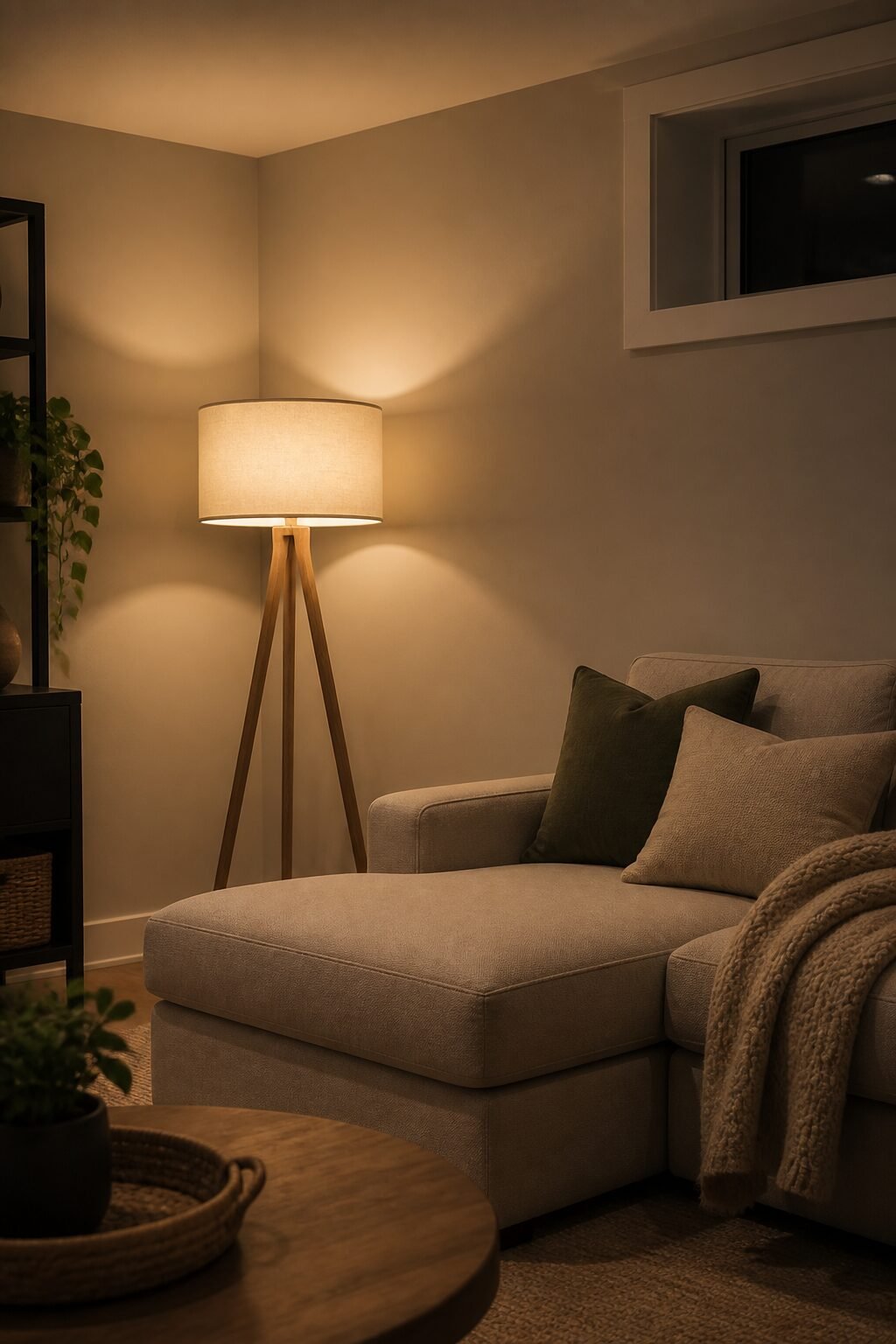
Greek Villa is that “ahh, finally” off-white for dim spaces. It’s warm, creamy, and reflective without going sterile.
- Why It Works: Enough warmth to cancel the gloom, enough brightness to lift the room.
- Where It Shines: Basements, hallways, windowless home gyms—any space that needs cheer.
- Pair It With: Soft white lighting, natural woods, matte black accents.
Pro Tip: Don’t Go Brighter Than This
If you push whiter than Greek Villa, you risk “apartment primer” vibes—dull and shadowy. Stick with creamy, not clinical.
Timeless Gray: Sherwin-Williams Light French Gray
Yes, gray still works in 2024—just pick the right one. Light French Gray reads balanced and calm, not icy.
- Why It Works: It’s neutral without going blue or beige-heavy. No weird undertone surprises.
- Design Style: Skews contemporary or transitional, IMO. Great with updated flooring and finishes.
- Mood: Clean, grounded, and super versatile as a backdrop.
Style It Right
Layer plush textiles, warm metals, and textured rugs to keep gray from feeling too slick in low light.
Warm Greige-Green: Sherwin-Williams Ancient Marble
If gray feels too… gray, Ancient Marble brings soft warmth with a gentle green whisper. It’s a greige with an organic twist.
- Why It Works: Around 60 LRV, so it reflects a healthy amount of light while staying rich.
- Vibe: Airy yet earthy—energizing without being loud.
- Use It When: You want a neutral that boosts mood in darker rooms and plays nice with wood tones.
Great Alternative To “Cement” Grays
Ancient Marble reads warmer and friendlier than flat grays. Perfect if you want subtle color complexity that still behaves like a neutral.
Cool And Confident: Sherwin-Williams Morning Fog
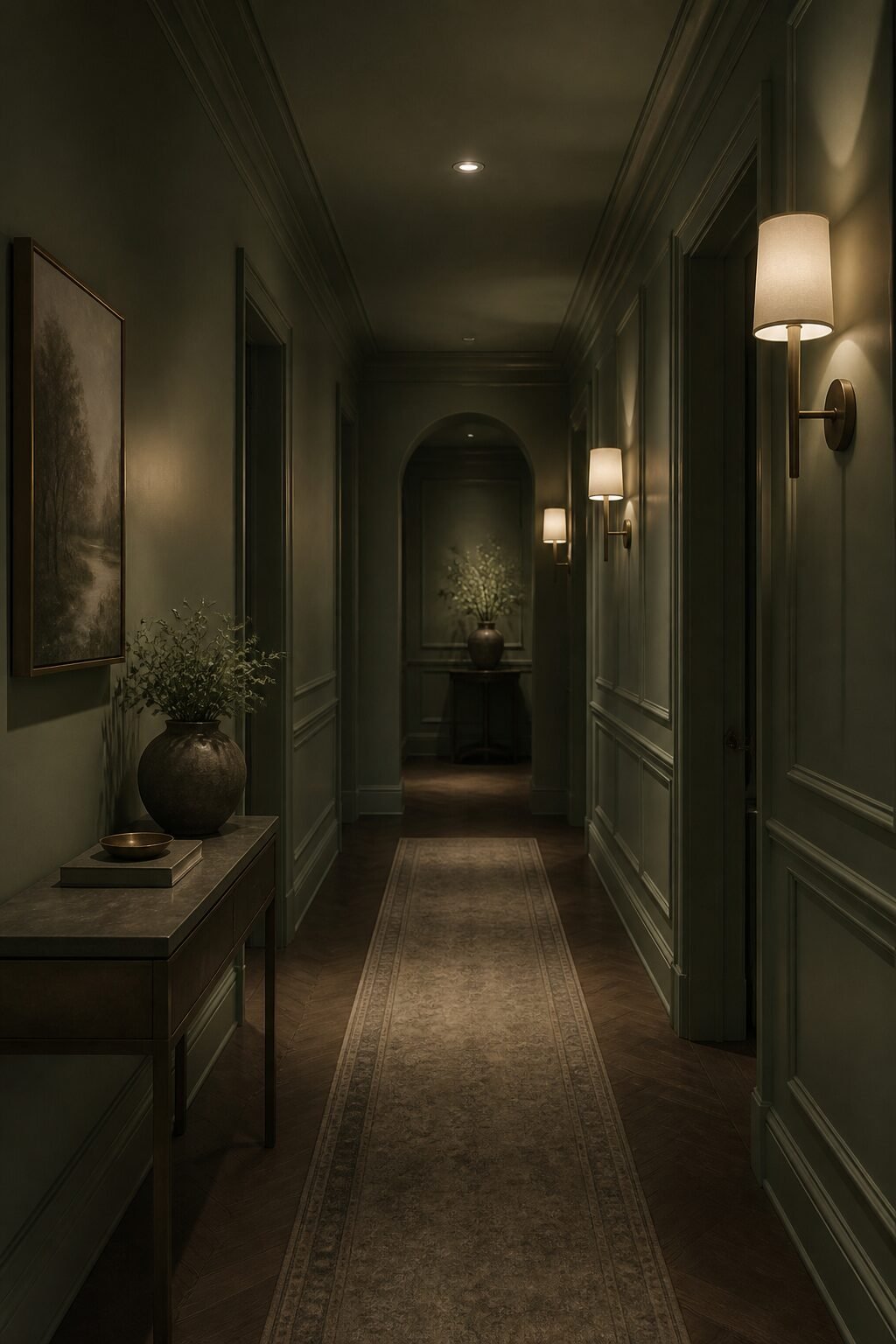
Want a midtone that actually owns its undertone? Morning Fog skews blue—clean, clear, and intentional.
- Why It Works: No undertone drama. It looks blue-leaning even under different bulbs.
- When To Choose It: You’re cool with cooler hues and want a calm, moody envelope.
- Styling: Contrast with warm wood, brass, and creamy textiles so it doesn’t feel chilly.
Lighting Note
Bulbs matter. Under warmer 2700K lighting, Morning Fog softens. Under cooler LEDs, it leans crisper and more modern.
Bold Move: Sherwin-Williams Storm Warning
Sometimes you lean in. Storm Warning is deep, slatey, and green-touched—a moody option with serious presence.
- LRV ~14: It’s dark. Embrace the cocoon.
- Best Spots: Small offices, media rooms, reading nooks—anywhere you want focus and drama.
- Why It Rocks: Dark hues can look luxe in low light because they don’t pretend to be bright.
How To Pull It Off
Add layered lighting, plush textures, and a few lighter elements (rugs, artwork) to keep the space from feeling too heavy.
Brand Alternatives If You’re Not Team Sherwin
Prefer another paint line? No shade. Try these comparable vibes:
- Off-White Like Greek Villa: Benjamin Moore Swiss Coffee; Behr Swiss Coffee (warmer cousins).
- Balanced Light Gray: Benjamin Moore Classic Gray (lighter/warmer feel); Behr Dolphin Fin.
- Greige-Green: Benjamin Moore Soft Fern or Healing Aloe (different depths, similar organic warmth).
- Blue-Leaning Midtone: Benjamin Moore Nimbus Gray; Behr Light French Gray (naming overlap, check swatches).
- Dark Slate-Green: Benjamin Moore Dark Olive or Behr Meteorological (test—undertones vary).
Always Sample First
Paint behaves differently in every room. Test large swatches on multiple walls and check morning, afternoon, and evening.
Quick Rules For Low-Light Success
- Favor Warmth: Warm neutrals beat stark whites in dim spaces.
- Mind LRV: 55–65 LRV feels lively; under 20 LRV feels dramatic and intimate.
- Control Undertones: Choose colors that commit—wishy-washy neutrals can shift under LEDs.
- Layer Texture: Low light loves contrast—think boucle, wood grain, matte metals.
- Accent Strategically: Dark doors or trim can look chic even with lighter walls.
FAQ
Should I always avoid pure white in dark rooms?
Not always, but often. Super-bright whites can look flat, gray, or grimy in low light. A warm off-white like Greek Villa softens shadows and keeps the space feeling inviting instead of clinical.
What’s the ideal LRV for low-light spaces?
Aim for the middle: roughly 55–65 if you want lift without washout. If you’re going moody, drop below 20 and lean into drama with layered lighting. The in-between zone (30–45) can look muddy without strong lighting, FYI.
Will cool colors make my dark room feel colder?
They can, but not always. A clear cool like Morning Fog can look sophisticated if you balance it with warm lighting, wood, and textiles. It’s all about contrast and styling.
How many paint samples should I test?
Three to five is the sweet spot. Try a warm off-white, a balanced gray, a greige-green, and one bold option. Paint letter-sized swatches on multiple walls and view them under your actual lighting.
Do I need special bulbs for these colors to work?
“Special,” no. “Thoughtful,” yes. Stick to 2700K–3000K for warmth or 3500K for neutral. Avoid super-cool 5000K bulbs unless you want everything to skew bluish, IMO.
Can I use dark trim with lighter walls in a low-light room?
Absolutely. Dark trim with light walls adds depth and intention. Just repeat that dark tone elsewhere (frames, textiles) so it feels designed, not accidental.
Conclusion
Dark, low-light rooms don’t need rescuing—they need the right color strategy. Choose warm off-whites or nuanced neutrals for lift, or go moody and intentional with deep, slatey tones. With smart lighting and a few texture-forward finishes, any cave can feel cozy, polished, and yes, totally livable.