

Small room, big couch?
Totally doable. An L-shaped sofa can make a long, narrow living room feel intentional instead of awkward. The trick lies in placement, scale, and some smart styling moves.
Let’s turn that bowling alley into a cozy, functional space you’ll actually want to show off.
Pick the Right L for the Job
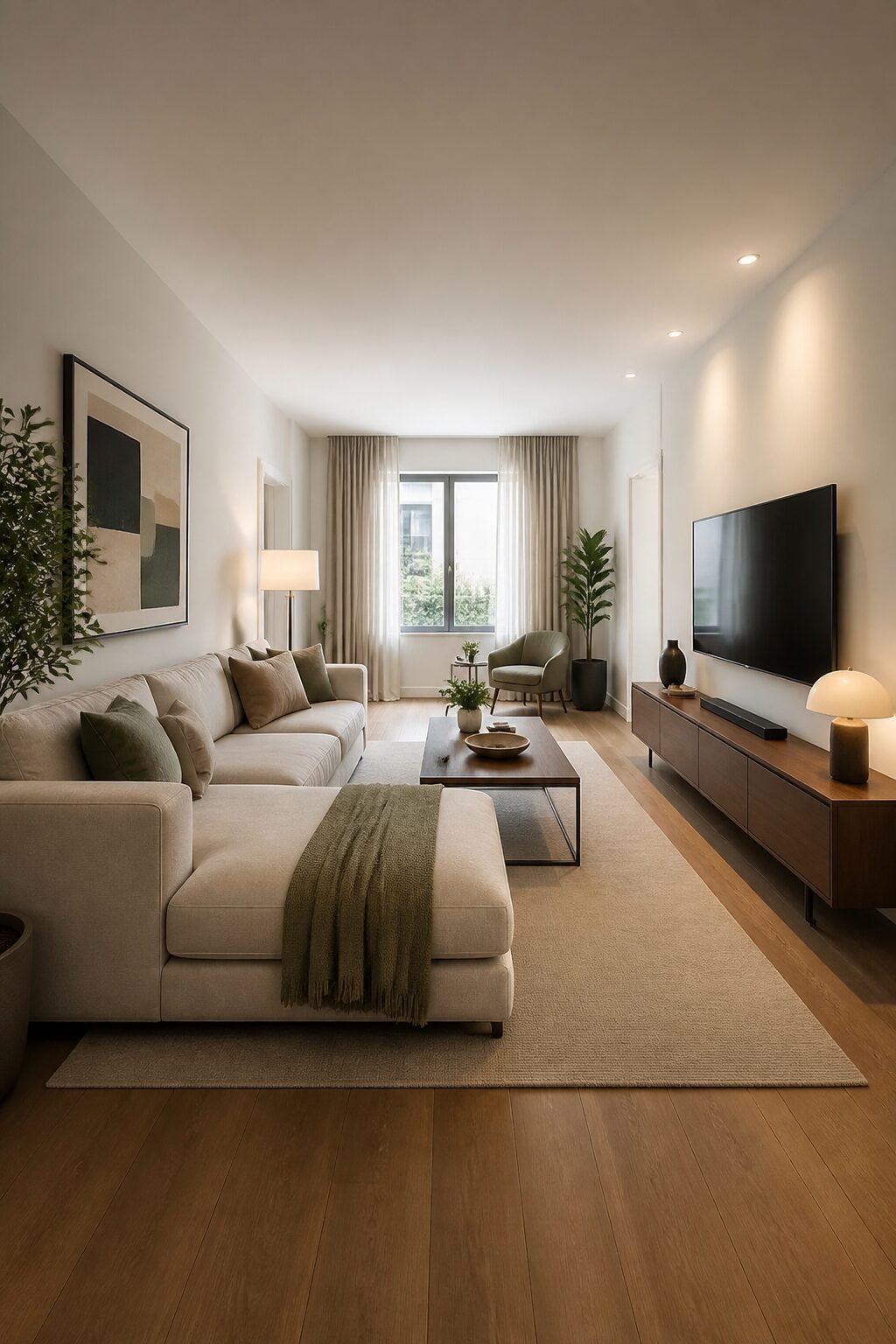
Not all sectionals are created equal, especially when your room runs long and tight. You want a shape and size that suits your layout, not fights it.
- Choose a chaise, not a deep corner unit. A chaise keeps one side open and visually lighter, perfect for tight circulation.
- Mind the proportions. Keep the depth around 34–38 inches if you can. Oversized cushions eat precious walkway space.
- Low-profile backs help. Lower arms and backs keep sight lines open so the room doesn’t feel like it’s wearing shoulder pads.
- Go for legs. Sofas with visible legs lift the piece and show more floor, which makes the room feel bigger. Magic? No. Visual trickery? Yes.
Left-arm vs. right-arm chaise
Stand at the room’s main entrance and imagine traffic flow. If people enter from the left and need to pass through, put the chaise on the opposite side so it doesn’t block the natural path. FYI: Think like Google Maps for furniture.
Place It With Purpose
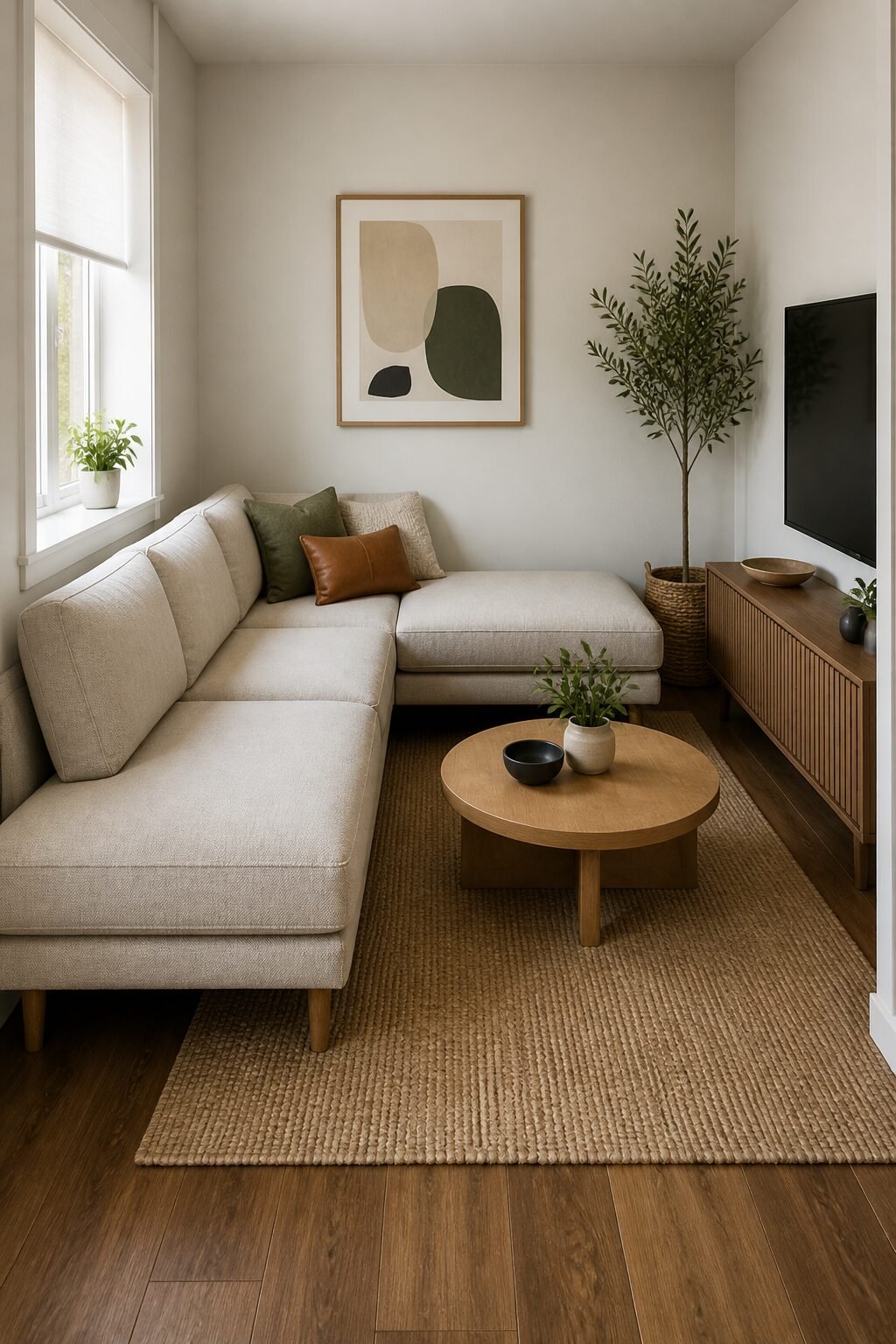
An L-shaped sofa can either lengthen the tunnel vibe or fix it. Placement changes everything.
- Float it off the wall. Even 6–10 inches gives breathing room and stops the “shoved in a hallway” look.
- Use the short leg to zone the room. Let the shorter side or chaise gently “cap” the seating area and create a defined living zone.
- Anchor the long side along the length. Align the longer section with the long wall to respect the room’s shape without emphasizing it too much.
When a corner placement wins
If your room feels ultra narrow, tucking the back of the L into a corner can work. It consolidates seating and frees up a clean walkway along the opposite side. Add art or a tall plant behind the shorter arm to balance the corner-heavy look.
Rug: Your Secret Weapon
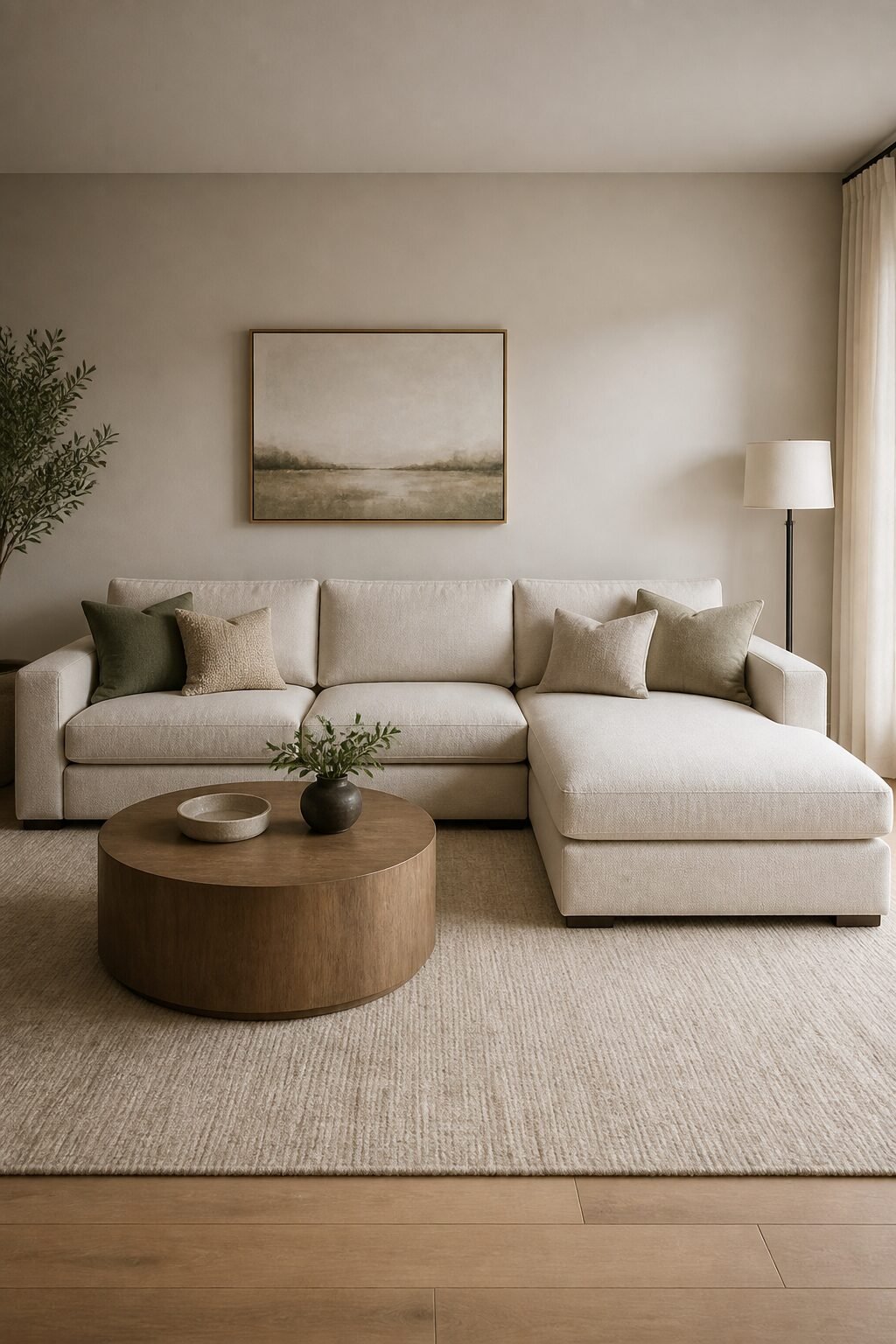
Rugs fix proportion issues like a hero in a rom-com. Get the size right, and everything else just… works.
- Size up. The rug should sit at least halfway under both legs of the sofa. Ideally, all the front legs of every seat rest on it.
- Run it with the room. Choose a rectangular rug that follows the long axis to elongate gracefully, not awkwardly.
- Keep patterns subtle. Go for a low-contrast or tonal pattern to avoid busyness. Narrow rooms can’t handle visual chaos. IMO, a textured flatweave or low pile is perfect.
Two rugs, one room?
If your space doubles as dining or office, you can layer zones with two rugs. Just keep them in the same color family and vary the texture so it looks intentional, not patchwork.
Balance the Bulk: Coffee Tables, Side Tables, and Lighting
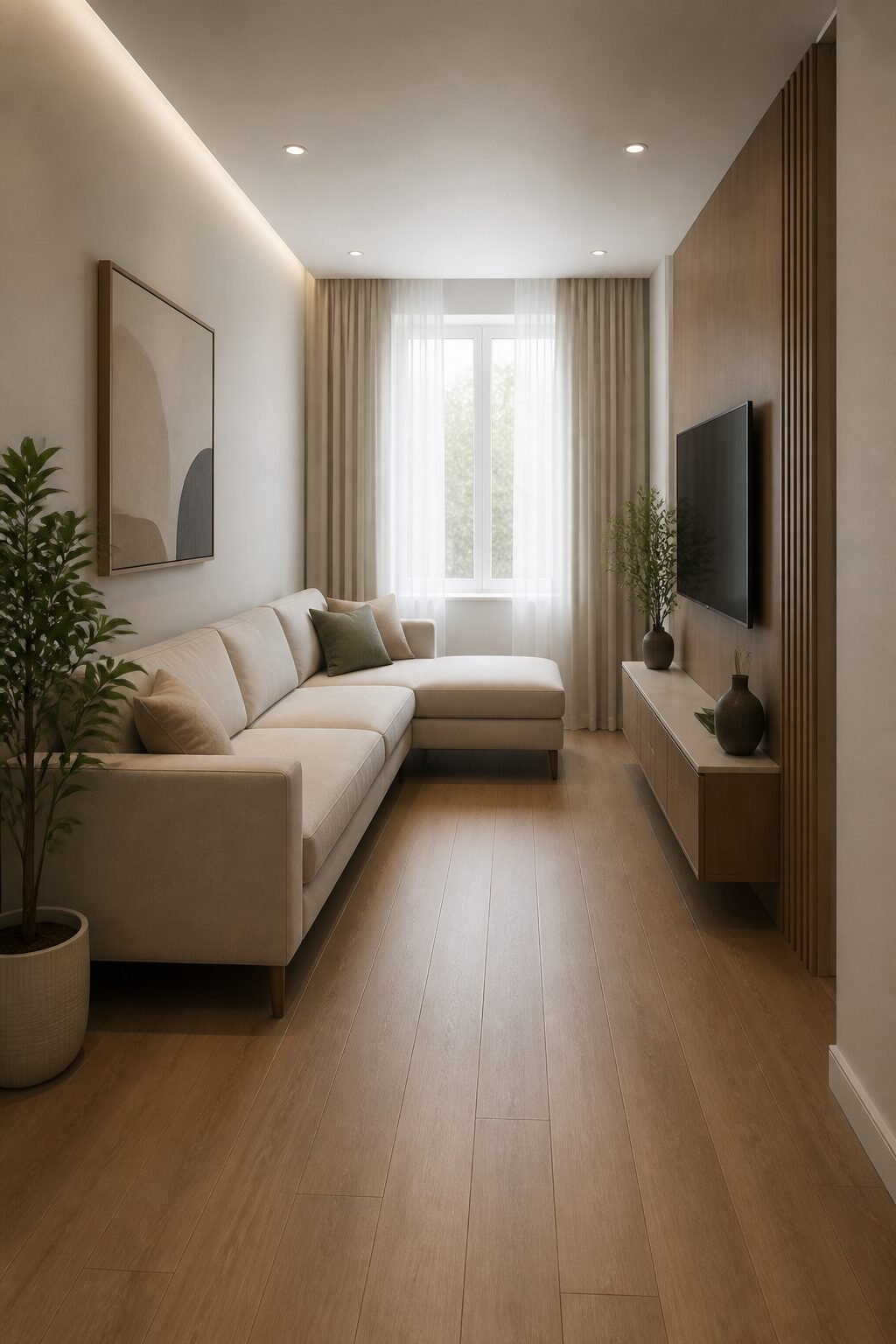
Your L-shaped sofa carries visual weight. Balance it with lighter, rounded pieces that soften corners and keep traffic smooth.
- Pick a round or oval coffee table. It helps traffic flow and breaks up all the right angles. Aim for 16–18 inches clearance from the sofa.
- Go glass or light wood. Transparent or pale finishes feel airier and keep the room from closing in.
- Use nesting tables. They tuck in and slide out when you need surfaces without eating floor space.
- Add a floor lamp behind the chaise. It pulls the eye upward and makes a cozy corner without needing another side table.
Lighting layers that don’t clutter
– One slim floor lamp by the chaise
– A small table lamp on a single side table
– Wall sconces on a dimmer instead of another floor lamp
You’ll get mood, task, and ambient light without tripping over cords every time you walk by.
Create a Focal Point That Isn’t Just a TV
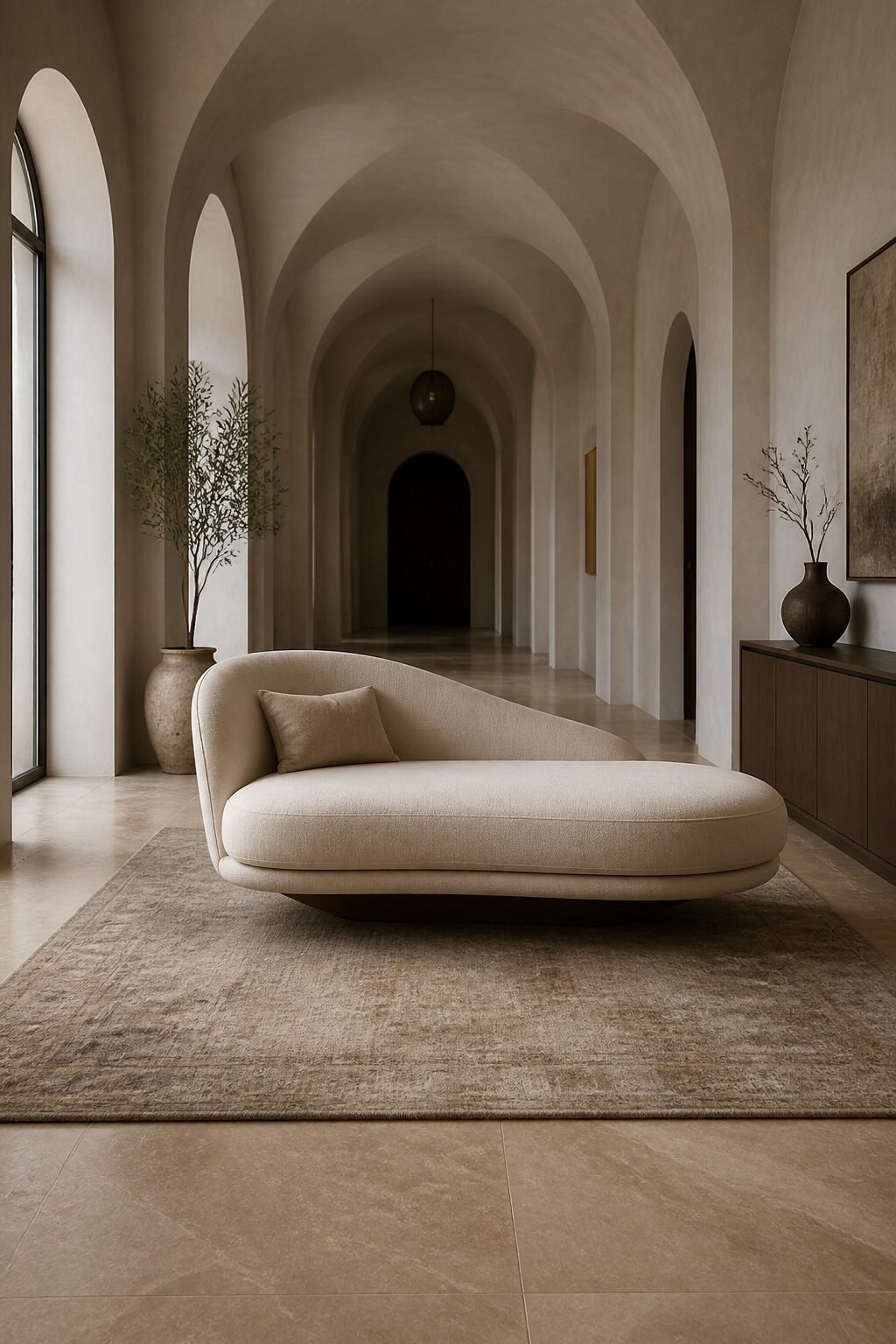
Narrow rooms love a clear focal point. Yes, you can still watch Netflix. But give the eye options so the room feels richer.
- Mount the TV to keep surfaces clear. Pair it with a narrow console or floating shelf below for storage.
- Balance with art. Hang a large piece or a tight gallery wall on the opposite side of the room to distribute visual interest.
- Use a tall plant by the sofa’s outside corner to “bookend” the seating area and soften lines.
Fireplace or window in the mix?
Angle the chaise so it points toward the view or fireplace, not away from it. If the TV must stay opposite, mount it slightly off-center and compensate with art so it doesn’t look like a weird afterthought. FYI: asymmetry can look designer-level when intentional.
Color, Texture, and Pattern (A.K.A. The Outfit)
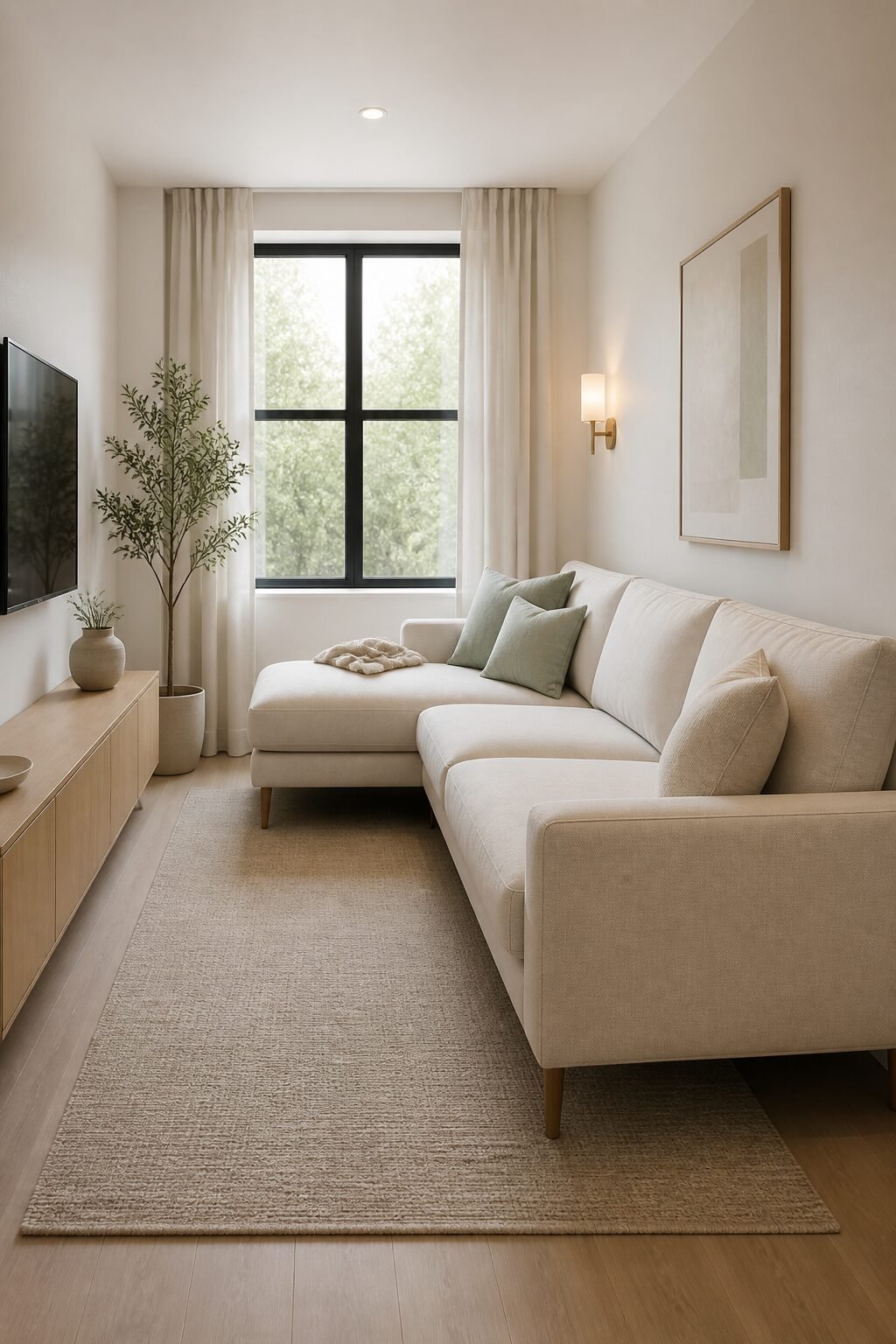
If the sofa is the main character, the palette is the wardrobe. Dress it well.
- Keep big pieces neutral. Light to mid neutrals bounce light and make the room feel airy. Save bold color for pillows and throws.
- Layer textures. Linen, bouclé, leather, and wood add depth without visual noise. It’s the difference between “flat” and “cozy.”
- Use vertical accents. Tall bookshelves or slim cabinets draw the eye up and counter the room’s length.
- Mirror, but not a funhouse. One large mirror opposite a window doubles light without adding clutter.
Pillows and throws cheat sheet
– Two larger pillows (22–24″) in a textured neutral
– One patterned pillow to introduce color or movement
– A throw with a chunky knit or subtle stripe at the chaise end
Mix sizes, not just fabrics. That layered look? It’s not accidental.
Traffic Flow and Storage That Doesn’t Scream “Storage”
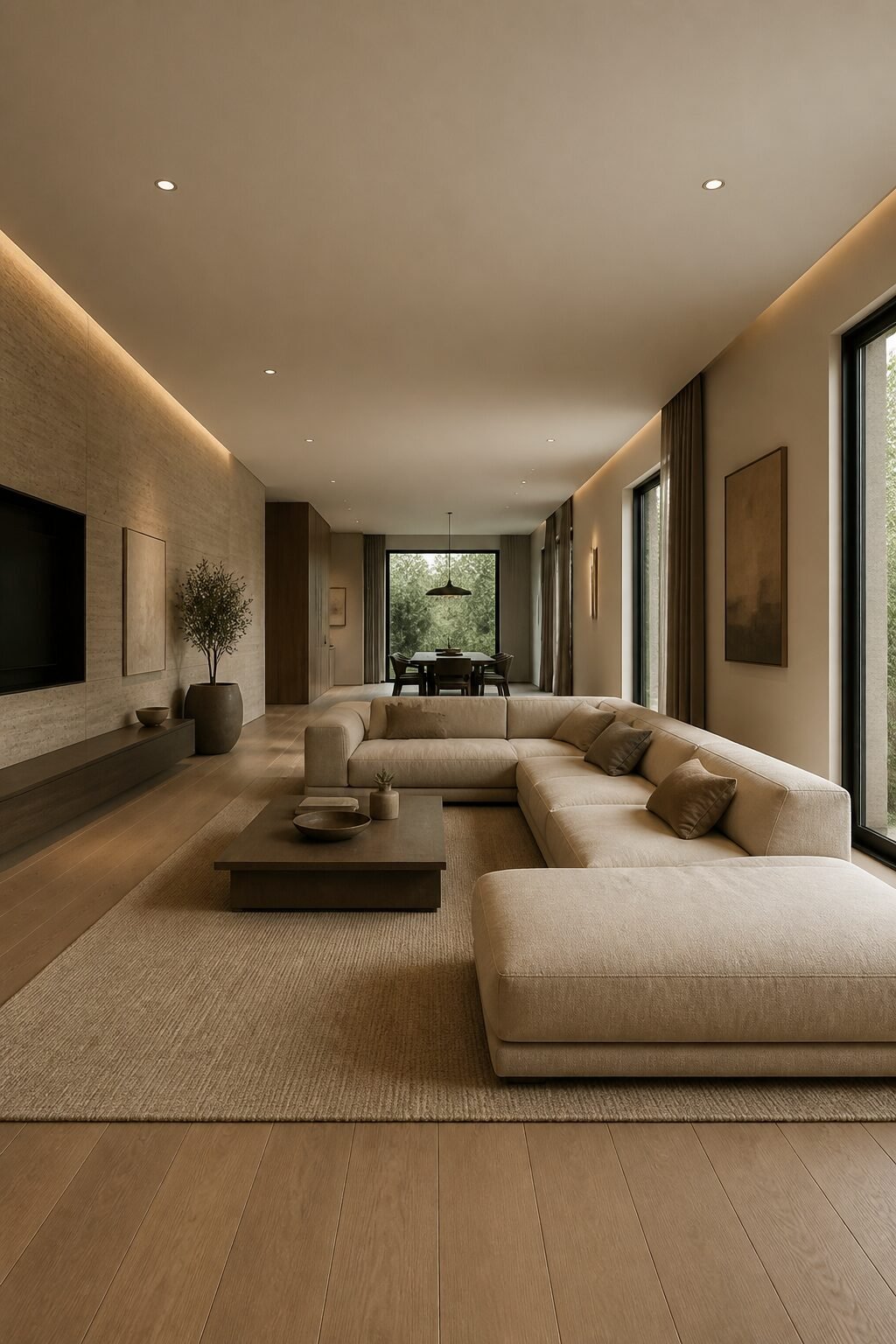
You need places for remotes, blankets, and the stuff real life brings. Hide it smartly.
- Choose a storage ottoman instead of a coffee table if clutter multiplies in your home like rabbits.
- Go vertical with shelves. Slim, tall shelving takes up less visual space than low, deep units.
- Hooks and baskets near entrances keep bags and throws corralled without eating floor space.
- Leave a 30–36 inch walkway along one edge of the sofa to move freely. Non-negotiable, unless you enjoy shin bruises.
Styling the Walls and Windows
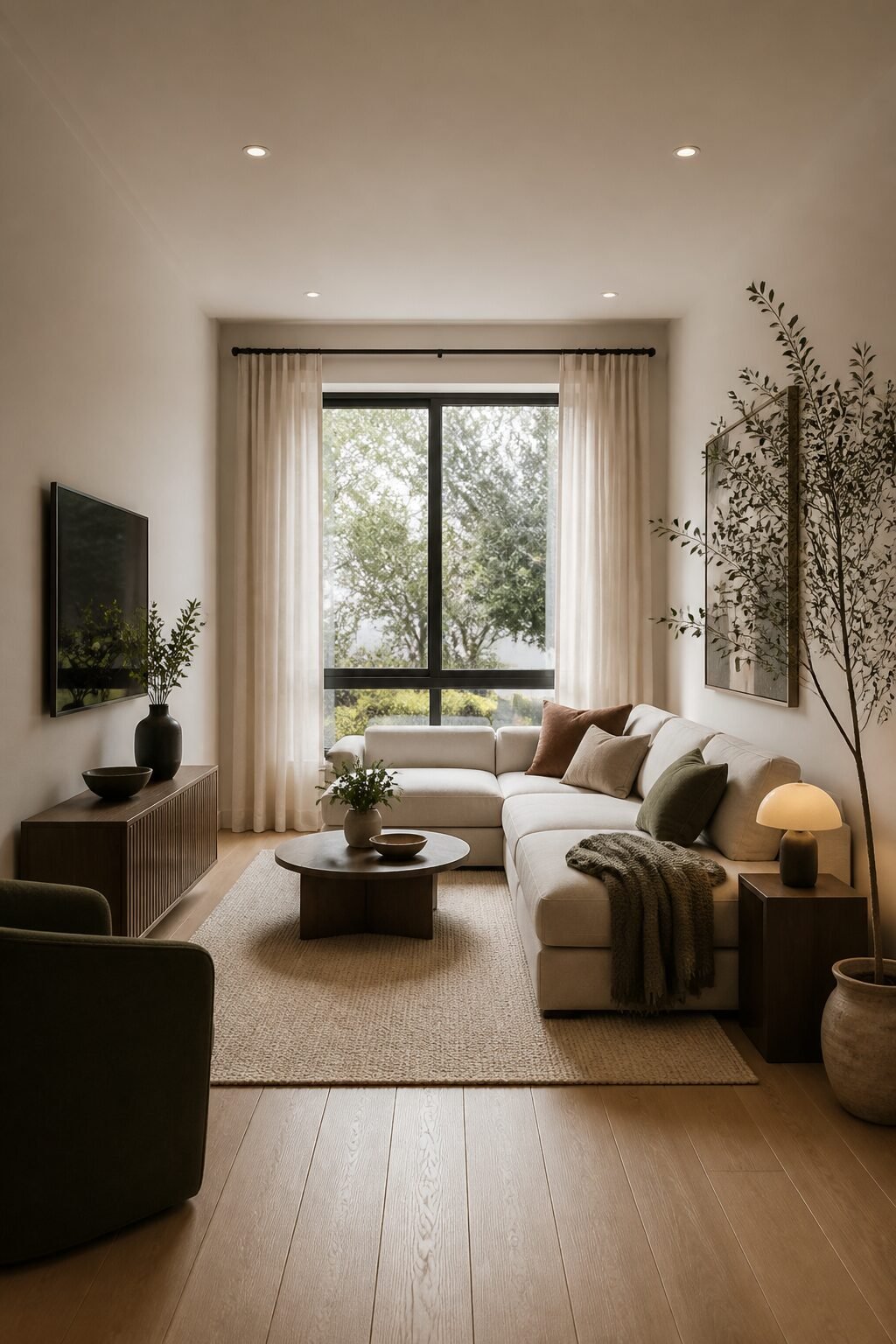
Walls and windows can fix awkward proportions fast. Use them.
- Hang curtains high and wide. Mount rods just below the ceiling and extend them past the window frame to widen the look and bring in more light.
- Go light with window fabrics. Sheers or linen blends keep the room bright. Heavy drapes can feel oppressive in tight spaces.
- Art placement matters. Center large art over the long section of the sofa, and use a smaller companion piece on the chaise side to balance the L shape.
Gallery wall without chaos
Keep frames in one finish, stick to a tight color palette, and align either the top or center lines. Visual order = calmer, larger-feeling room. IMO, black or light wood frames keep it clean.
FAQ
Where should the L-shaped sofa face in a long, narrow room?
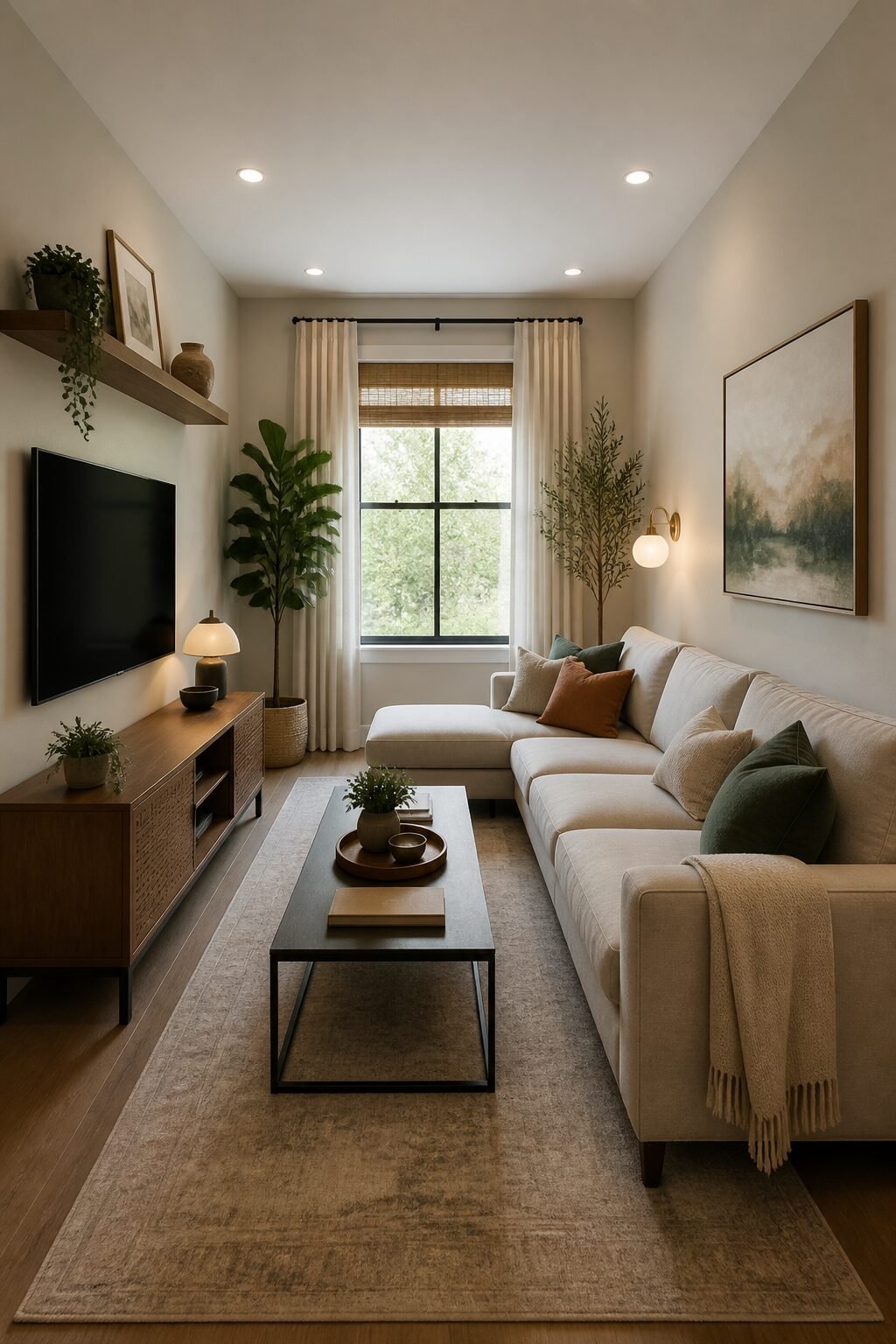
Aim the long section along the room’s length and face it toward your primary focal point—TV, fireplace, or window. Let the chaise or short leg help define the living zone and avoid blocking the main walkway. If in doubt, keep the chaise on the side with the least traffic.
How big should the rug be under an L-shaped sofa?
Choose a rug large enough to sit under the front legs of both the long section and the chaise. In many cases, an 8×10 or 9×12 works best, even in narrow rooms. Err on the larger side to ground the furniture and make the room feel unified.
Can I put an L-shaped sofa in the middle of a narrow room?
Yes, if you maintain a clear path. Float the sofa with at least 30 inches of circulation along one side and anchor it with a large rug and a slim console behind the back if needed. This creates a cozy zone without turning the room into an obstacle course.
What coffee table works best with a sectional in a tight space?
Round or oval tables shine here. They improve flow, soften the room’s angles, and reduce stubbed-toe incidents. Look for something 2/3 the length of the long sofa section and keep 16–18 inches between the table and seat edge.
How do I balance a bulky sectional visually?
Use lighter finishes, visible legs, and open-frame furniture. Add vertical elements like tall lamps or shelving to draw the eye up. Mirrors, high-hung curtains, and a large rug also rebalance the proportions fast.
Should I match my side tables and lamps?
You don’t have to. In a narrow room, mixing a single side table with a floor lamp and a wall sconce looks curated and saves space. Keep finishes cohesive—same metal tone or wood family—to avoid chaos.
Conclusion
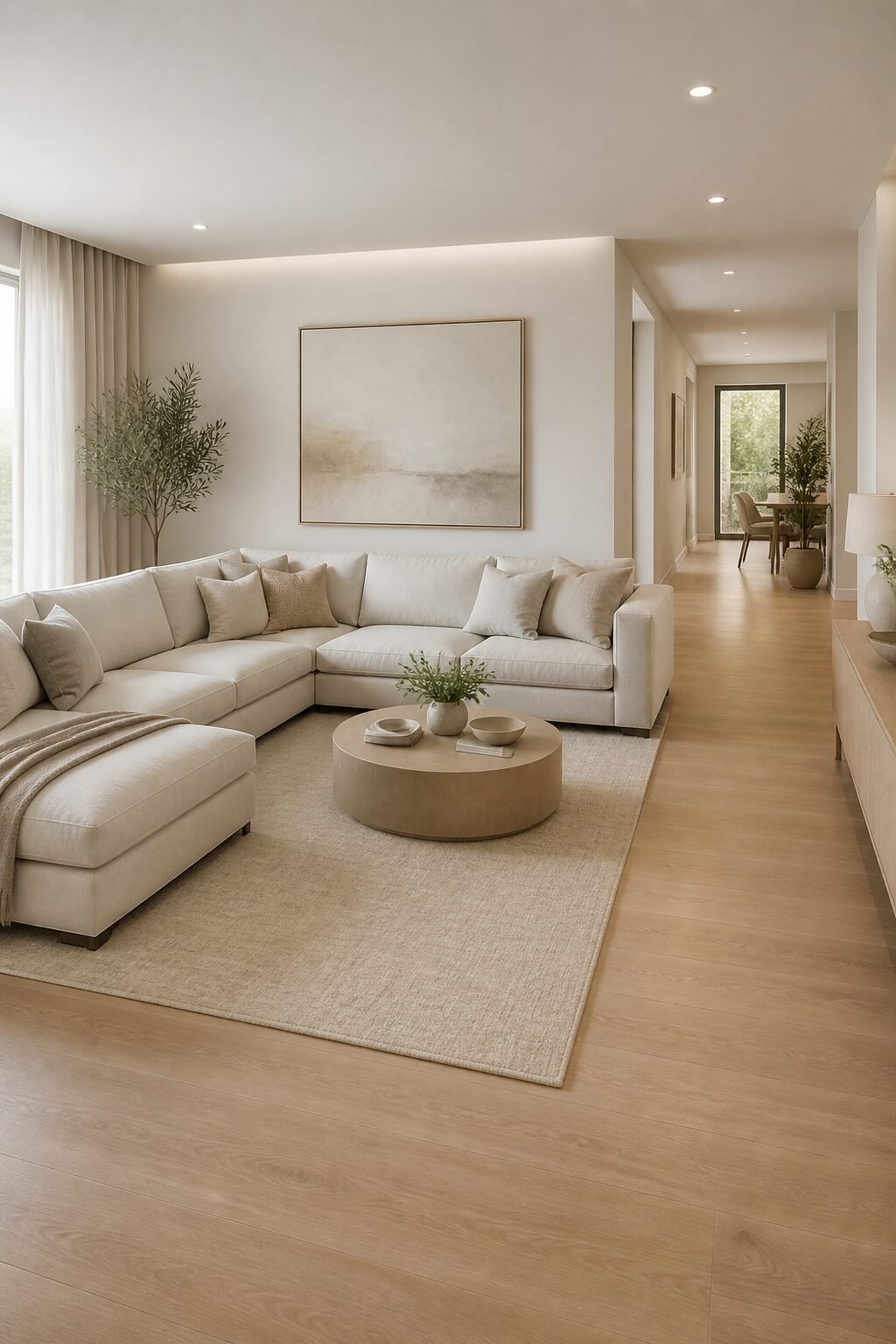
An L-shaped sofa can be the hero of a long, narrow living room when you size it right, float it smartly, and keep traffic flowing. Anchor with a generous rug, balance the bulk with round pieces and vertical accents, and let light fabrics and layered textures do the heavy lifting. Do that, and your “tricky” room turns into a streamlined, cozy hangout—no renovation required.