

You don’t need a sweeping foyer to make a dramatic first impression. A tiny entry can punch way above its weight with one clever trick: a bold accent wall.
Think of it like contouring for your house—strategic color and sheen can fake height, width, and, yes, a little drama. Ready to give your hallway main-character energy without knocking down a single wall?
Why an Accent Wall Works (Even in a Shoebox Entry)
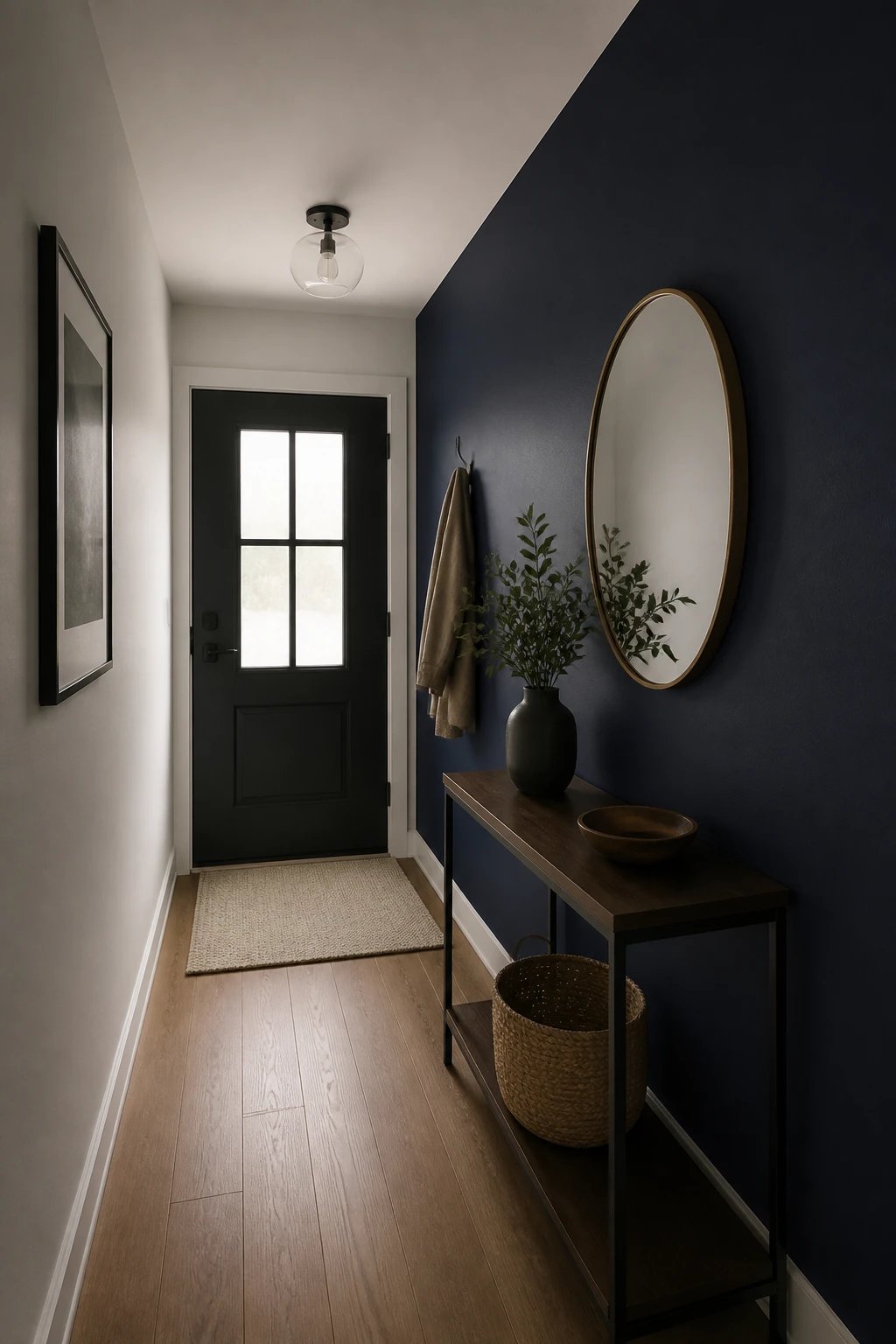
A small entry often feels flat and forgettable. An accent wall changes that by creating a focal point that draws the eye and steals attention from, well, the lack of square footage.
Here’s the magic:
- Depth: Darker or richer colors recede, which makes the space feel deeper.
- Height: Vertical details or color-blocking can make ceilings look taller.
- Intent: A styled wall signals, “This is a design choice,” not, “I ran out of space.”
You can’t make the entry bigger, but you can make it feel intentional and welcoming. That’s the win.
Plan the Vibe: Color, Finish, and Visual Tricks
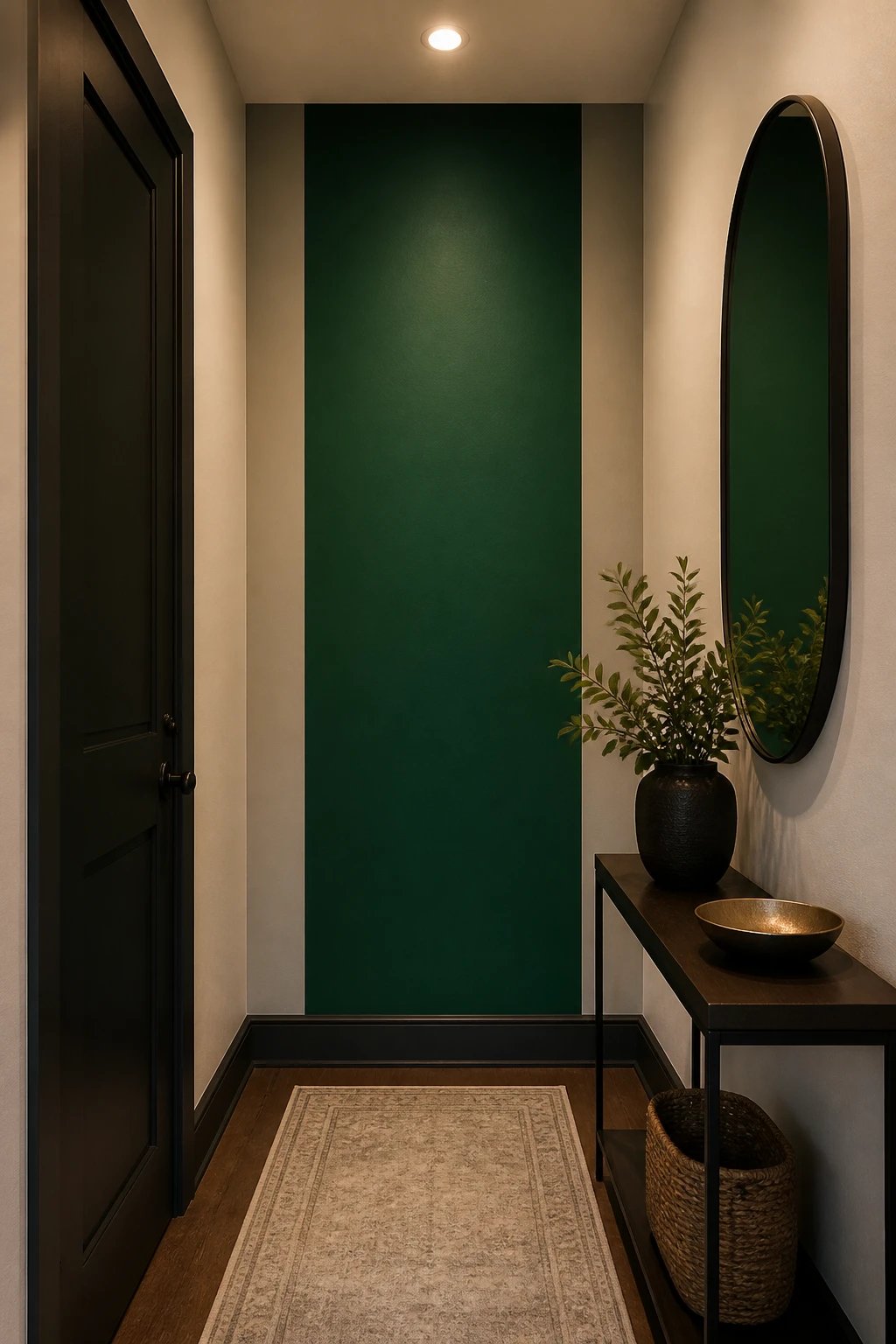
Before you grab a roller, decide what story your entry tells. Moody cocktail lounge? Light and cheerful? Minimalist chic? Pick a lane.
Choose a color strategy:
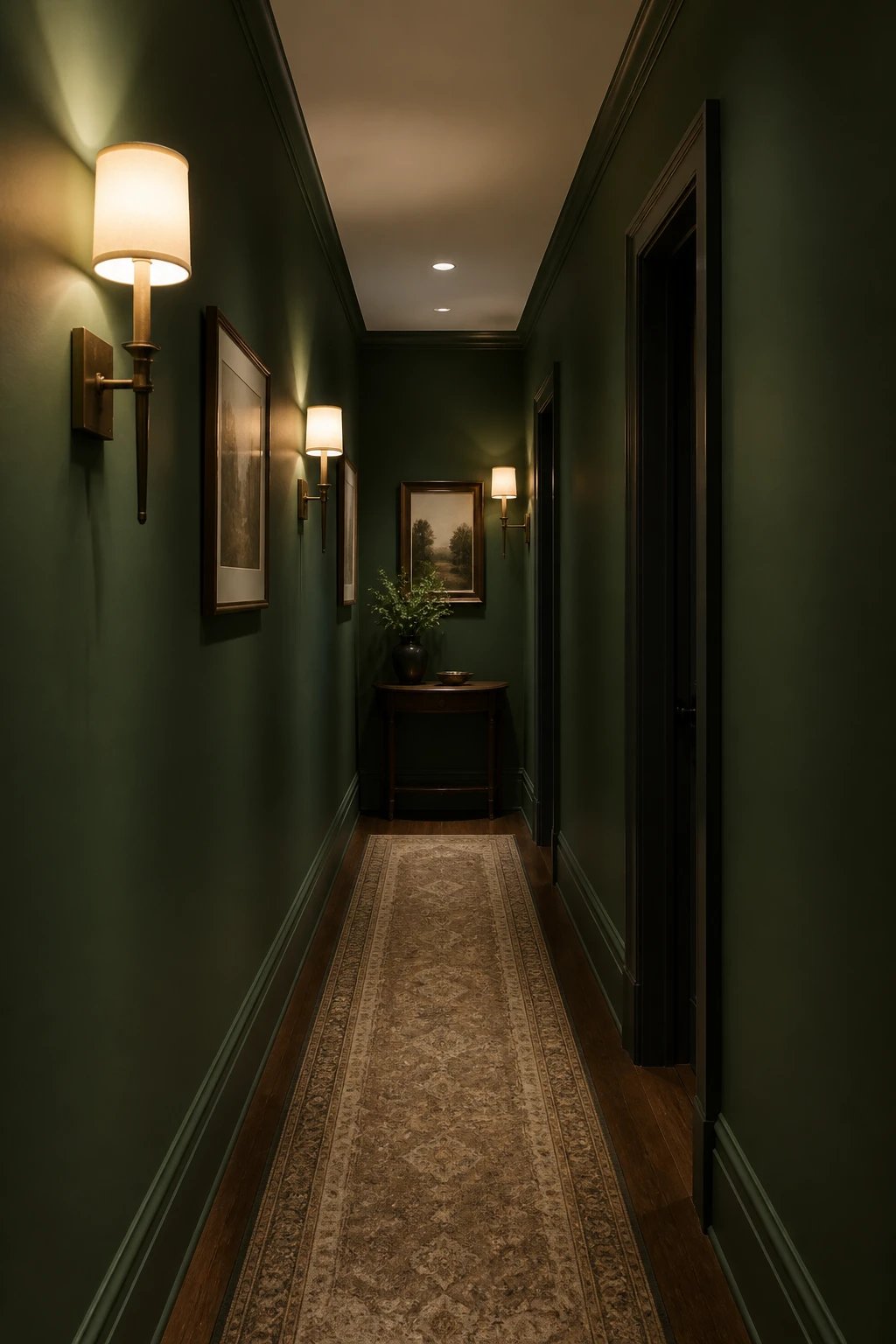
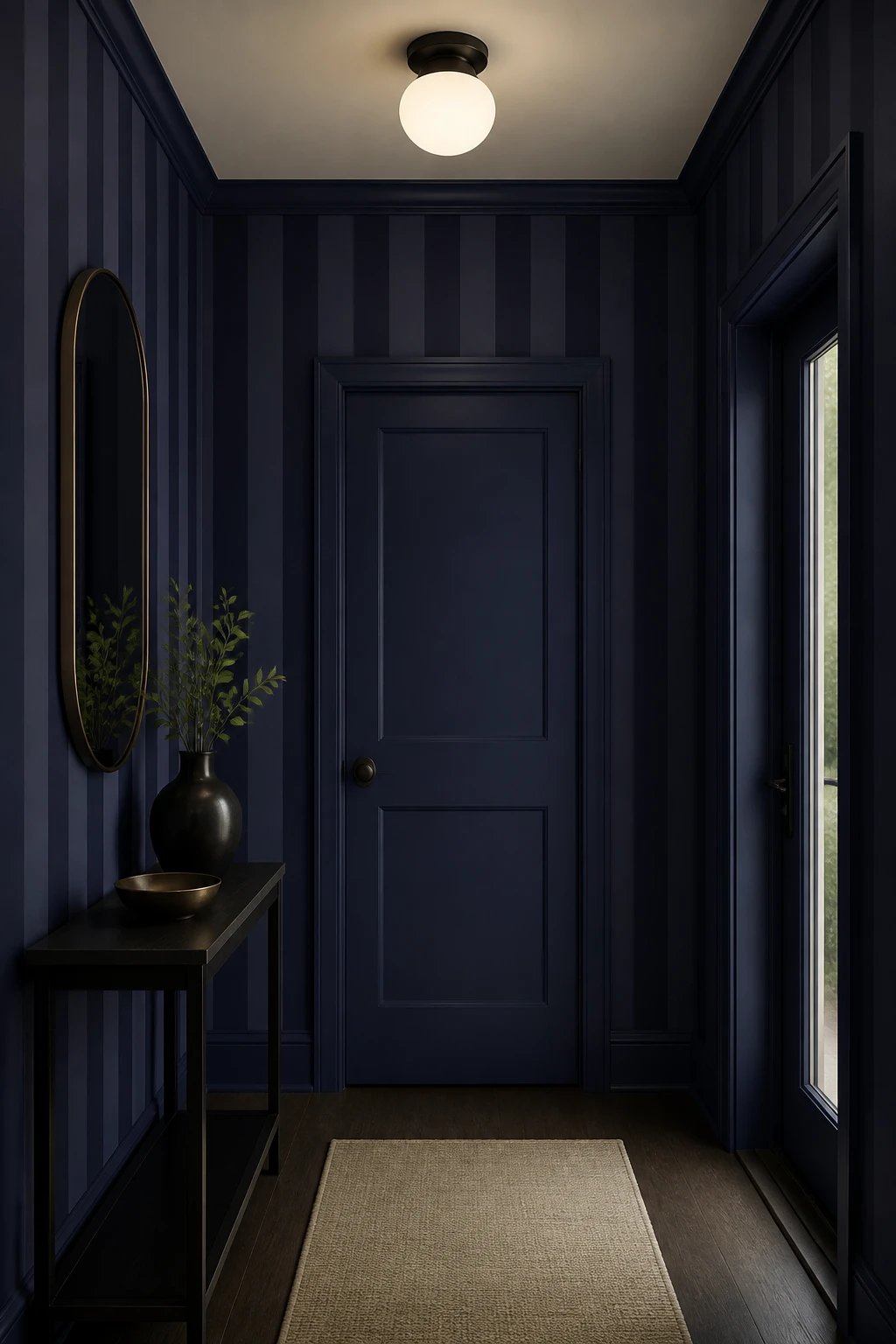
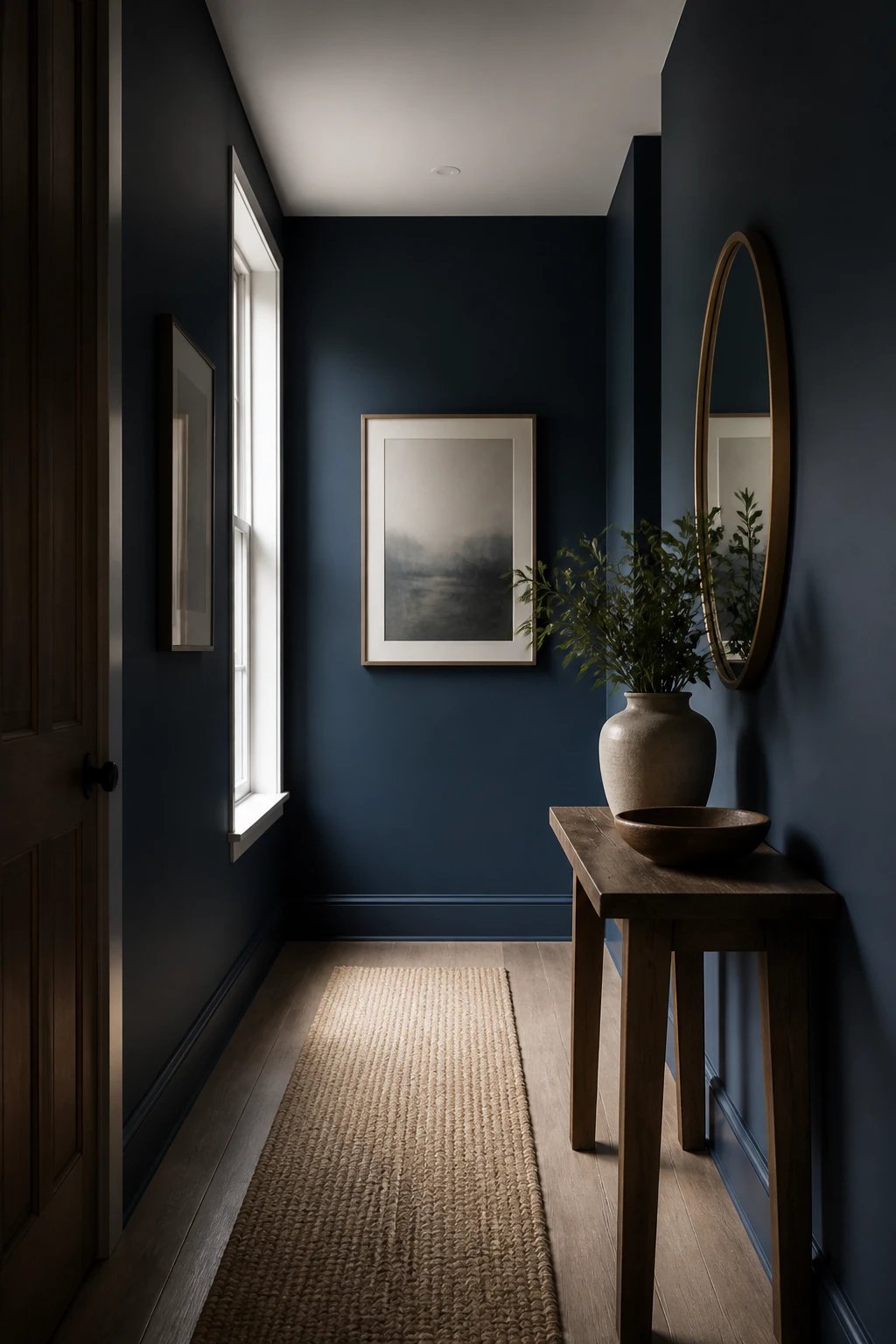
- Go moody for depth: deep navy, charcoal, inky green, aubergine.
- Stay airy and bright: warm white with a contrasting arch, soft sage, greige.
- High-contrast pop: black or cobalt behind light trim and art for drama.
Select a finish:
- Matte/eggshell: Forgiving on imperfect walls; creates a soft, luxe look.
- Satin: Slight sheen reflects light; easy to clean if you touch the wall often.
- Semi-gloss accents: Use sparingly for stripes or panels to bounce light.
Visual tricks that fake a grand entrance
- Vertical stripes: Thin, tone-on-tone stripes make ceilings feel higher.
- Painted “arch” or portal: Curve the top to frame the door or a mirror. Instant architectural vibe without the demo.
- Color blocking: Paint bottom two-thirds a deeper shade, top third lighter. It elongates the wall, IMO.
- Extend the color onto the ceiling: Paint the top 12 inches of ceiling the wall color to blur boundaries and boost height.
Measure, Mask, and Map It Out
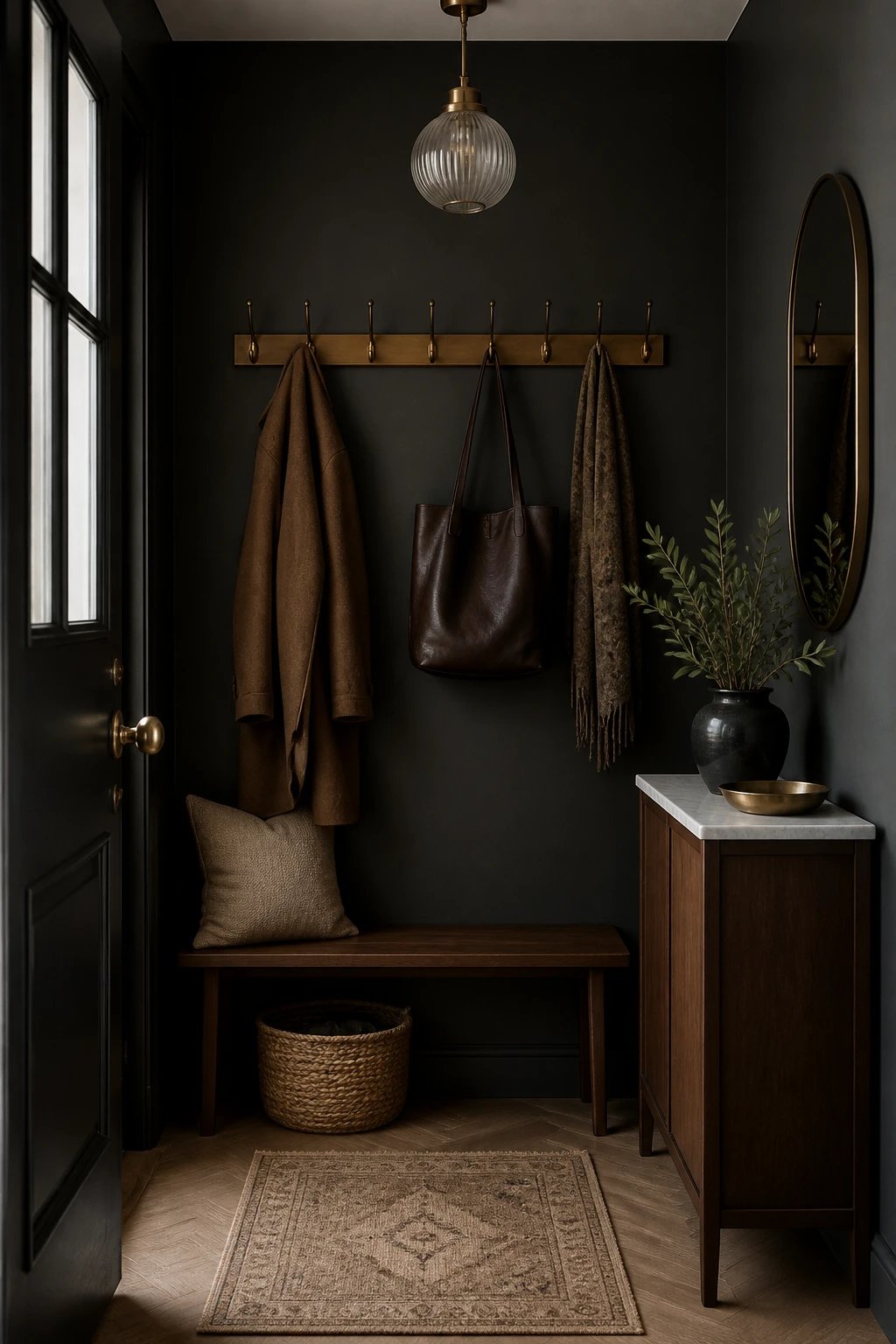
Every successful accent wall starts with good prep. Boring? Maybe. Worth it? Absolutely.
Grab these supplies:
- Painter’s tape (get the good stuff)
- Level/laser level and measuring tape
- Spackle, sandpaper (120–220 grit), putty knife
- Primer (stain-blocking if you have scuffs or dark colors)
- Quality angled brush, 4–6” mini roller for edges, 9” roller for the field
- Drop cloths and a damp rag (drips happen)
Map the design:
- For stripes or blocks, mark your lines with a light pencil and a level.
- For arches, tie a pencil to a string “compass,” anchor the string, and swing your curve.
- Label each section so you don’t paint the wrong area. Ask me how I know.
Tape like a pro
- Press tape firmly with a putty knife to seal edges.
- For razor-sharp lines, “seal” the tape by brushing the wall color under it first, let it dry, then paint your accent color.
- Remove tape while paint is slightly tacky for clean pulls.
Prep the Wall: The Unsexy Step That Changes Everything
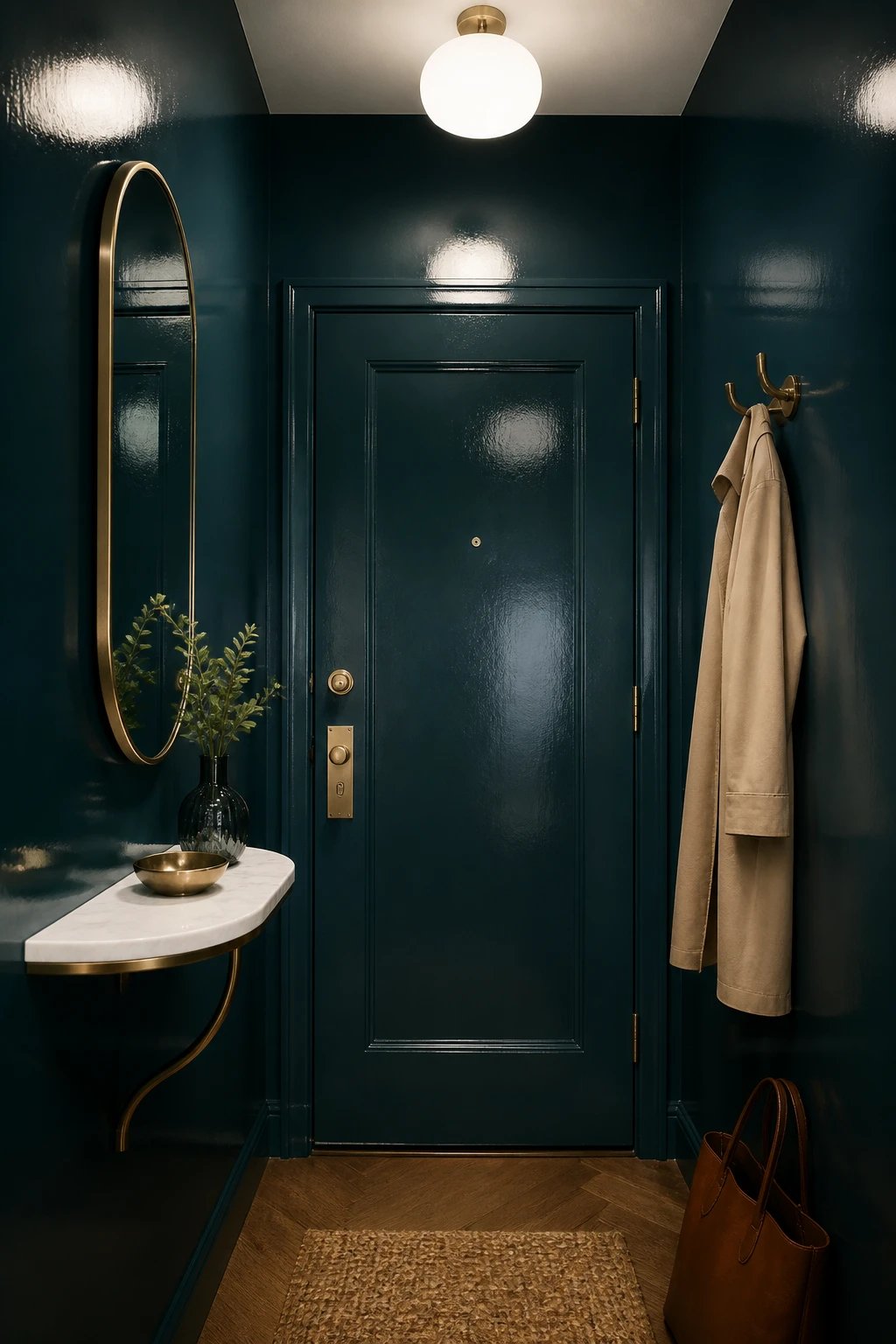
You want that “designer” look? Prep gives it to you.
- Clean: Wipe the wall with a degreaser or warm soapy water. Entry walls collect fingerprints and mystery marks.
- Patch: Fill holes and dents with spackle; sand smooth. Run your hand across the wall—if you feel it, you’ll see it.
- Prime: Spot-prime patches or prime the whole wall if you’re going darker or covering gloss. Primer helps color accuracy and durability, FYI.
Paint Like You Mean It
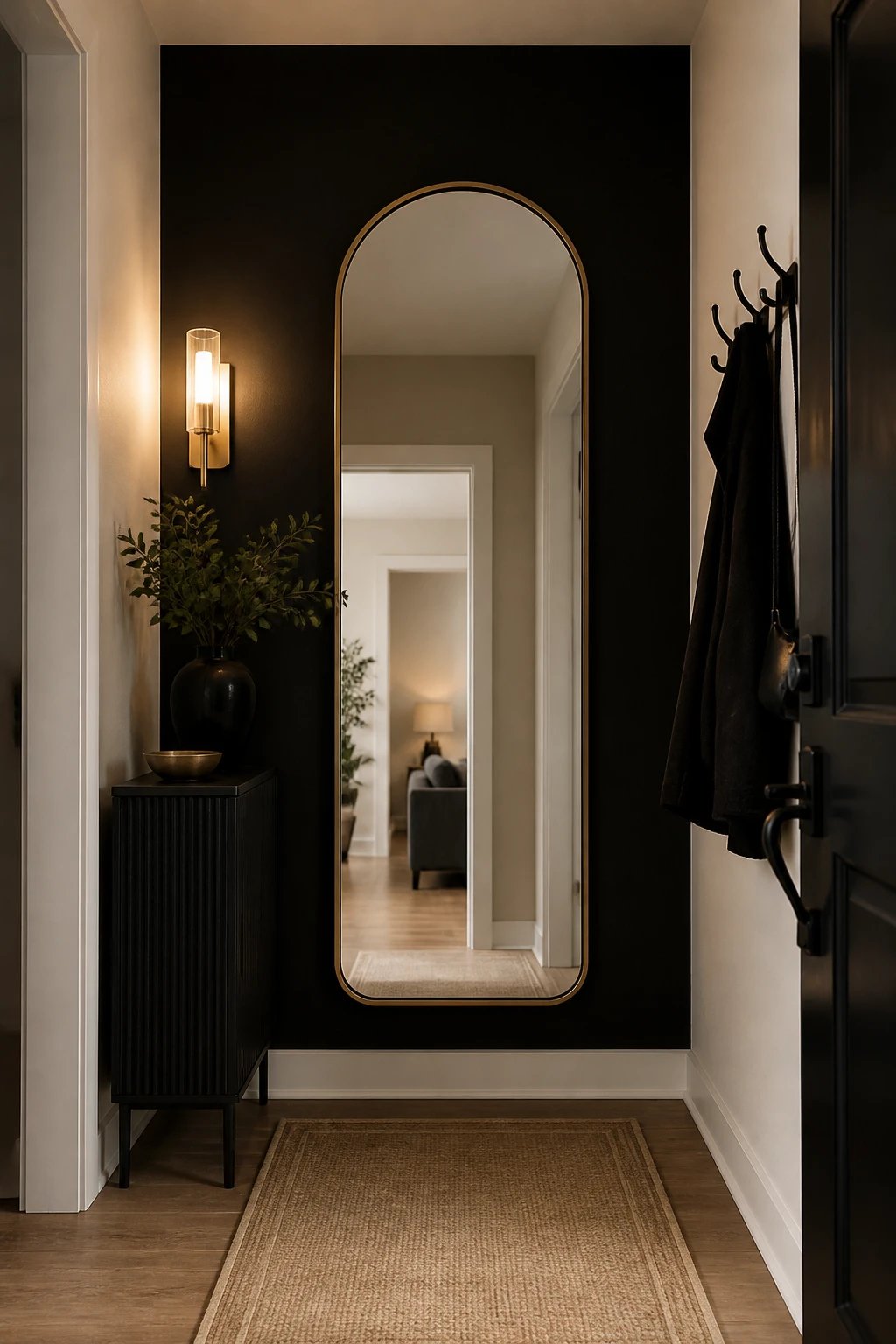
Now for the fun part. Put on a podcast and commit.
- Cut in: Use an angled brush to edge along baseboards, ceiling, door trim, and any masked lines. Keep a wet edge.
- Roll the field: Load your roller evenly; roll in a “W,” then fill in. Feather the edges to avoid ridges.
- Do two coats minimum: Dark colors often need three for that rich, velvety finish.
- Mind the dry time: Follow the can, but generally 1–2 hours between coats. Don’t rush—streaks love impatience.
- Peel the tape: Score gently with a utility knife if paint bridges formed, then peel back at a 45-degree angle.
Special effects without the chaos
- Tone-on-tone molding look: Use a semi-gloss stripe over a matte base in the same color. Subtle, luxe, renter-friendly.
- Soft color wash: Mix a touch of glaze into your paint and brush in crisscross strokes for movement.
- Micro-check pattern: Tape a narrow grid and alternate sheens for a modern textile vibe.
Layer the Entry: Styling That Sells the Illusion
You painted the wall. Now make it feel like a destination, not just a painted rectangle.
Anchor the space:
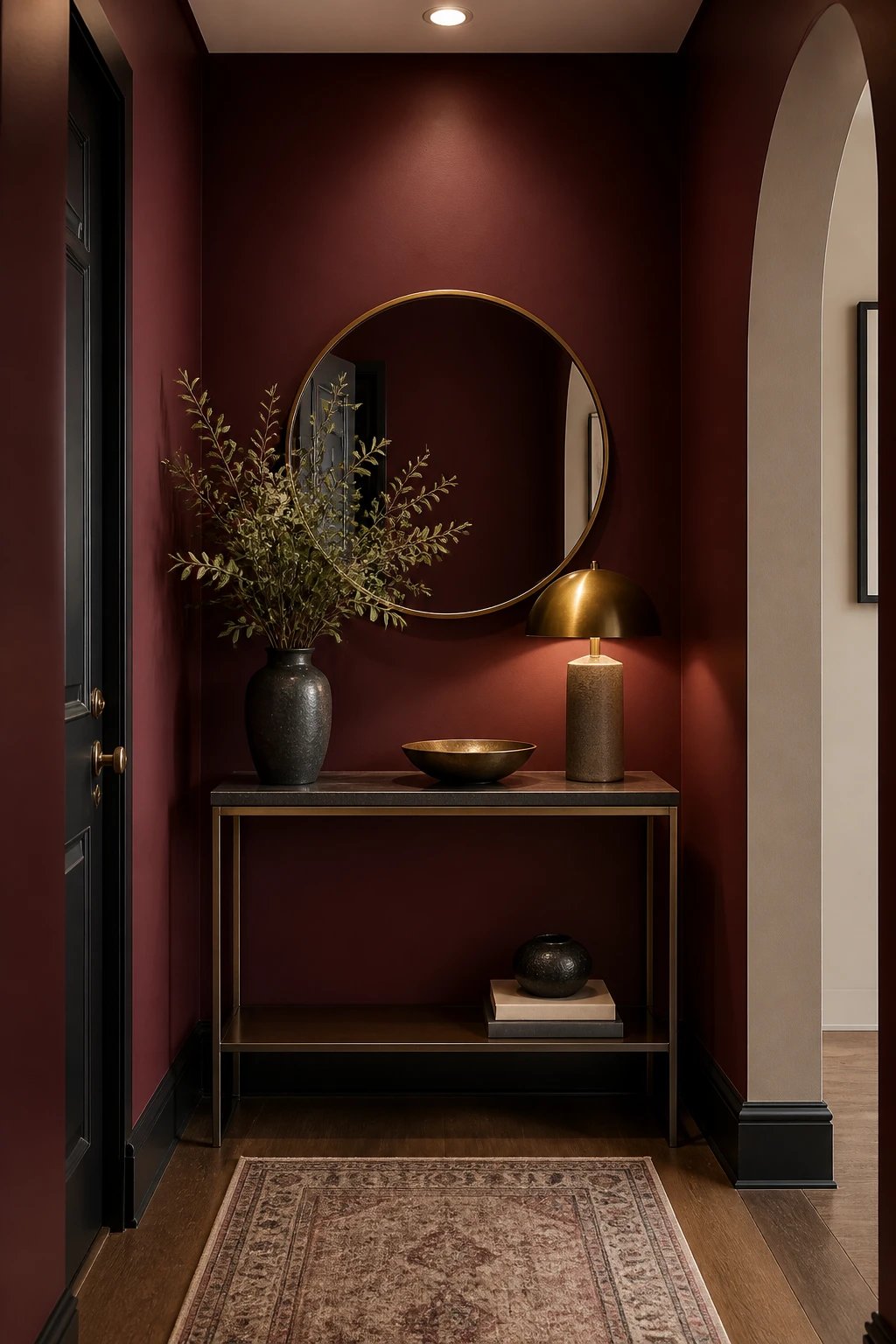
- Mirror: Round or arch-top mirrors reflect light and visually double the space.
- Console shelf or narrow bench: Keep depth under 12 inches. Even a floating ledge counts.
- Statement hook rail: Wood or matte black hooks read custom and keep clutter off the floor.
Layer lighting:
- Sconce pair or plug-in lamp: Flank the mirror or perch a small lamp on the console for warmth.
- Bulb color temp: 2700–3000K for cozy, welcoming light.
Art and accessories:
- Limit yourself to a few larger pieces over many small ones. Negative space looks expensive, IMO.
- Tray or bowl for keys, a small plant for life, and one textured element (woven basket, ceramic vase).
- Runner rug with a bold stripe or vintage pattern to stretch the space visually.
Proportion cheat codes
- Hang mirrors a few inches higher than you think to lift the eye line.
- Choose artwork that sits within the accent wall’s borders to reinforce the focal point.
- Match metal finishes for cohesion: black with black, brass with brass. Chaos reads small.
Small Space Layouts That Work
Not every entry has a perfect blank wall. Work with what you’ve got.
- Narrow hallway entry: Paint the far end wall a deep shade; keep the long walls light. Instant tunnel-to-portal effect.
- Door opens right onto a wall: Paint a half-arch that frames a mirror and a tiny shelf. It feels architectural, not cramped.
- No real wall, just a corner: Paint a floor-to-ceiling color block about door-width. Add hooks and a ledge. Boom—“zone” created.
- Open concept: Use the accent color to visually anchor a freestanding console and mirror combo so the “entry” reads as a room.
Common Mistakes (And Easy Fixes)
We all learn the hard way. Or you can just read this.
- Picking a trend color you don’t love: Sample at least three shades on the wall. Look morning and night.
- Forgetting light: Dark paint without lighting = cave. Add a sconce, lamp, or brighter bulb.
- Clutter overload: Hooks and baskets help, but edit. One or two hero pieces only.
- Skipping primer over glossy paint: Leads to peeling. Prime once, cry never.
- Wobbly tape lines: Use a level and seal the tape with base color first. Clean lines sell the “pro” look.
FAQ
Will a dark accent wall make my entry feel smaller?
Surprisingly, no—if you balance it. A single dark wall recedes and creates depth, especially when the side walls stay lighter and you add a mirror and good lighting. It feels intentional, not claustrophobic.
What if my walls have heavy texture?
Textured walls make crisp lines tougher, but not impossible. Press tape really well, use a flexible putty knife to seal edges, and consider a slightly higher-sheen stripe or panel effect to embrace the texture rather than fight it.
Do I need special paint for high-traffic entries?
Choose a scrubbable finish like eggshell or satin labeled for durability. These handle fingerprints and scuffs better. If the wall takes a beating (kids, bags, dogs), satin is your friend, FYI.
How big should the accent area be in a tiny space?
Frame the main view when you open the door. Usually that’s the wall opposite the entry or the wall you face first. If the wall is broken up, paint a contained shape (arch or block) that’s 60–80% of the wall width so it reads bold but not chaotic.
Can renters pull this off without losing the deposit?
Yes. Stick to standard finishes, avoid super-dark colors if your lease forbids them, or try removable paintable wallpaper as a base. Painted arches and blocks also touch up easily when you move.
What accent colors feel timeless?
Deep navy, charcoal, olive green, warm taupe, and rich off-blacks age well. Pair them with warm white trim and natural textures for balance. Trendy brights can work, but sample first and commit only if you love them, not because Instagram told you to.
Wrap It Up: Your “Grand” Entrance Awaits
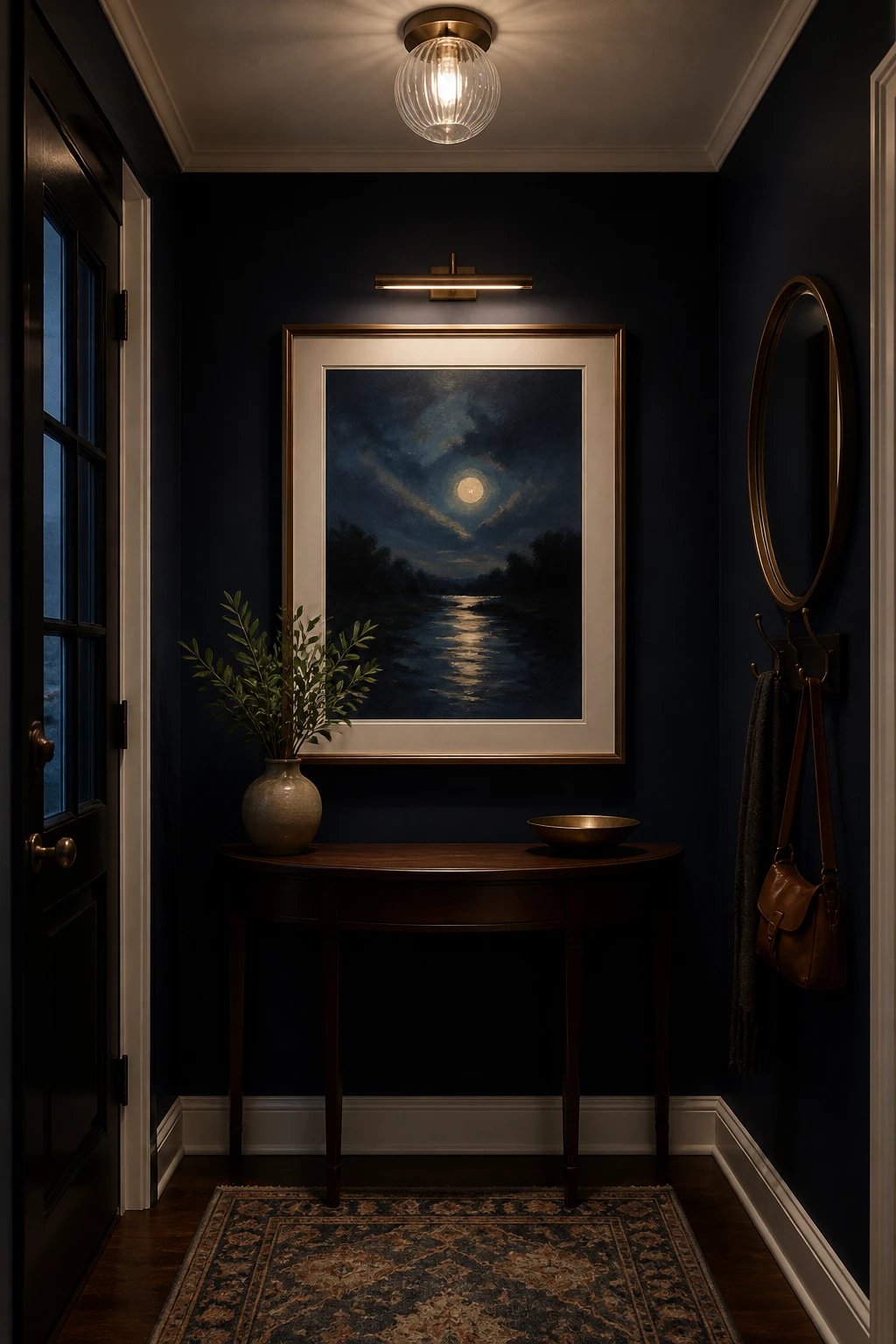
You don’t need extra square footage to make an entrance—just a smart accent wall, clean lines, and a few styled layers. Map your design, prep like a pro, and choose lighting that flatters your color. The result? A tiny entry with jaw-dropping confidence. Go on—give your front door the red-carpet moment it deserves.