

Your entryway sets the tone for your whole home. Get the rug wrong and everything else feels a little… off. Get it right and boom—instant polish, zero effort.
Let’s dial in the best small entryway rug sizes and layouts, so you stop tripping over corners and start getting compliments.
Start With Size: What Actually Fits
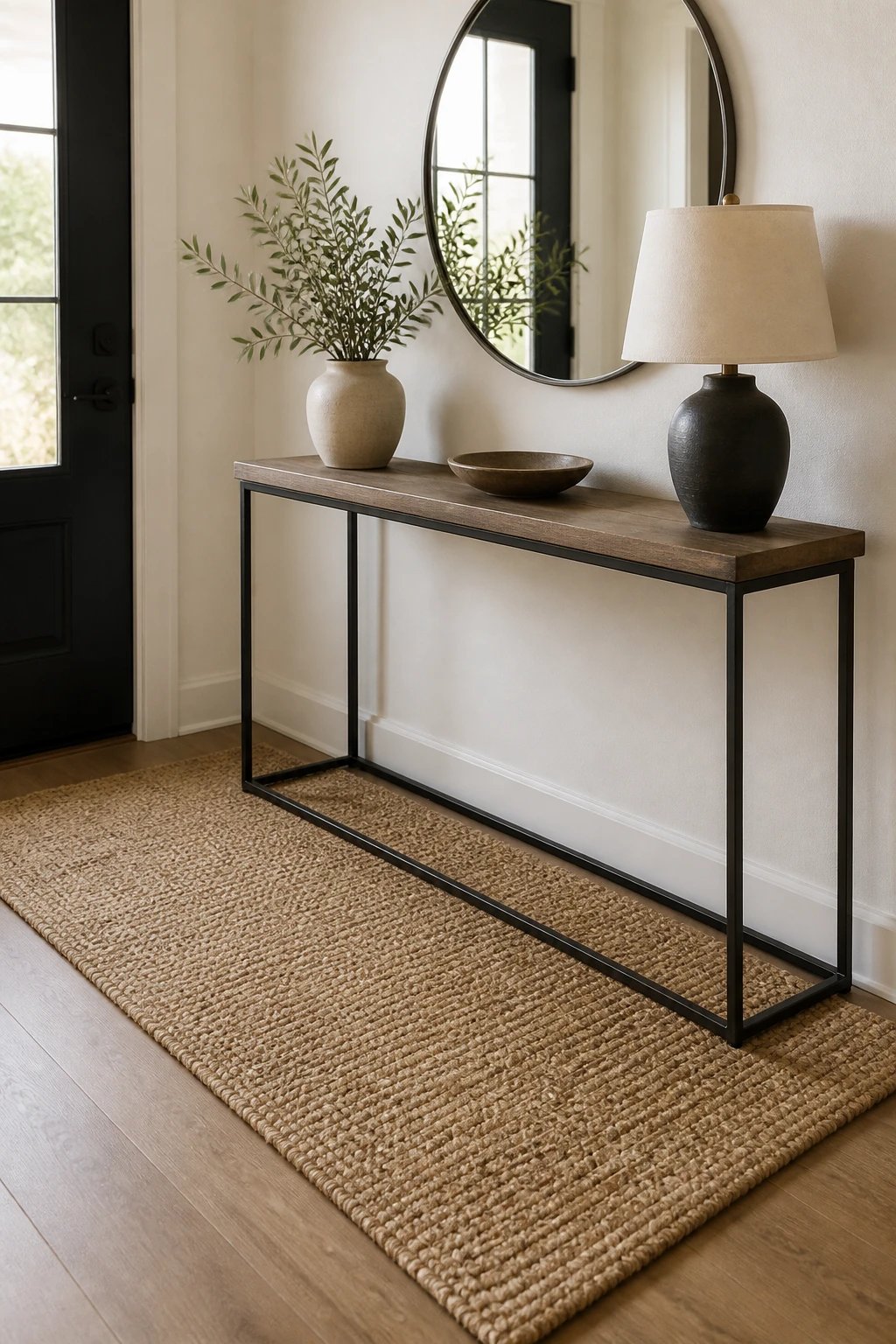
Measure your entryway first. I know, groundbreaking stuff. But it matters more than you think. You want the rug to feel intentional, not like you borrowed it from the bathroom.
- 3′ x 5′: The MVP for small entryways. Big enough to anchor a console or bench and catch most of the grit from shoes.
- 2′ x 3′: Perfect for micro foyers or apartment entries. It’s basically a stylish doormat with better PR.
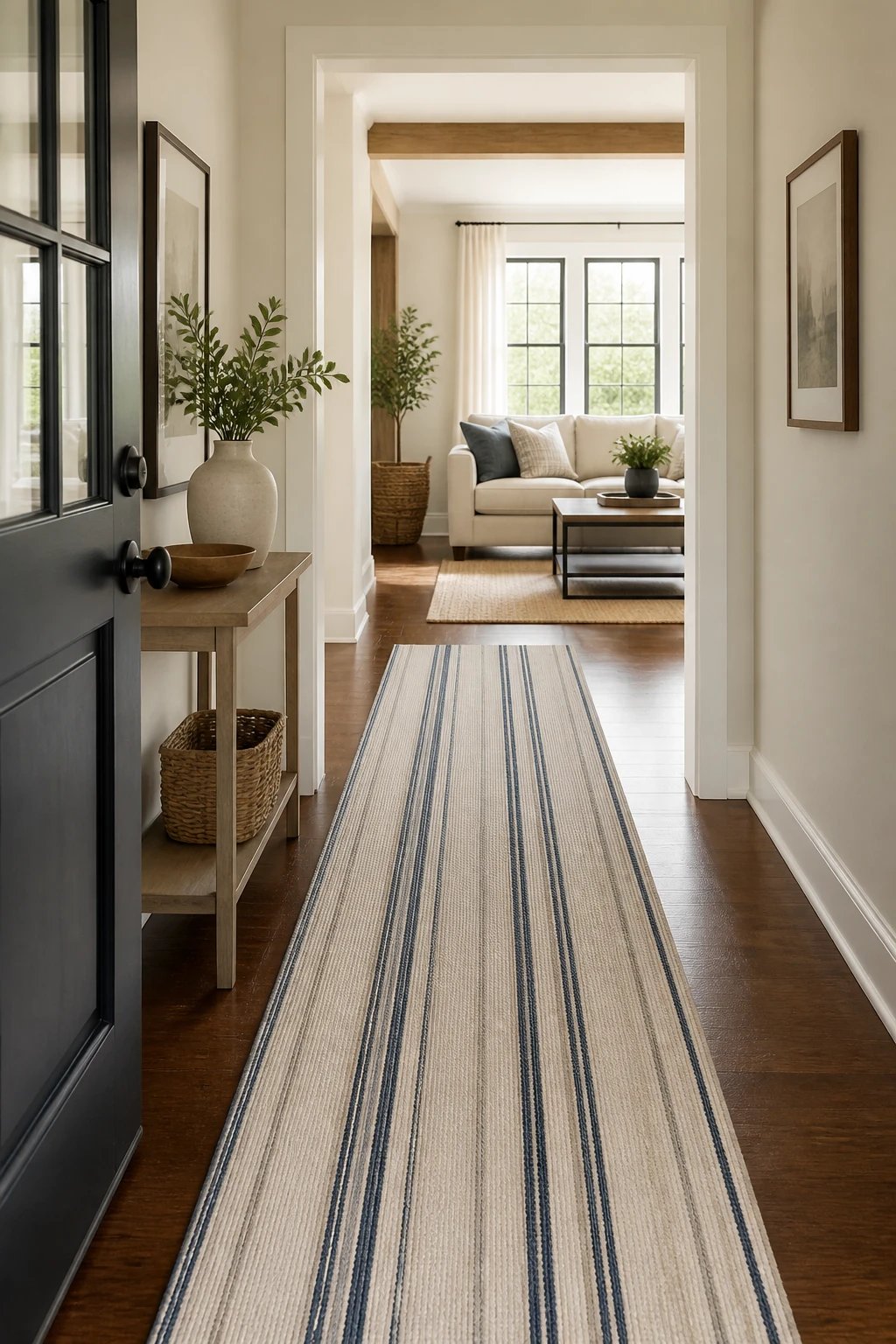
- Runner (2’6″ x 6′): Best for narrow hall-like entries. It visually stretches the space and keeps people on a clean path.
- Round (3’–4′): Ideal if you have a centered door with equal space on both sides or a square-ish nook.
Pro rule: Leave 3–8 inches of floor border on all sides. That little reveal makes your entry look tailored, not crowded.
Match the Rug to Your Door Swing
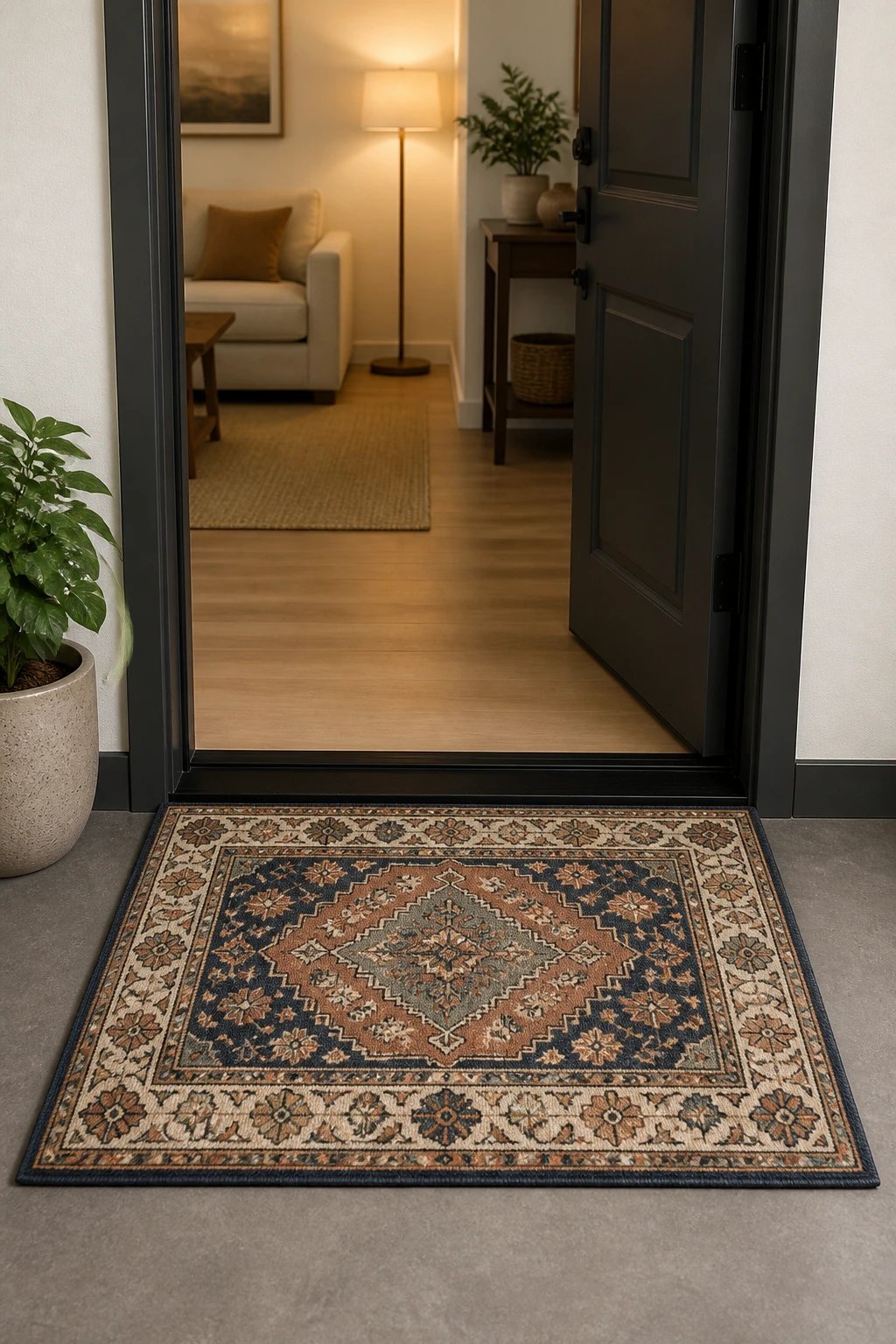
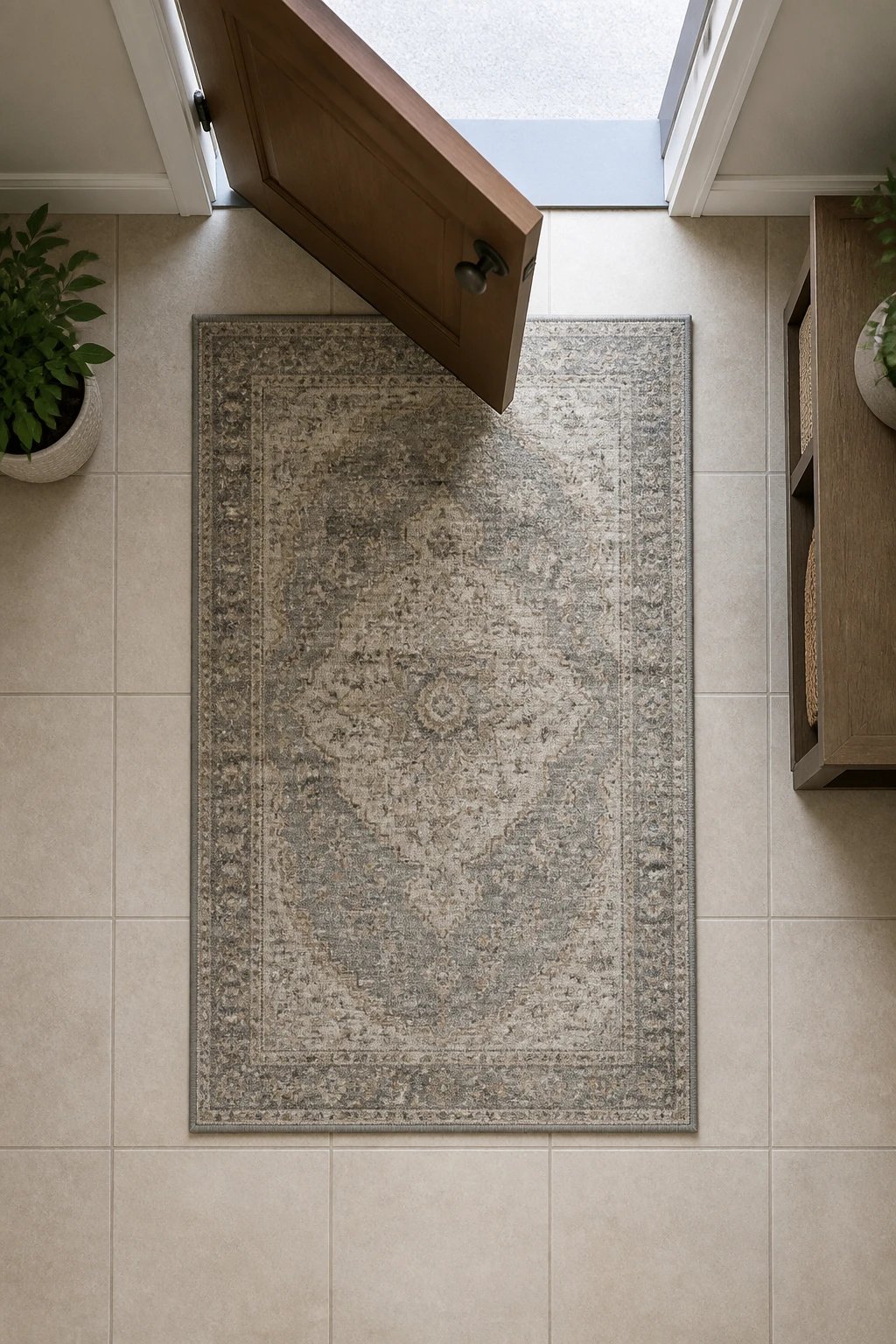
The door should glide over the rug like it’s on vacation. Test the clearance before you buy. Thicker pile can jam under the door and ruin the vibe (and your mood).
- Low-pile (under 0.4″): Safest for front doors. Think flatweave or indoor/outdoor rugs.
- Medium-pile (0.4″–0.6″): Works if your door clears easily or swings outward.
- High-pile/shag: Not here. Save it for the living room unless you enjoy vacuuming leaves every 12 minutes.
Layout Options That Actually Work
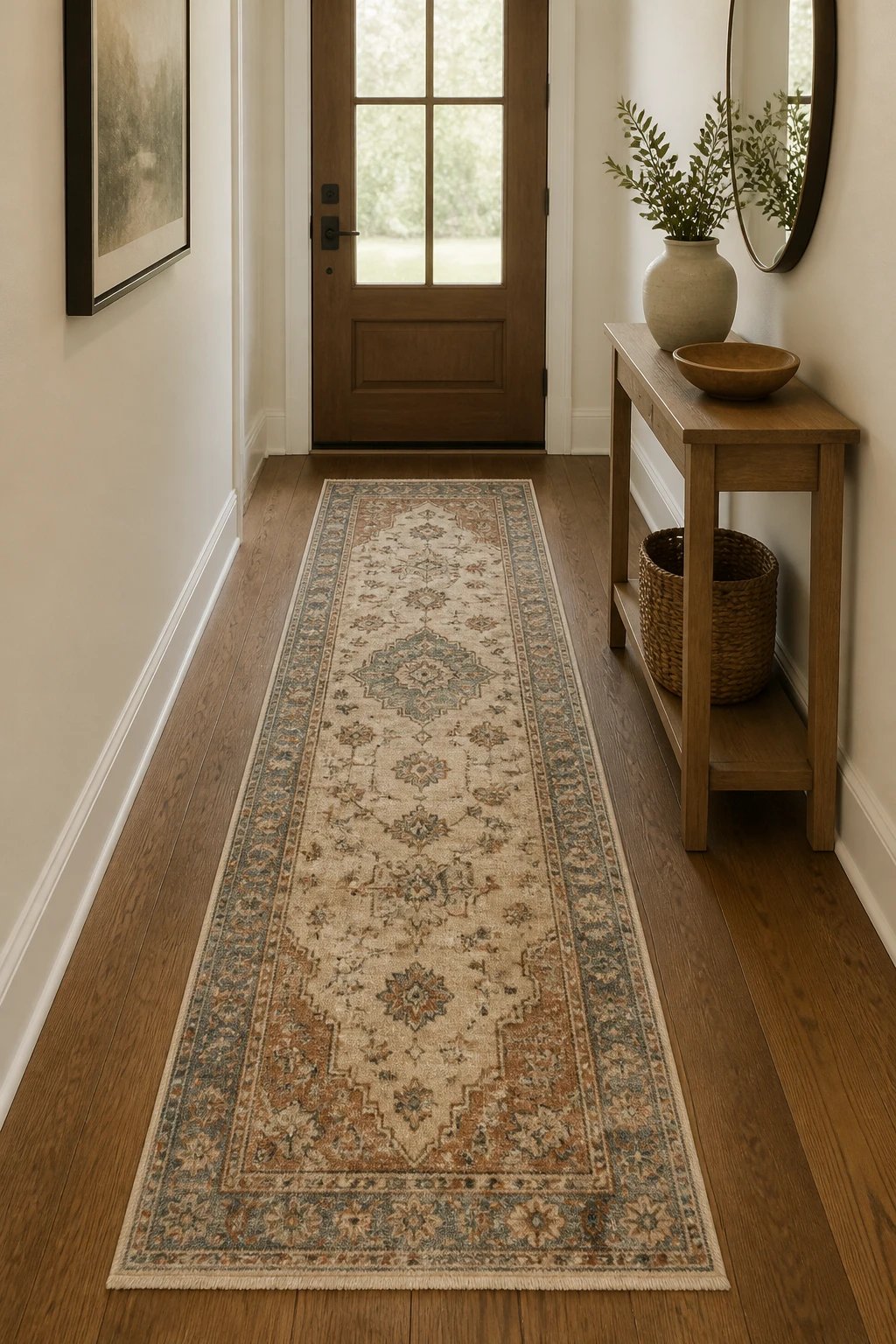
Good layout makes a tiny entry feel bigger and more organized. Here’s how to place it without overthinking (or underthinking) it.
Centered with Breathing Room
If your entry is a simple rectangle, center a 3′ x 5′ with equal floor space on each side. It feels calm and finished, and it avoids the “floating in a corner” look.
Runner Down the Line
For narrow entries, run a 2’6″ x 6′ or similar from the door inward. Keep at least 2–4 inches of floor on each side so it doesn’t read like a slip-n-slide.
Round in a Square Nook
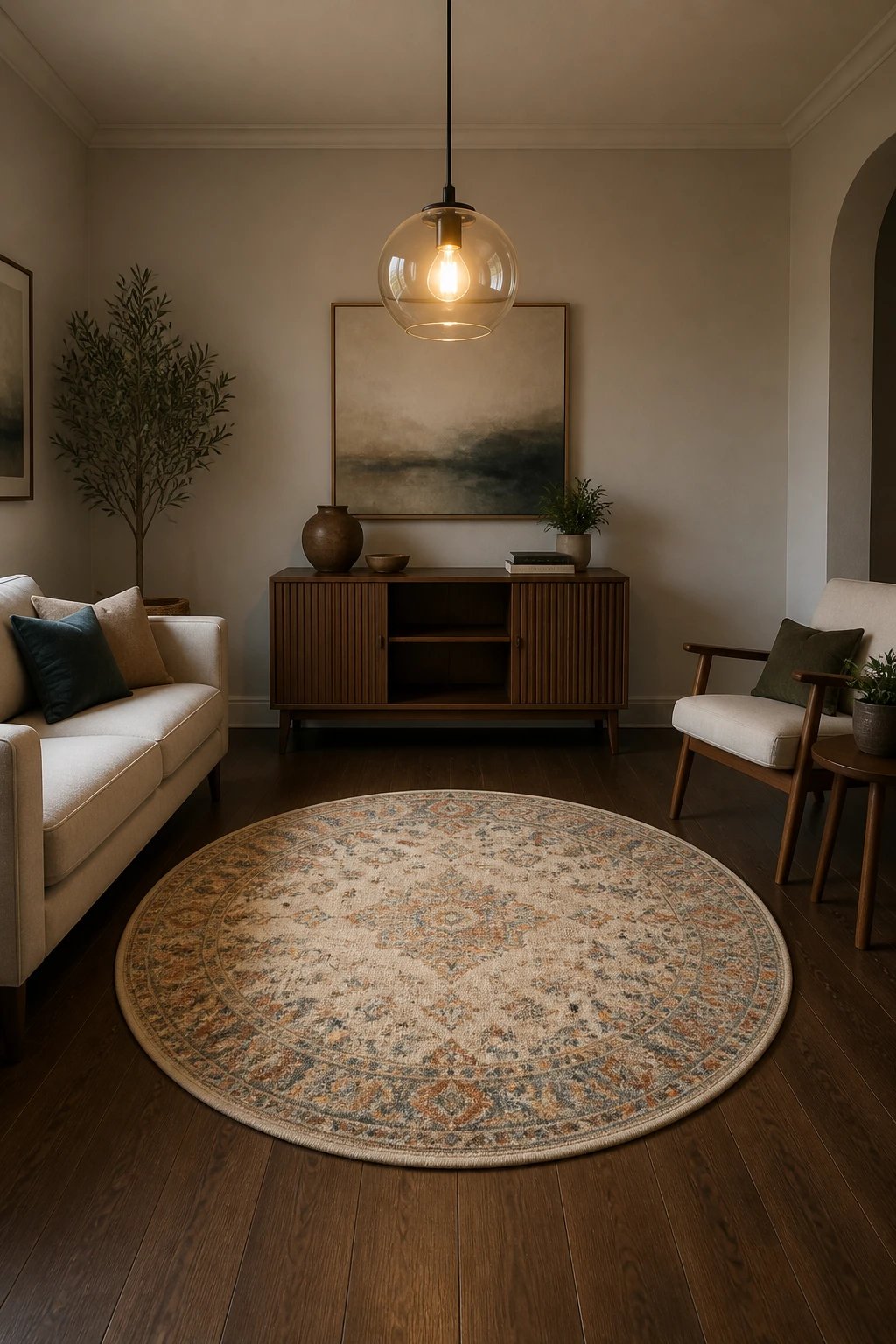
Got a square-ish foyer or a centered pendant light? Drop a 3’–4′ round rug right in the middle. It softens hard angles and plays nice with curved mirrors or round sconces.
L-Shaped Entries
Use a runner to guide traffic along the main path. If the short branch needs love, add a 2′ x 3′ at the junction. Yes, layering two small rugs can work—just keep colors coordinated.
Styling With Door Mats and Layers
Yes, you can layer. No, it shouldn’t look chaotic. Here’s how to make it look “intentional, but make it easy.”
- Outside + inside combo: Put a heavy-duty outdoor mat at the doorstep, then a pretty indoor rug just inside. Function meets flair.
- Layered look: Place a 2′ x 3′ on top of a 3′ x 5′ for texture and dimension. Keep patterns simple so your entry doesn’t scream optical illusion.
- Bench anchor: If you’ve got a bench, the rug should extend at least 6 inches beyond either side. No bench teetering on the edge, please.
Materials That Can Survive Real Life
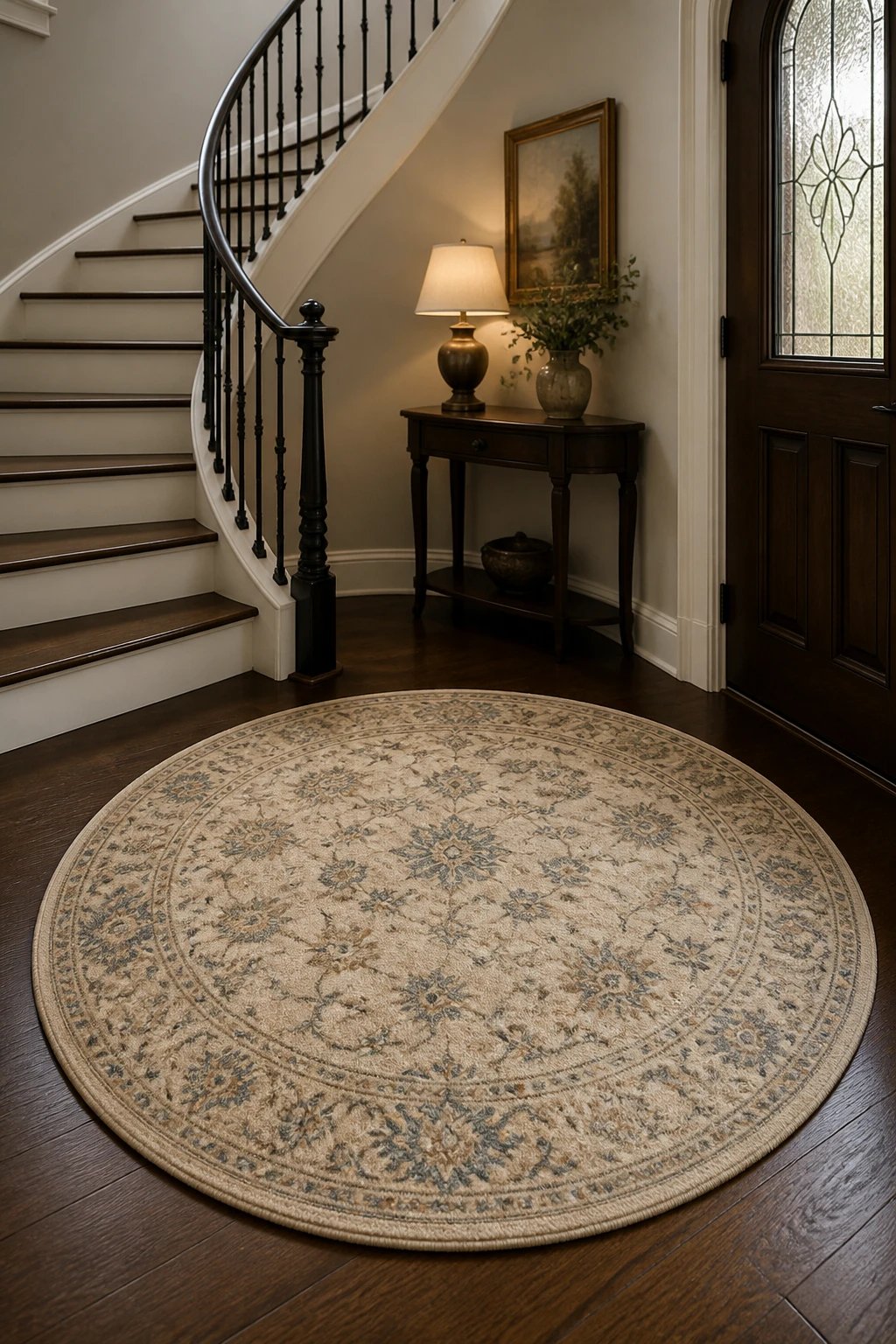
Entry rugs take abuse: shoes, wet umbrellas, late-night pizza deliveries. Pick materials that can handle it.
- Polypropylene/olefin: Durable, budget-friendly, easy to clean. Great for households with kids, pets, or both.
- Wool: Naturally stain-resistant and crushes it on texture. Costs more but lasts. FYI, it sheds at first—don’t panic.
- Jute/sisal: Earthy and pretty, but jute hates water. If you live in a rainy climate, go sisal or a poly-sisal blend instead.
- Indoor/outdoor rugs: IMO the sleeper hit for entries: hose-able, stylish, nearly indestructible.
Non-negotiable: Use a quality rug pad. It prevents slipping, protects floors, and adds a cushy feel underfoot. Cut the pad 1 inch smaller than the rug on all sides.
Color, Pattern, and Dirt Camouflage
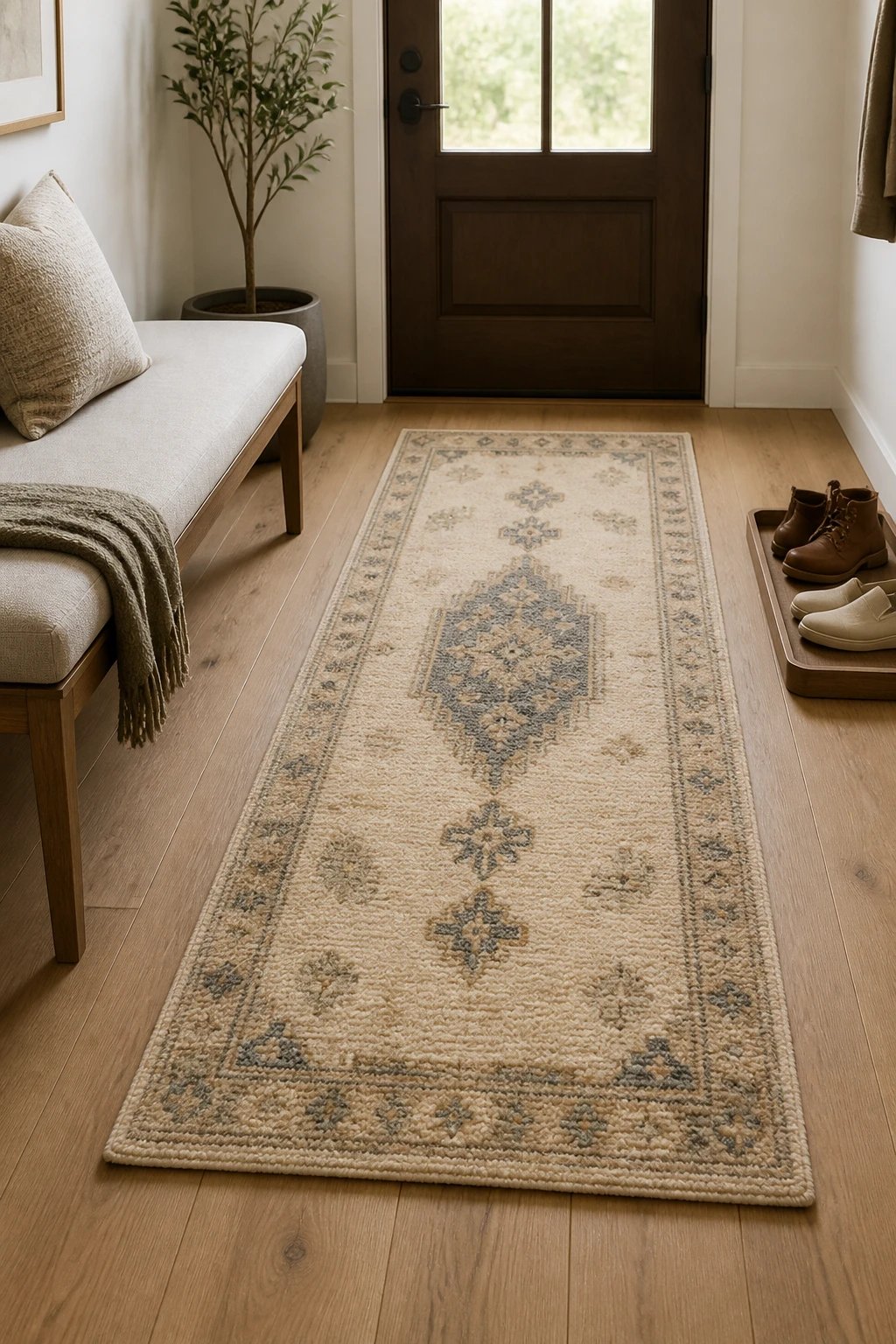
Let’s be honest: your entry sees mud, dust, and mystery crumbs. Choose colors that forgive.
- Medium tones hide dirt best. Think charcoal, camel, navy, olive, or heathered neutrals.
- Pattern helps. Vintage-inspired, Moroccan, or geometric prints disguise scuffs and shoe tracks.
- Avoid super light solids. They show everything. Unless you enjoy constant cleaning? Your call.
Common Mistakes (And How to Fix Them)
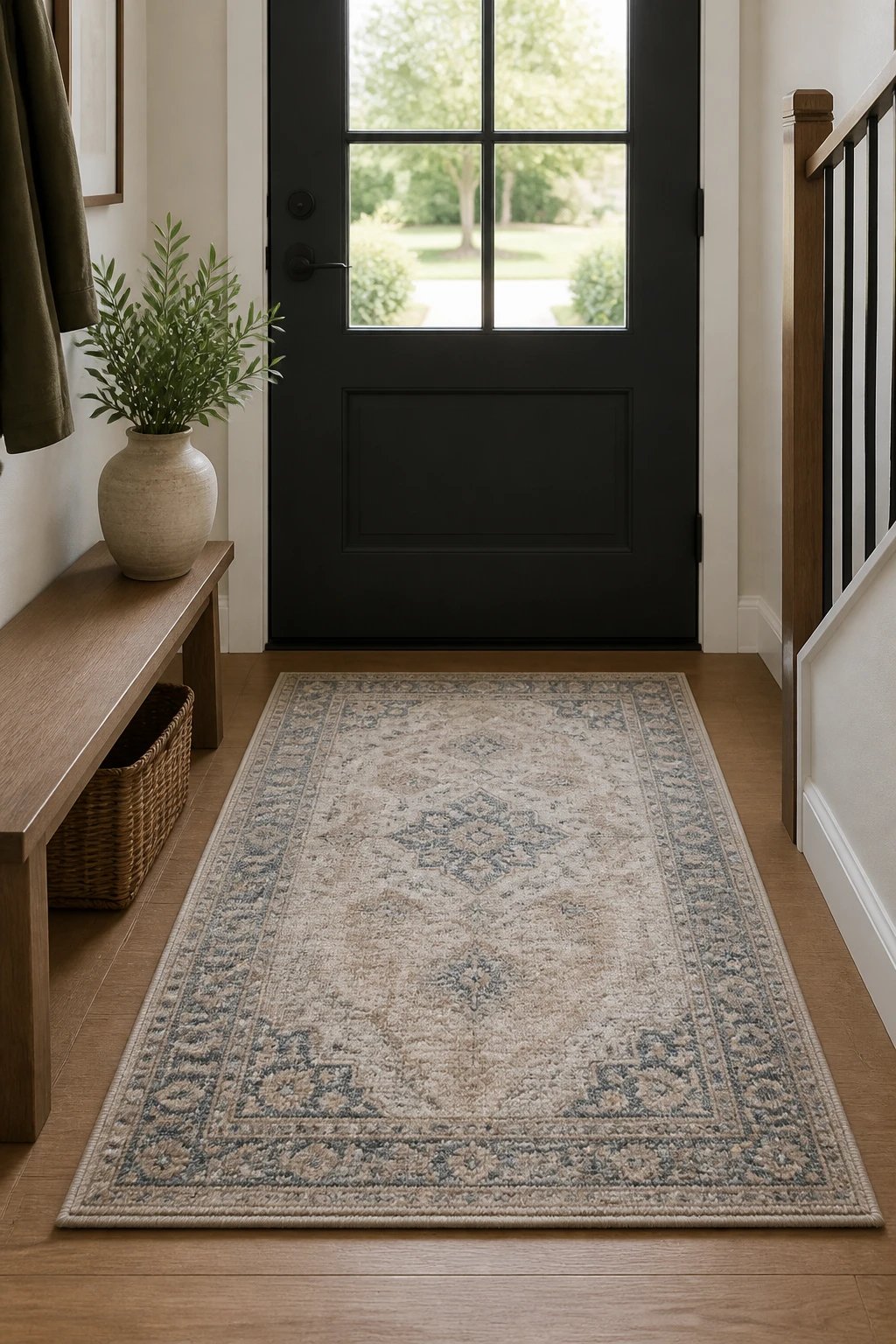
- Rug too small: If your 2′ x 3′ looks like a postage stamp, size up to 3′ x 5′. Instant glow-up.
- Door clearance drama: Switch to a flatweave. Problem solved without planing your door like a lumberjack.
- No pad: Don’t risk slips. A felt + rubber combo pad gives grip and squish.
- Clashing patterns: If your tile is bold, go simpler on the rug. Let one element be the star, not a duet that argues.
How to Measure (Without Guessing)
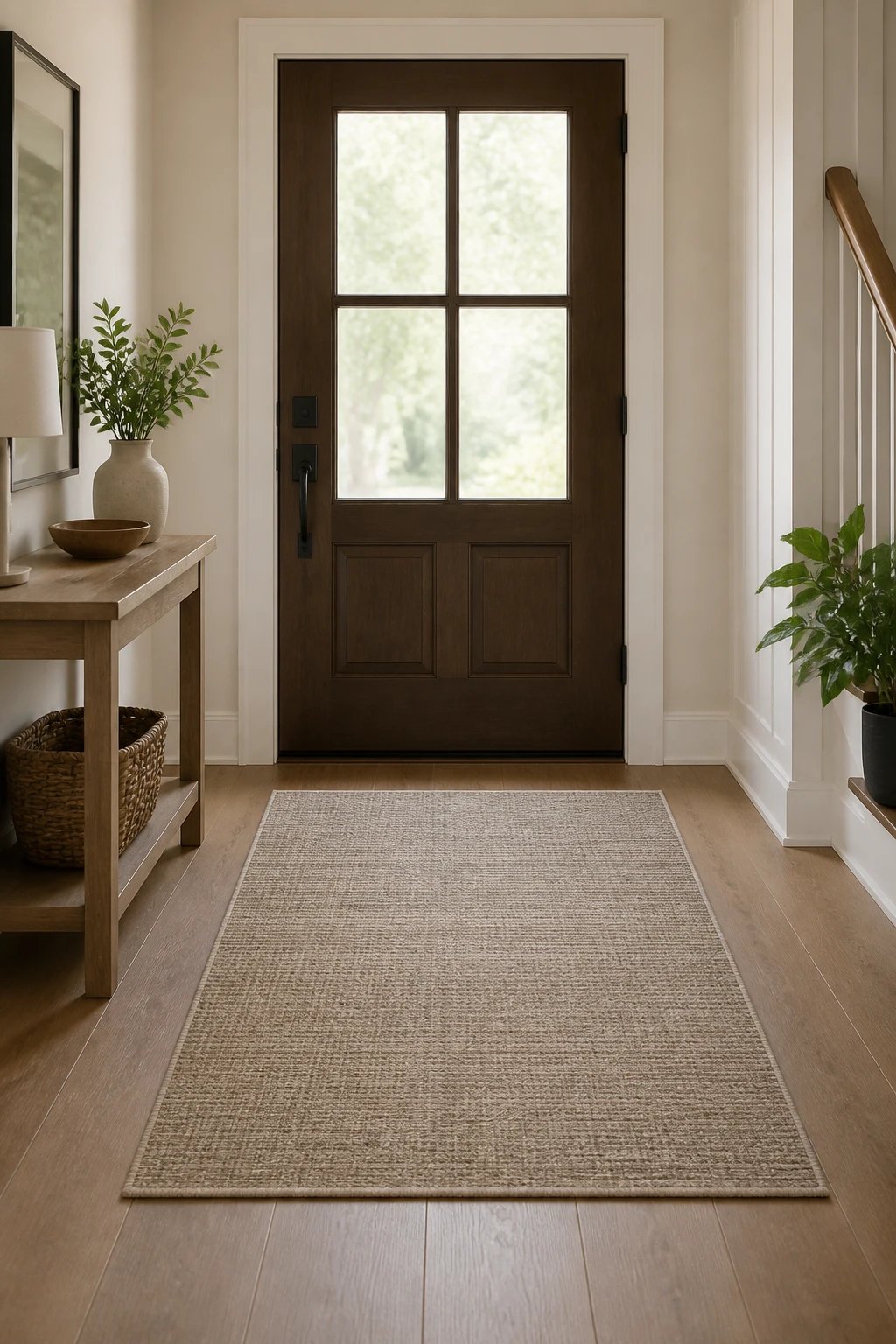
Grab painter’s tape and lay out potential rug sizes on the floor. Open and close the door. Walk through like you normally would—bags, dog, chaotic Monday energy. If you trip, it’s wrong. If it disappears under the door, it’s wrong. If it looks balanced and stays put, you nailed it.
FAQ
Should the entry rug go under the door when it’s closed?
Ideally, the rug sits just inside the door swing with enough clearance so the door moves freely. If the door closes on top of the rug without friction, that’s fine. Just avoid bunching or scraping.
What size rug for a tiny apartment entry?
A 2′ x 3′ works great if space is super tight. If you can spare the width, upgrade to a 3′ x 5′ for a more “finished” look that also catches more dirt. You’ll thank yourself on rainy days.
Do I need a rug pad even with a small rug?
Yes. Small rugs slip the most. Use a low-profile rubber or felt-rubber pad cut slightly smaller than the rug to keep it from curling or skating around like it’s auditioning for the Olympics.
What patterns hide dirt best?
Multi-tone patterns, heathered weaves, and vintage-style prints hide dirt and wear better than flat solids. Dark-to-medium palettes like charcoal, rust, navy, or olive keep things looking clean between washes.
How do I clean an entry rug?
Shake it outside weekly, vacuum both sides, and spot clean with a mild detergent. For flatweaves or indoor/outdoor rugs, take it outside and hose it down a few times a year. Always dry completely before putting it back—mildew is not invited.
Can I layer a doormat over an entry rug?
You can, but it usually looks better to keep the heavy-duty mat outside and the decorative rug inside. If you layer inside, make sure both rugs are low-pile and the top rug has grip so it doesn’t slide.
Conclusion
The best small entryway rug is the one that fits your space, clears your door, and stands up to daily chaos. For most small entries, 3′ x 5′ wins on balance and function, while 2′ x 3′ saves the day in micro spaces and runners rule narrow halls. Choose durable materials, go for forgiving colors and patterns, and never skip the rug pad. Nail those basics and your entry will look pulled together every time you walk through the door—no design degree (or drama) required.