

Your laundry room entry way doesn’t need to scream “utility closet.” With a few smart moves, you can make it feel like a natural extension of your home—cozy, tidy, and not at all like the place socks go to vanish.
Ready to blur that boundary between “laundry zone” and “real life”? Let’s make that small entry way pull double duty without shouting about it.
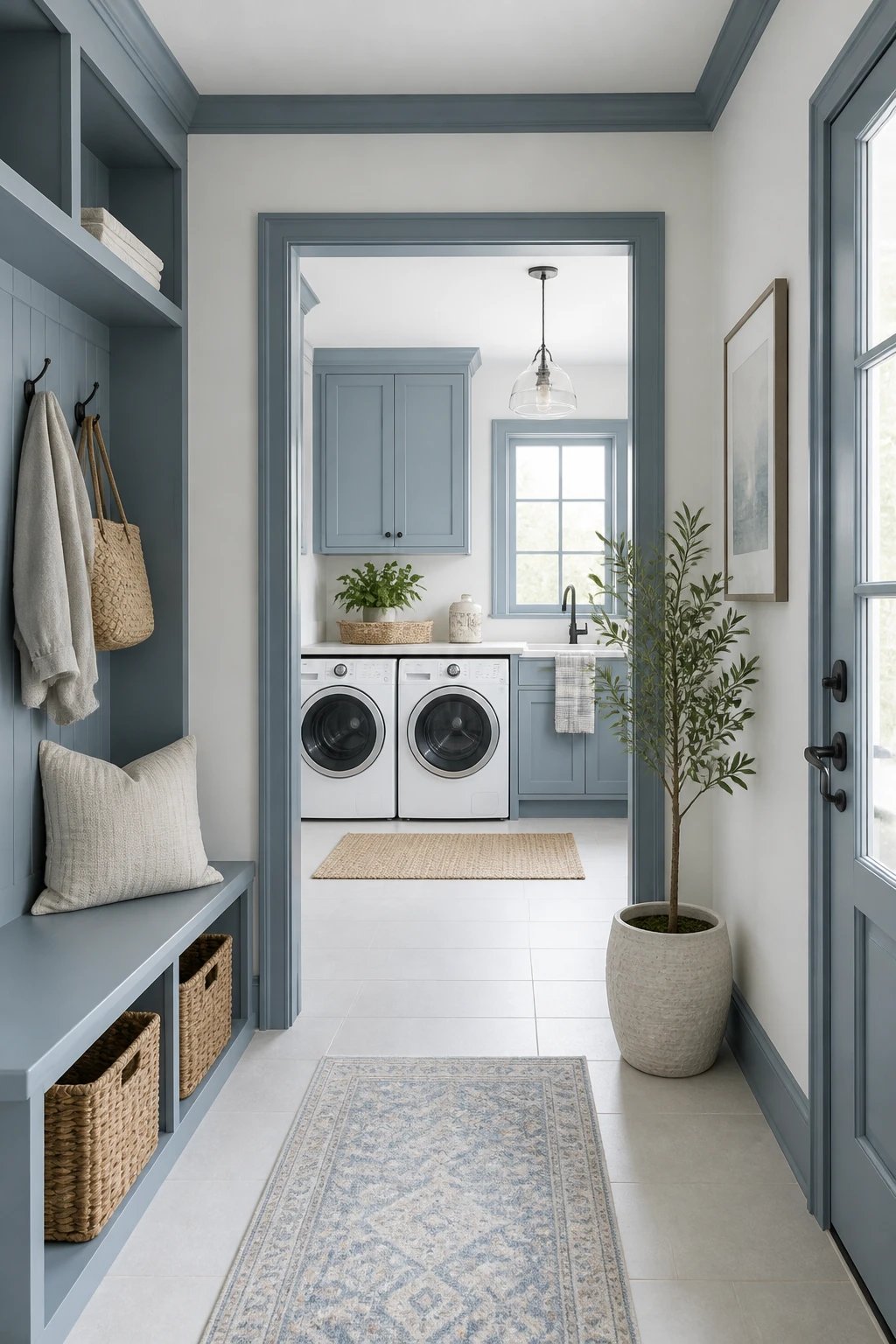
Start With a Shared Color Story
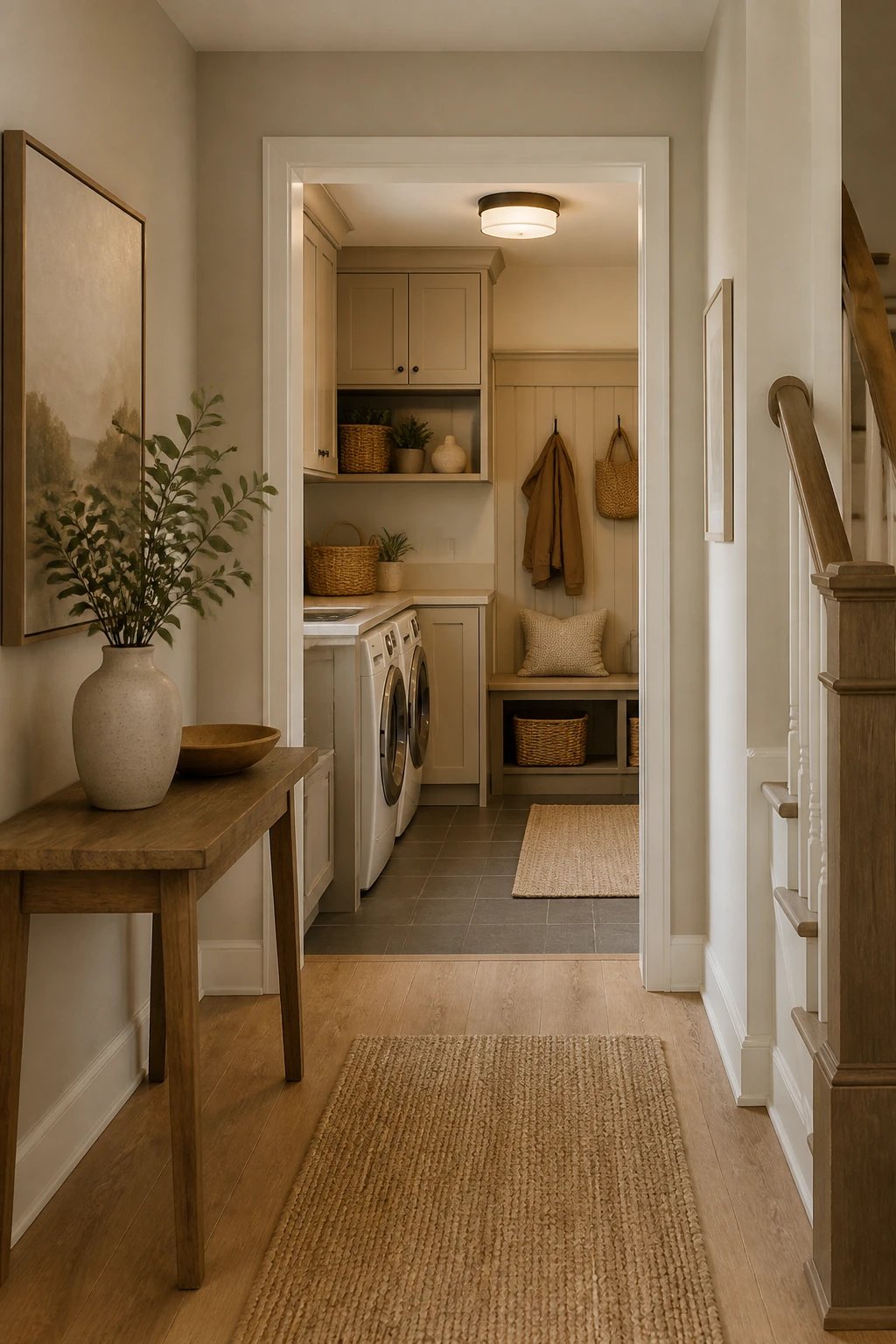
Color sets the mood fast. If your hallway or adjacent room leans warm and neutral, carry those tones into the laundry entry. Cool, airy palette in the next space? Keep it going here.
- Match or slightly tweak the wall color. Choose a shade one step lighter or darker than the adjoining room. It keeps flow without feeling copy-paste.
- Repeat an accent color. Pull a hue from nearby art, a rug, or cabinetry and echo it with hooks, baskets, or a runner.
- Keep trim consistent. Door casings, baseboards, and interior doors should match the rest of the home for instant cohesion.
Pro tip: Paint the door
Paint the laundry room door the same as nearby interior doors, or go bold with a muted accent that appears elsewhere (like your kitchen island color). It reads intentional, not random.
Choose Flooring That Makes Sense (And Hides Crimes)
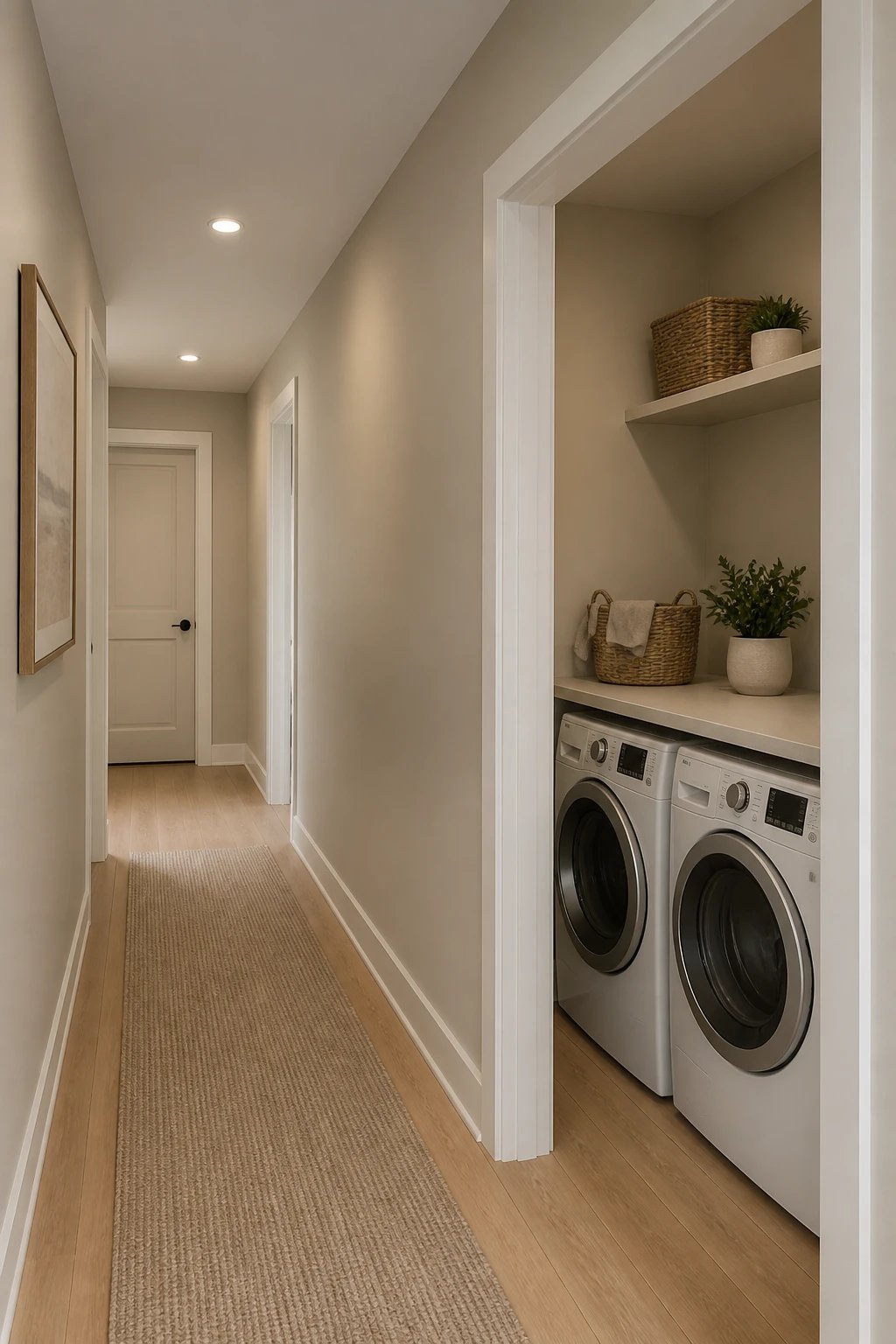
Your entry-laundry zone handles traffic, drips, and dirt. Choose flooring that looks like it belongs with the rest of the home but can take a hit.
- Tile or LVP that mimics natural materials feels high-end and wipes clean. Bonus if it resembles flooring nearby.
- Use a threshold wisely. A subtle transition strip or a herringbone “border” signals a shift without a harsh line.
- Layer a washable runner. Choose a pattern that forgives stains. Darker, low-contrast rugs hide lint like a champ.
Grout matters
Go medium-gray grout with tile. It hides dirt and still looks crisp. White grout in a laundry entry? Brave. Maybe too brave, IMO.
Hide the Ugly, Celebrate the Useful
If you see detergent bottles the second you walk in, the whole space feels like a utility closet. Tuck the mess away and show off the pretty stuff.
- Closed storage for the win. Cabinets or tall lockers keep visual noise out of sight. Use upper cabinets for detergents; place a pull-out for hampers below.
- Use pretty containers for daily items. Glass jars for pods, ceramic crocks for dryer balls—practical and photogenic.
- Install a drop zone. A narrow console shelf or shallow countertop handles keys and mail so they don’t invade the machines.
When you can’t add cabinets
Try a wall-mounted shelf with a curtain panel below. It’s cottage-core meets clutter control. FYI, a simple tension rod and linen panel can hide a lot.
Design a Mini Mudroom (Even If You Only Have 18 Inches)
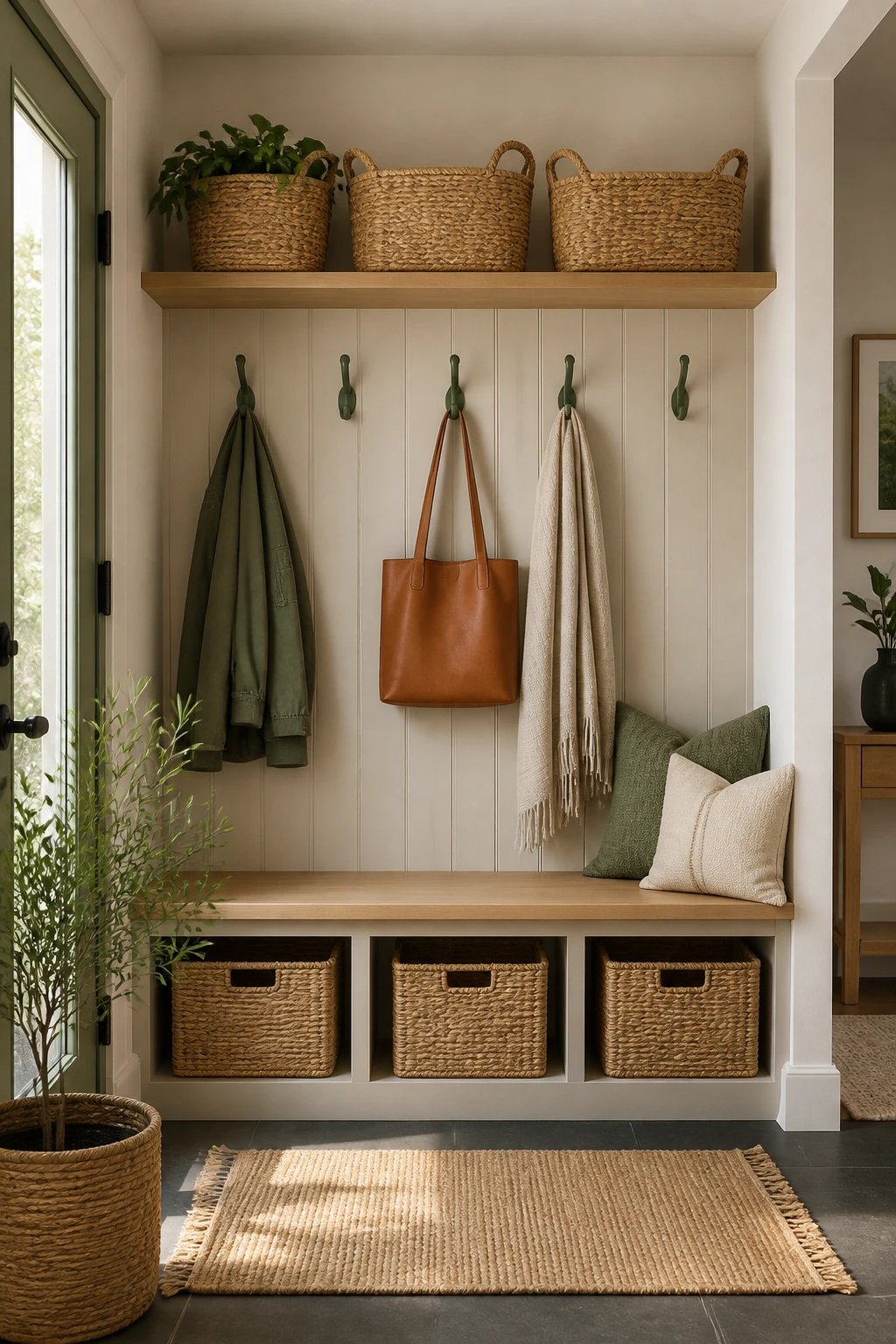
Your entry-laundry hybrid should catch coats, shoes, and random life debris gracefully. Think vertical, modular, and narrow.
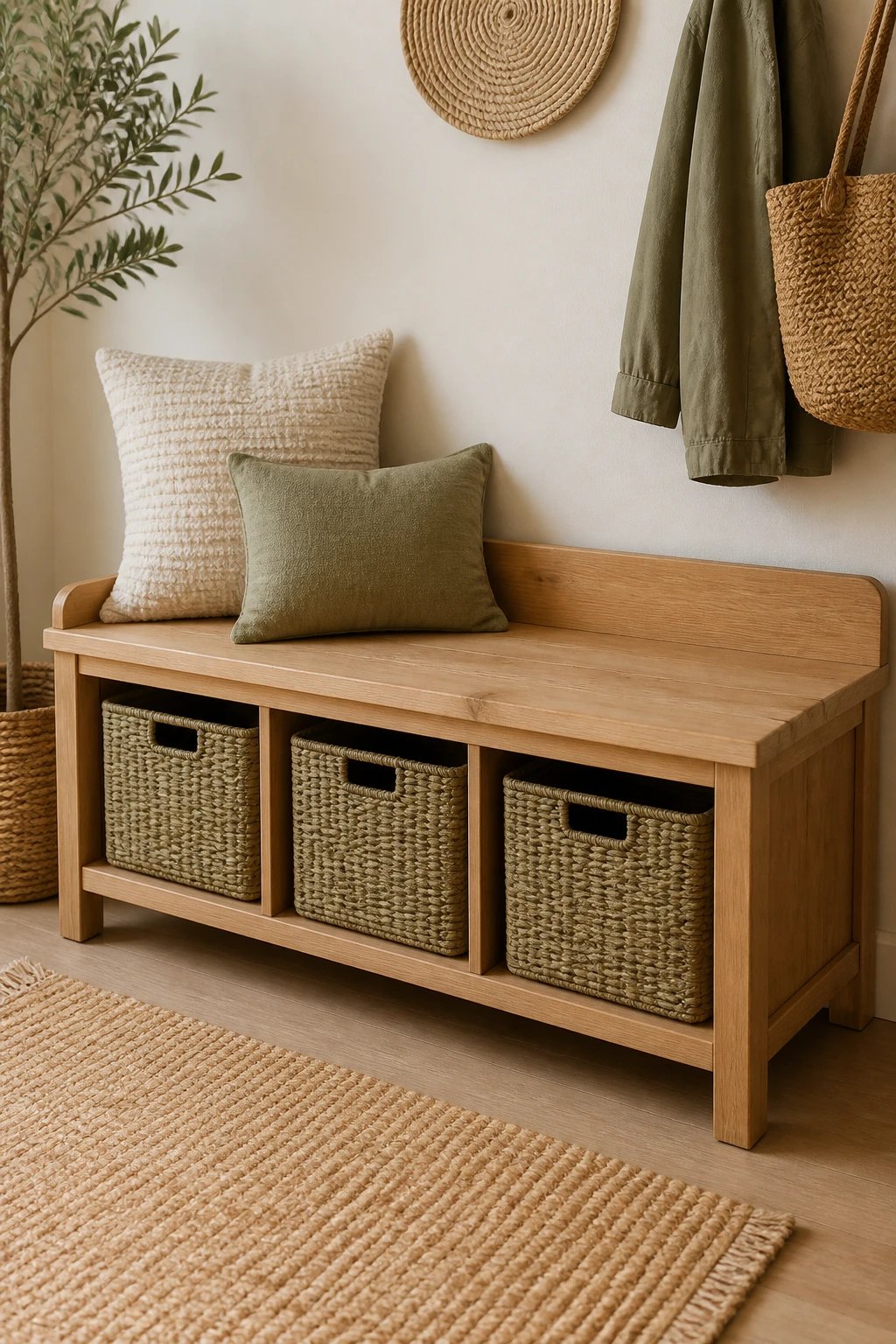
- Hooks over a bench. Hooks beat hangers for speed. A slim bench gives you a landing spot for bags and a place to shoe-up.
- Use vertical cubbies. Tall, skinny cubbies or wall baskets claim dead space and make room assignments obvious.
- Go for closed shoe drawers. Ventilated pull-outs keep the smell in check and the look clean.
Smart bench dimensions
Aim for a 14–16 inch deep bench in tight hallways. It sits comfortably without shrinking your walkway. Add a flip-top for hidden storage—no extra footprint required.
Lighting That Feels Like the Rest of the House
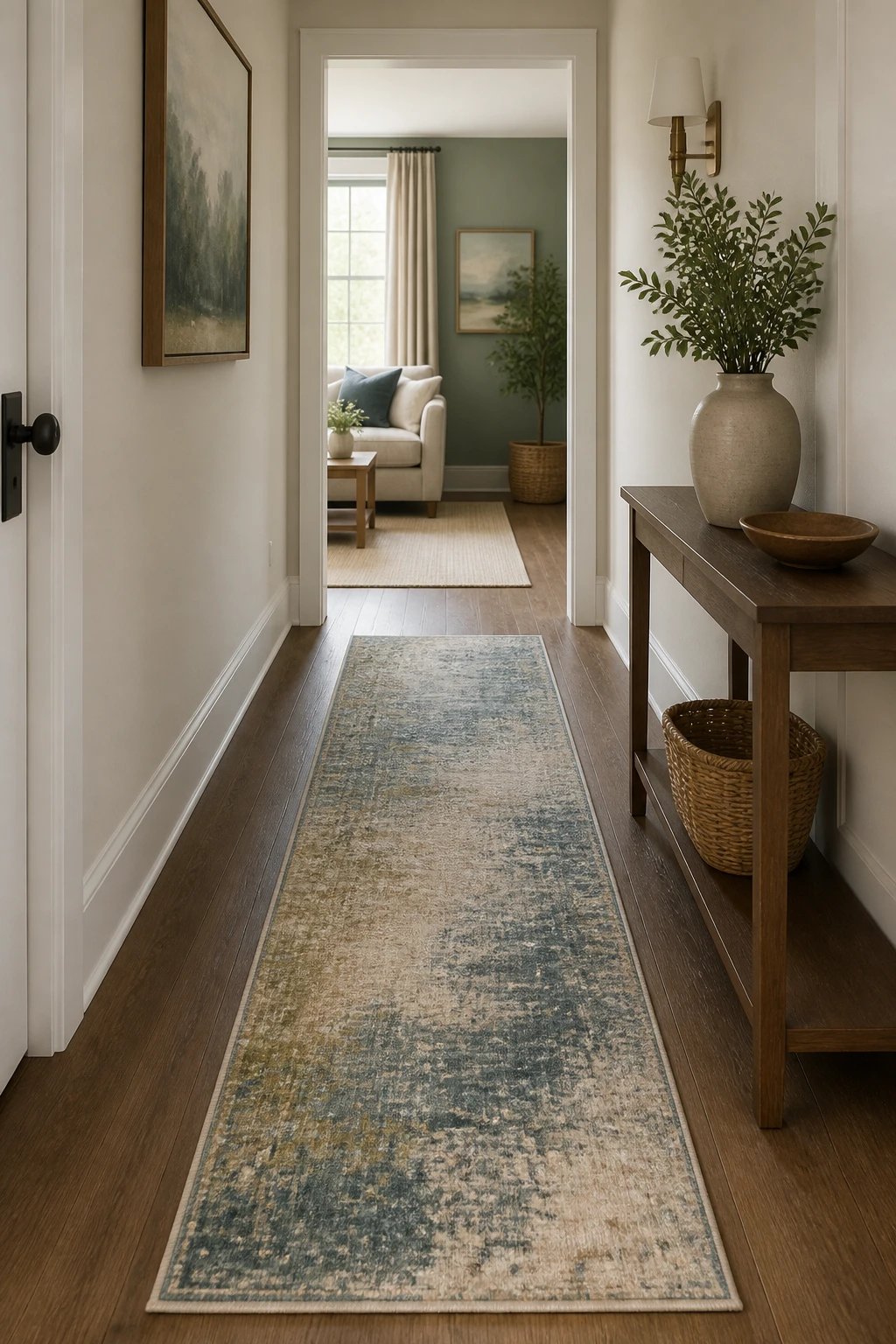
Nothing says “utility” like a single, sad boob light. Choose fixtures that match the style and finish from adjacent rooms.
- Layer it: a flush mount or semi-flush overhead, plus a sconce over the drop zone or a picture light over art.
- Match finishes loosely. If the kitchen rocks aged brass, bring it here too. Don’t stress a perfect match—close counts.
- Bulb temperature: Keep 2700K–3000K for warmth. Anything bluer screams basement break room.
Consider motion sensors
Hands full of laundry? Let lights pop on automatically. Tie them to a dimmer so late-night cycles don’t blind you.
Bring in “Real Room” Decor
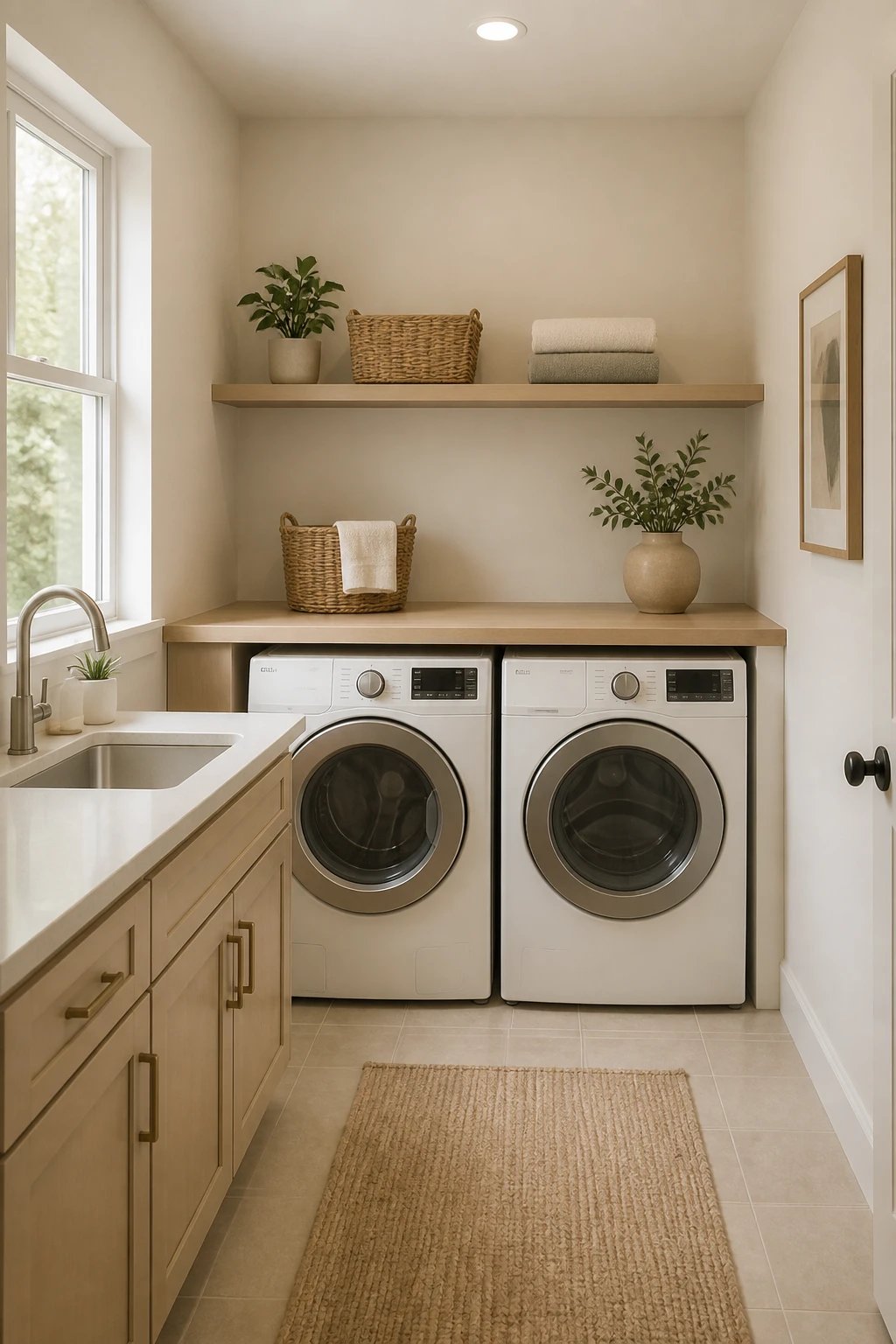
If the hallway has art and plants, your laundry entry deserves the same love. The trick? Choose low-maintenance and purposeful pieces.
- Hang art with glass. It laughs at lint and moisture. Botanical prints or vintage diagrams fit the function without being on-the-nose.
- Add a small plant. A pothos on a high shelf or a snake plant on the bench corner softens the edges.
- Use textiles. A washable runner, a cushion on the bench, and a hand towel near a utility sink warm it up.
Mirror magic
A framed mirror by the door expands the space and gives you a last-minute lint check. Handy, flattering, and sneaky-functional.
Optimize the Laundry Workflow (So It Feels Effortless)
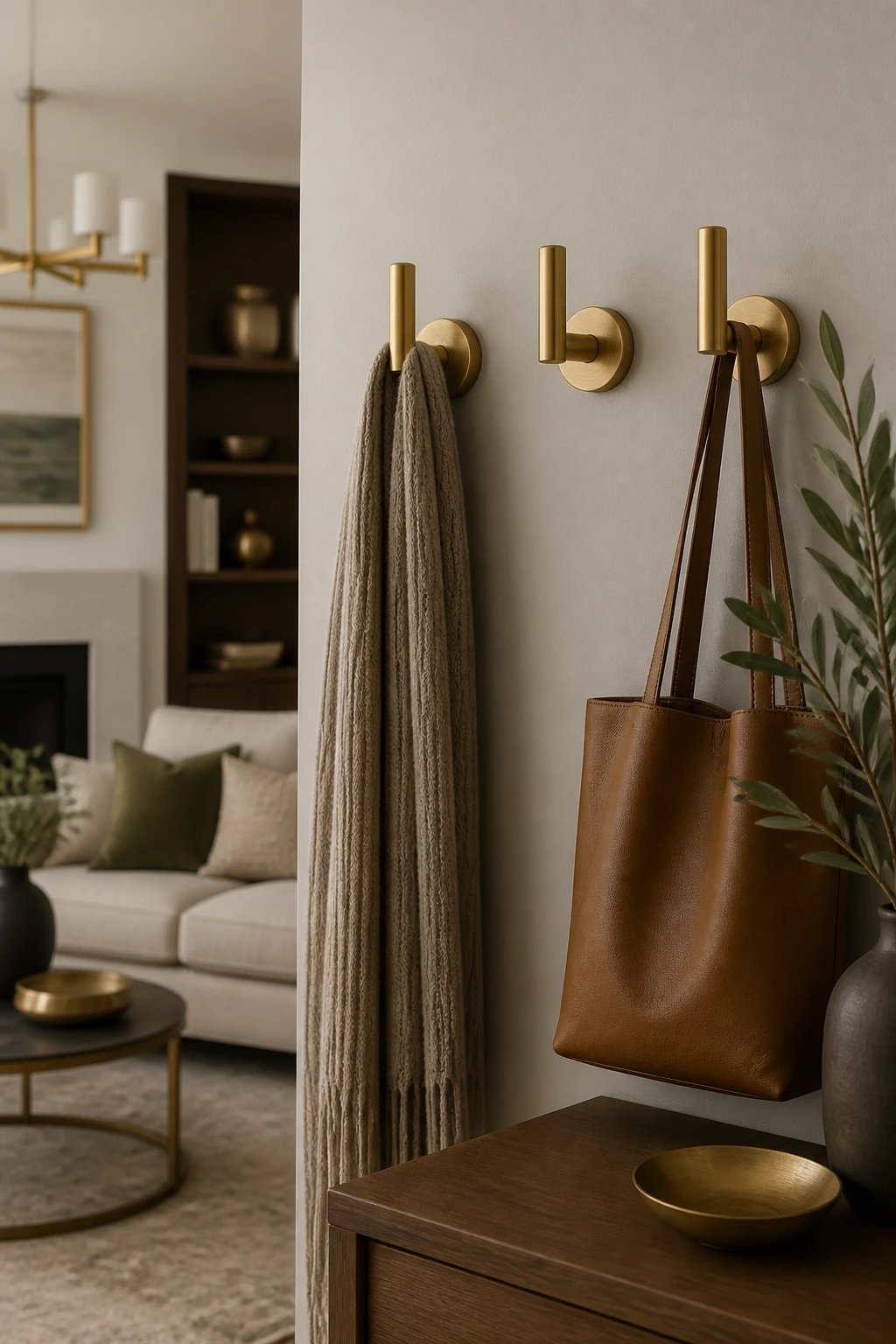
A smooth system makes the space feel bigger. When everything has a place, you stop staging chaos everywhere else.
- Divide hampers by wash cycle. Whites, colors, delicates—label them. You’ll save time and sanity.
- Add a fold-down surface. Mount a wall-hinged table over machines or in a corner. It drops when you need it, disappears when you don’t.
- Install a retractable drying rack. Ceiling-mounted or over-the-door options keep floors clear.
- Create a “kit” zone. Stain sticks, mesh bags, lint rollers in one drawer. No more scavenger hunts.
Acoustic and smell control
Add soft surfaces (runner, cushion) for sound dampening. Use a discreet wall vent or door with a louver panel for airflow. A small plug-in purifier near shoes goes a long way, IMO.
Make Doors Work For You
The wrong door eats space and vibes. The right one solves problems.
- Swap a swing door for a pocket or barn door. Pocket doors disappear; barn doors add style if you have wall clearance.
- Choose a glass panel door with frosted or reeded glass to borrow light while hiding clutter.
- Use over-door real estate. A slim shelf above the door holds extra paper goods or off-season stuff.
Sound matters here too
If machines hum near living areas, choose a solid-core door with weatherstripping. You’ll thank yourself during spin cycle.
Small Space Tricks That Don’t Feel Like Tricks
You don’t need magician-level illusions—just a few careful choices.
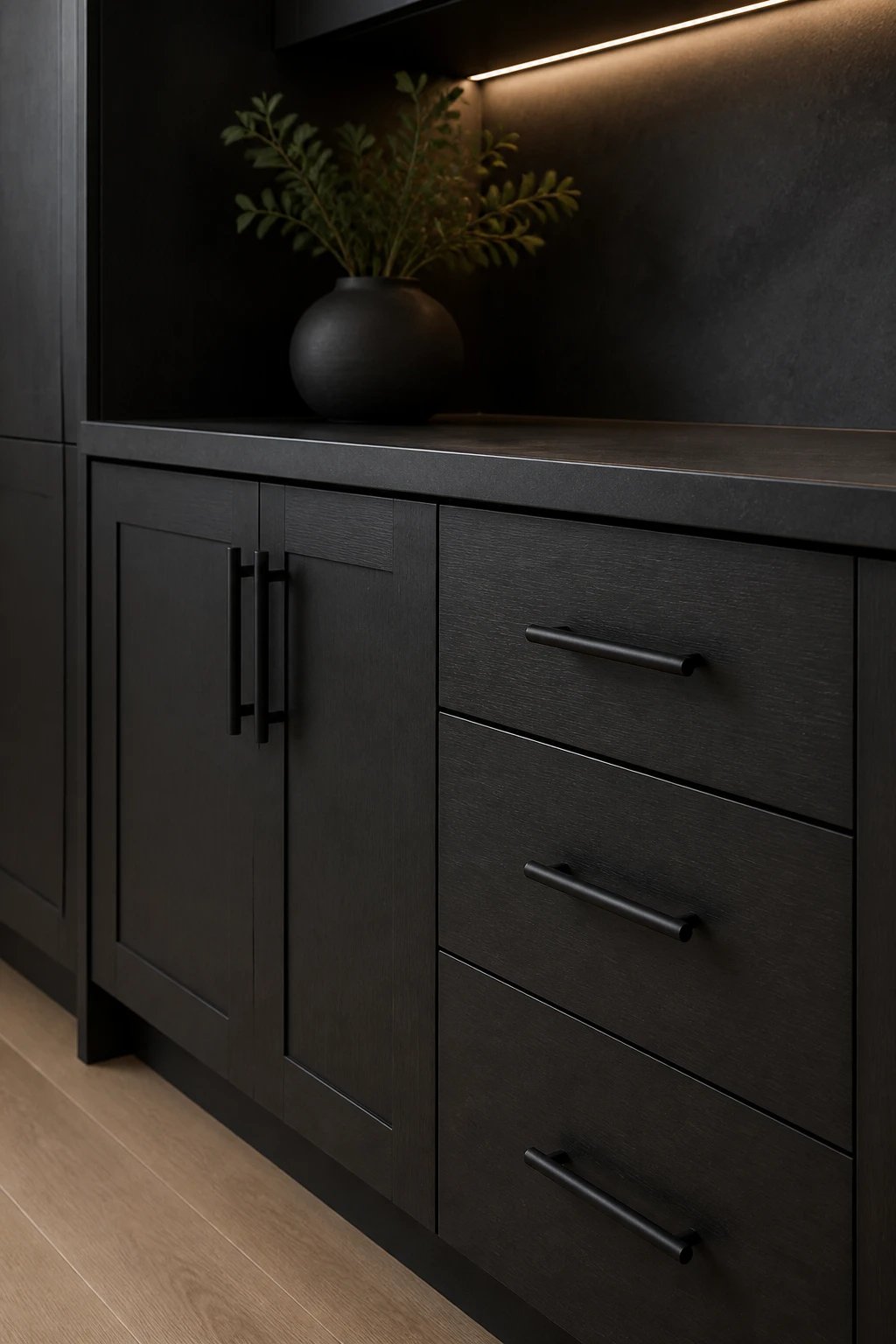
- Repeat materials. Same hardware finish, similar woods, related textiles. It reads calm and cohesive.
- Keep sightlines clean. No tall storage right behind the door. Lower profiles near the entry, taller storage deeper in.
- Use consistent baskets. Matching bins hide chaos and look designed, not cobbled together.
- Label, but pretty. Small metal or leather tags keep order without kindergarten vibes.
FAQ
How do I blend the laundry entry with an open-concept kitchen?
Repeat two elements from the kitchen—cabinet color and hardware finish usually do the trick. Keep counters or drop zones in the same surface family (butcher block with butcher block, quartz with quartz). Add a runner that nods to your kitchen rug so the spaces feel like cousins, not strangers.
What if I have zero room for a bench?
Go wall-mounted: a narrow 4–6 inch deep shelf for keys and sunglasses, plus sturdy hooks below. Slide a couple of slim stacking stools nearby for a perch when you need it. Not ideal, but wildly effective.
Can I use wallpaper in a laundry entry?
Absolutely—choose vinyl-coated or scrubbable options. Keep patterns small-to-medium scale so the tight space doesn’t feel chaotic. Tie the colors back to the adjoining room so it reads intentional, not random accent fever.
How do I keep detergent bottles from looking messy?
Decant into uniform containers with discreet labels, or hide them in a pull-out next to the machines. If you must use original bottles, corral them in a tray or bin so they read as one object instead of a clutter parade.
What lighting level works best?
Aim for layered lighting: bright overhead (around 1,000–1,500 lumens) for chores, plus a warmer task or accent light at 300–500 lumens for mood. Stick to 2700K–3000K bulbs to keep things cozy and consistent with the rest of the home.
How do I handle a weird nook or angled wall?
Custom or semi-custom shelves can tame odd angles. Fill the deeper wedge with closed storage and keep the shallow side for hooks or art. Embrace the quirk—don’t fight it with standard pieces that never fit right.
Conclusion
A small laundry room entry can blend in beautifully when you repeat colors, respect the flooring, hide the chaos, and treat it like a “real” room. Add lighting that flatters, storage that actually works, and a few decor moments that make you smile on spin cycle. Do that, and your laundry entry stops feeling like a pit stop—and starts acting like part of the home, FYI.