

You don’t need a tape measure to make your bedroom look intentional. You just need a handful of rock-solid ratios and the confidence to stick to them. Mattress-to-rug placement isn’t rocket science—it’s geometry with a sprinkle of cozy.
Let’s demystify the sizes, the overhangs, and those annoying room quirks so your rug doesn’t look like it shrunk in the wash.
Why Rug-to-Mattress Ratios Even Matter
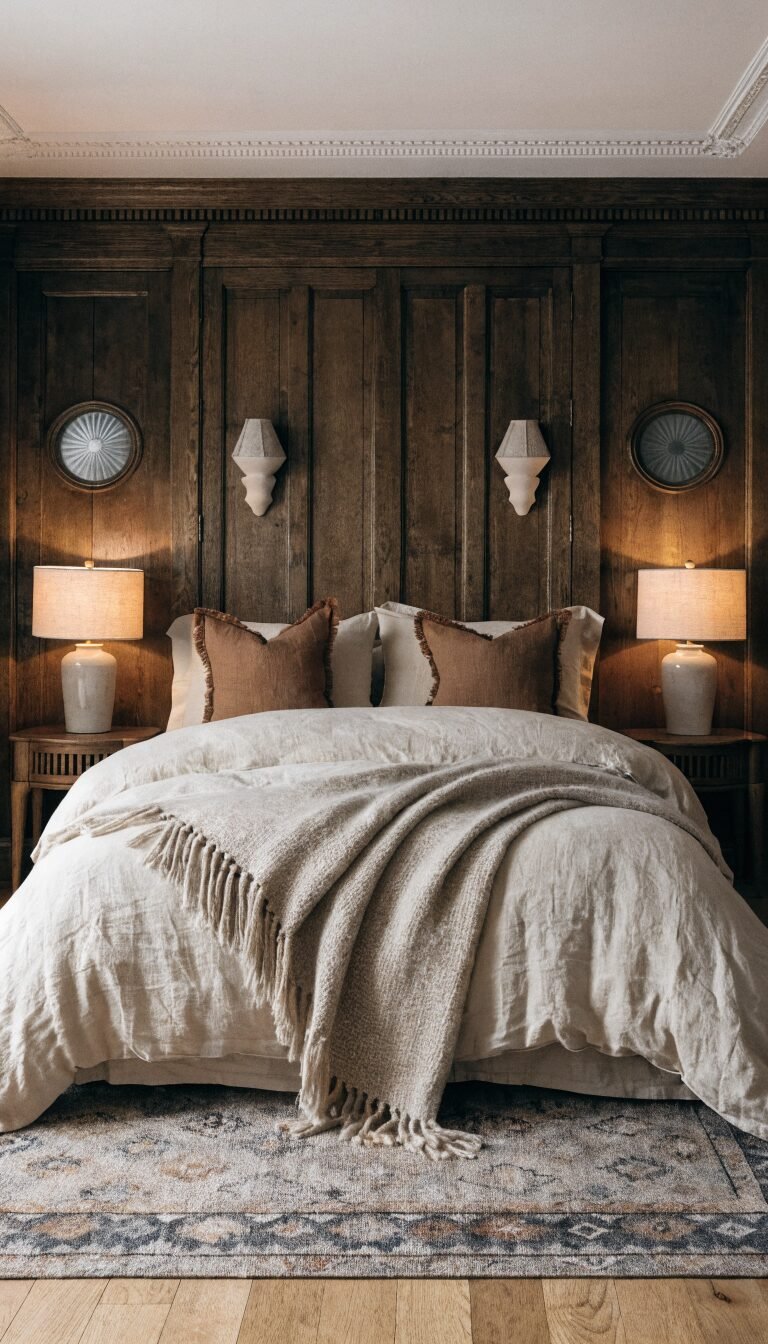
You can buy the prettiest rug on Earth and still miss if it’s the wrong size. Ratios create visual balance, anchor the bed, and make the room feel finished. Too small? It screams “bath mat.” Too big? It bulldozes your floor plan and eats your nightstands.
The goal: a rug that frames your bed, gives your feet a soft landing, and plays nice with your furniture.
The Golden Overhang: How Far Should the Rug Extend?
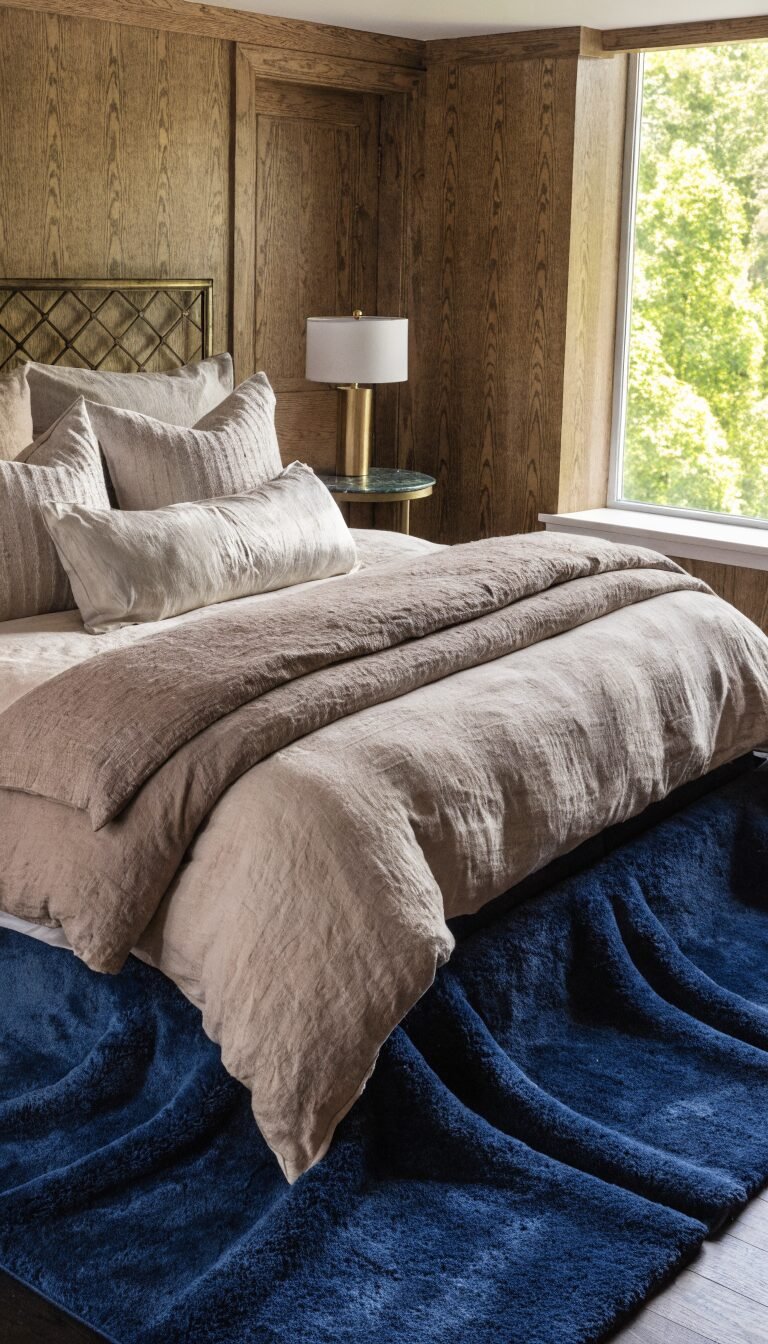
Think of the rug as a stage for your bed. The “overhang” is how far the rug extends beyond the mattress edges.
Sweet spots by bed size:
- Queen (60″ x 80″): Aim for 10–14 inches of rug visible on each long side and 8–18 inches at the foot.
- King (76″ x 80″): 12–18 inches on each side and 10–20 inches at the foot.
- Full (54″ x 75″): 8–12 inches on each side and 6–14 inches at the foot.
- Twin/Twin XL: Skip the big rug and do runners or a 4′ x 6′ offset rug (more on that soon).
General rule of thumb: Keep at least 8 inches of rug at the foot of the bed. That little border makes the whole setup look intentional, IMO.
Real-World Translations (AKA Rug Sizes That Work)
- Queen bed: 8′ x 10′ rug usually wins. In smaller rooms, a 6′ x 9′ can fly if you pull the rug forward.
- King bed: 9′ x 12′ is the safe bet. 8′ x 10′ only works if you accept less side reveal and no nightstand coverage.
- Full bed: 6′ x 9′ pairs well; 8′ x 10′ if you want more luxury and wall-to-wall vibes.
Where Should the Rug Sit Under the Bed?
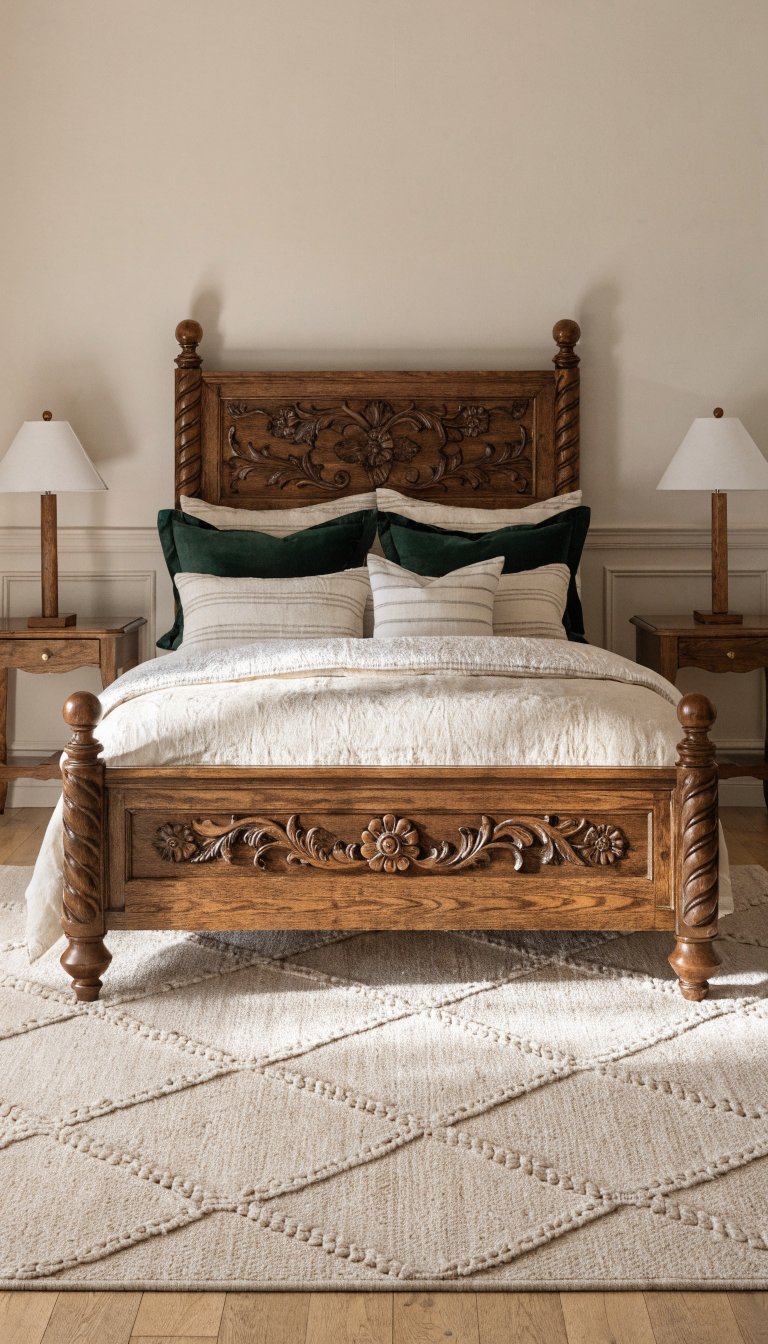
This is where everyone panics. Don’t. You have three clean options, and they all work—just pick based on room size and furniture layout.
- Only the lower two-thirds of the bed on the rug
Slide the rug down so it starts a few inches in front of the nightstands. This keeps them off the rug and avoids wobbly lamp syndrome. - Bed frame and nightstands fully on the rug
This reads luxe and hotel-like. You’ll need a larger rug (9′ x 12′ for king, 8′ x 10′ for queen) to maintain proper side reveals. - Just the front legs of the bed on the rug
Budget- and small-room-friendly. You still get softness underfoot without swallowing the whole floor.
FYI: Keep the rug at least 6 inches away from walls or baseboards. Let the floor breathe.
Alignment Essentials
- Center the rug to the bed, not the room. Off-center beds happen—align with the headboard wall and call it a day.
- Mind door swings. Door hits rug? Trim the placement or size down. No one wants a scuffed corner that curls forever.
Nightstands: On, Off, or Half-On?
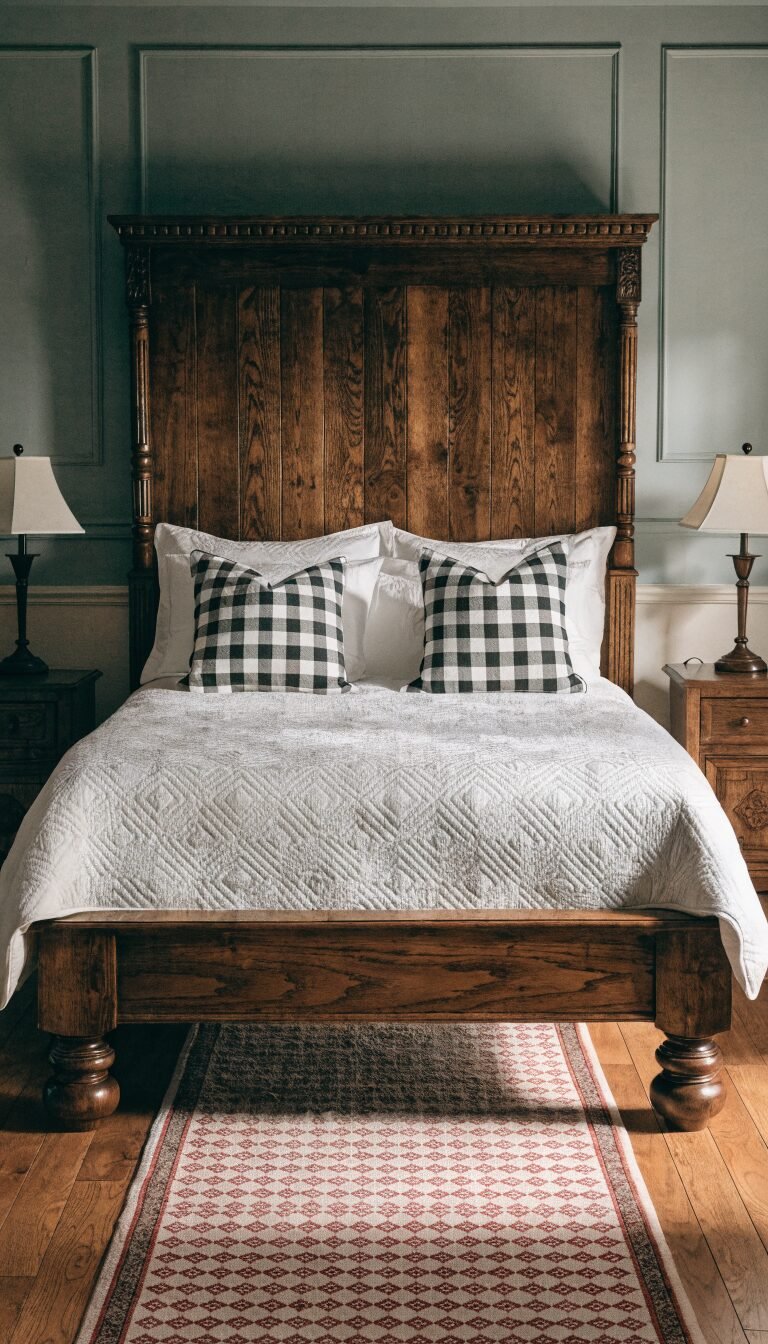
Nightstands cause more drama than they deserve. Here’s the deal:
- Keep nightstands off the rug when you use a smaller rug (6′ x 9′ for queen). Cleaner placement, easier vacuuming, lamps don’t wobble.
- Place nightstands fully on for a polished, layered look—just make sure the rug extends at least 6–8 inches beyond the outside edges of the nightstands.
- Half-on is a no-go unless you enjoy drawer tilt and visual chaos.
Headboards and Bed Frames
Don’t shove the rug all the way under the headboard legs. Let the rug start 6–12 inches below the nightstands (or roughly at the front feet of the nightstands). It creates a clean “reveal” line and stops the rug from getting pinched.
Small Rooms, Big Style: Smart Workarounds
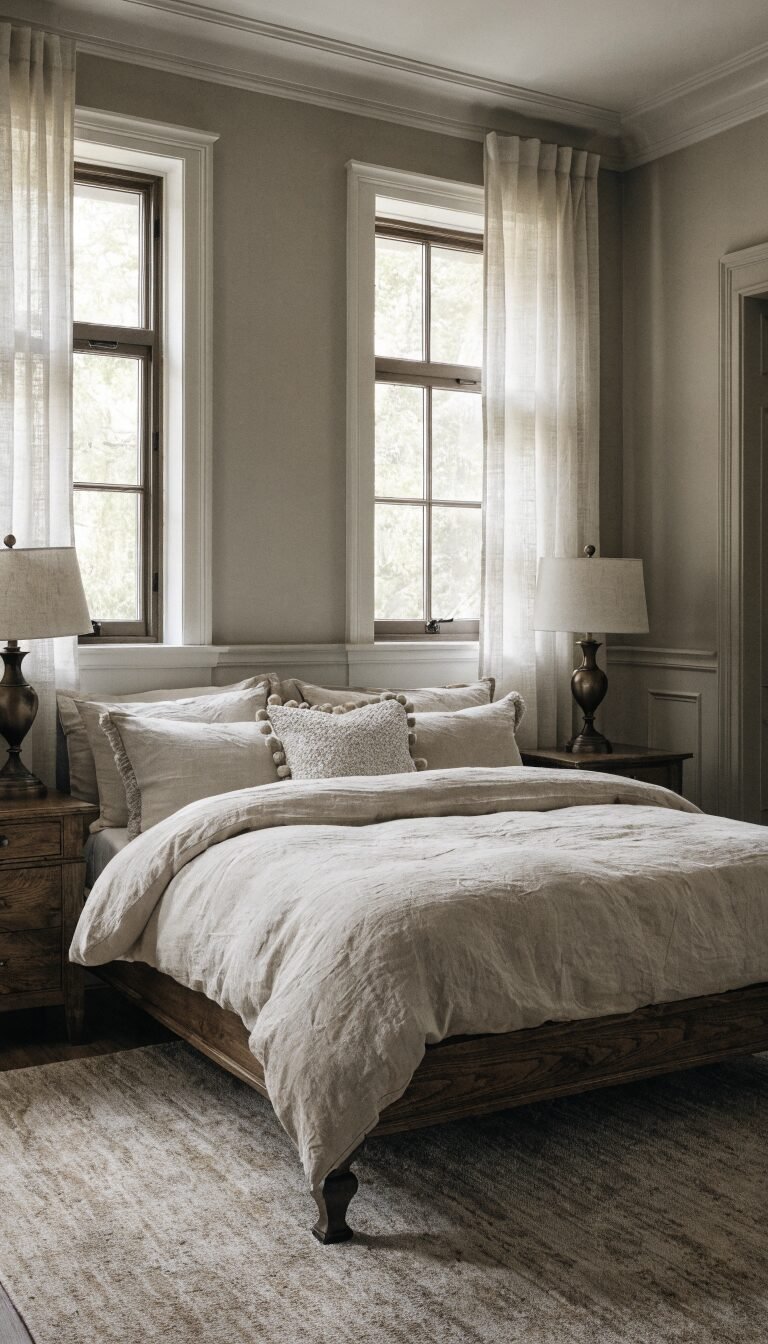
Tight bedroom? Same. You can still land a high-end look without a huge rug.
- Use side runners (2.5’–3′ x 7′) on both sides of a queen or king. Perfect symmetry, easy to clean, and looks tailored.
- Try one oversized runner on the most-used side of the bed if it sits against a wall. Keep it 6–12 inches out from the frame.
- Go offset with a 4′ x 6′ or 5′ x 7′ angled slightly under the lower corner of a twin or full. It feels designed, not accidental.
- Consider a custom cut if you have weird nooks. A bound broadloom can give you the perfect dimensions without hunting unicorn rugs.
Layering Rugs for Texture
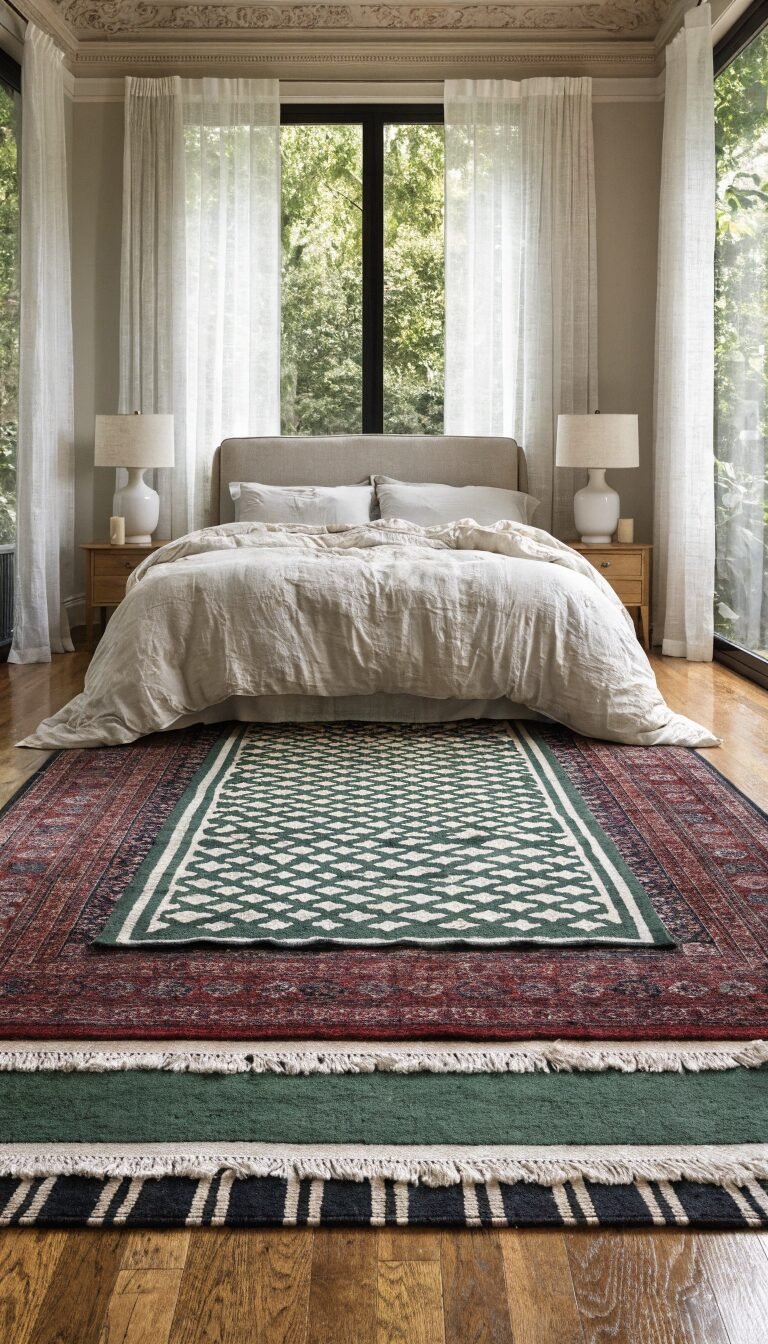
Lay a large, flat-weave base (say 8′ x 10′) and then layer a smaller plush rug under the lower third of the bed. You get visual depth and that sink-your-toes feel right where you want it.
Thickness, Pile, and Pad: Comfort Without the Trip Hazard
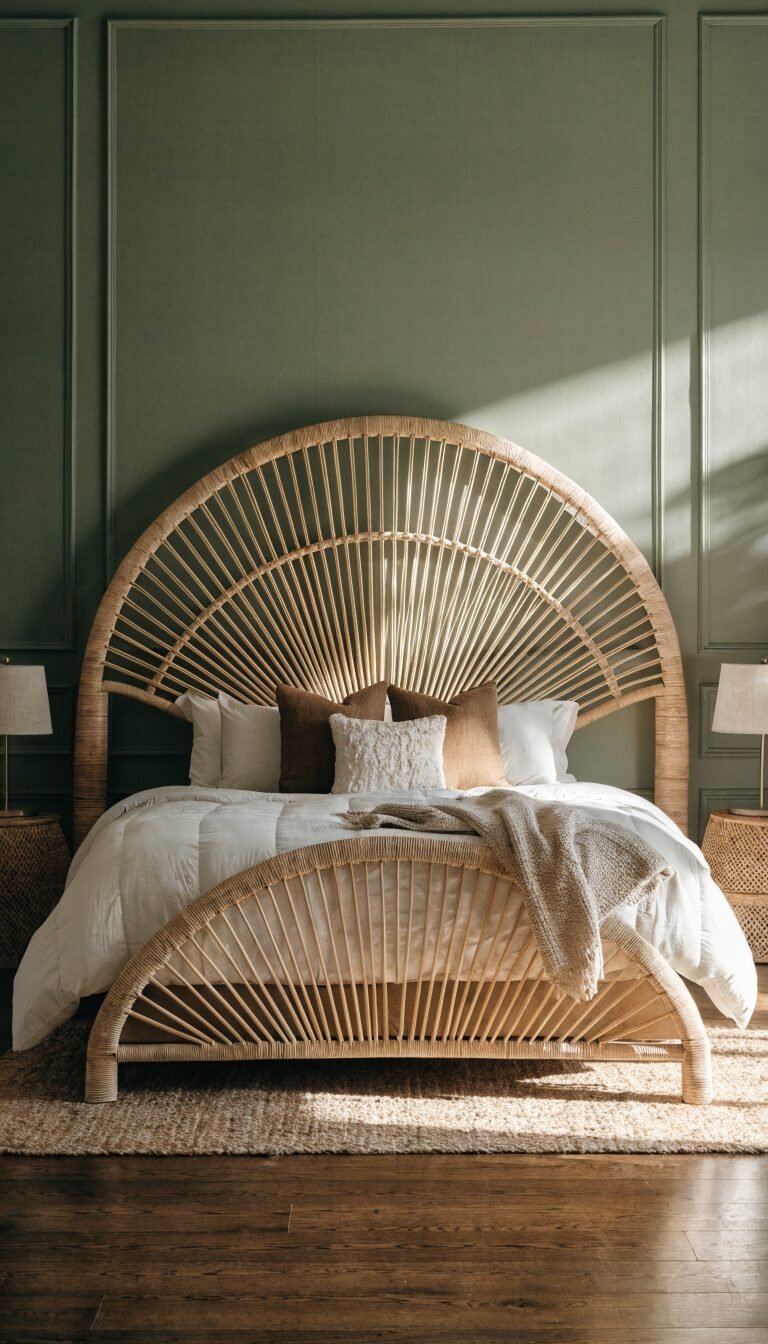
A pretty rug that trips you at 6 a.m. is not your friend. Think proportions here too.
- Low to medium pile (0.25″–0.5″) slides under bed frames easily and won’t fight doors.
- Use a felt or natural rubber pad cut 1–2 inches smaller than the rug. It adds cushion, keeps the rug from migrating, and helps with acoustics.
- High-pile or shag looks lush but traps dust and snags on casters. Great for accent layers, not the base rug under a heavy bed.
Pattern and Scale
Match rug scale to bed mass. Heavy, dark bed? Balance it with a medium-to-large pattern. Light, airy frame? Smaller pattern or solid texture works. And align stripes perpendicular to the bed length to visually widen the room, FYI.
Common Layouts You Can Copy
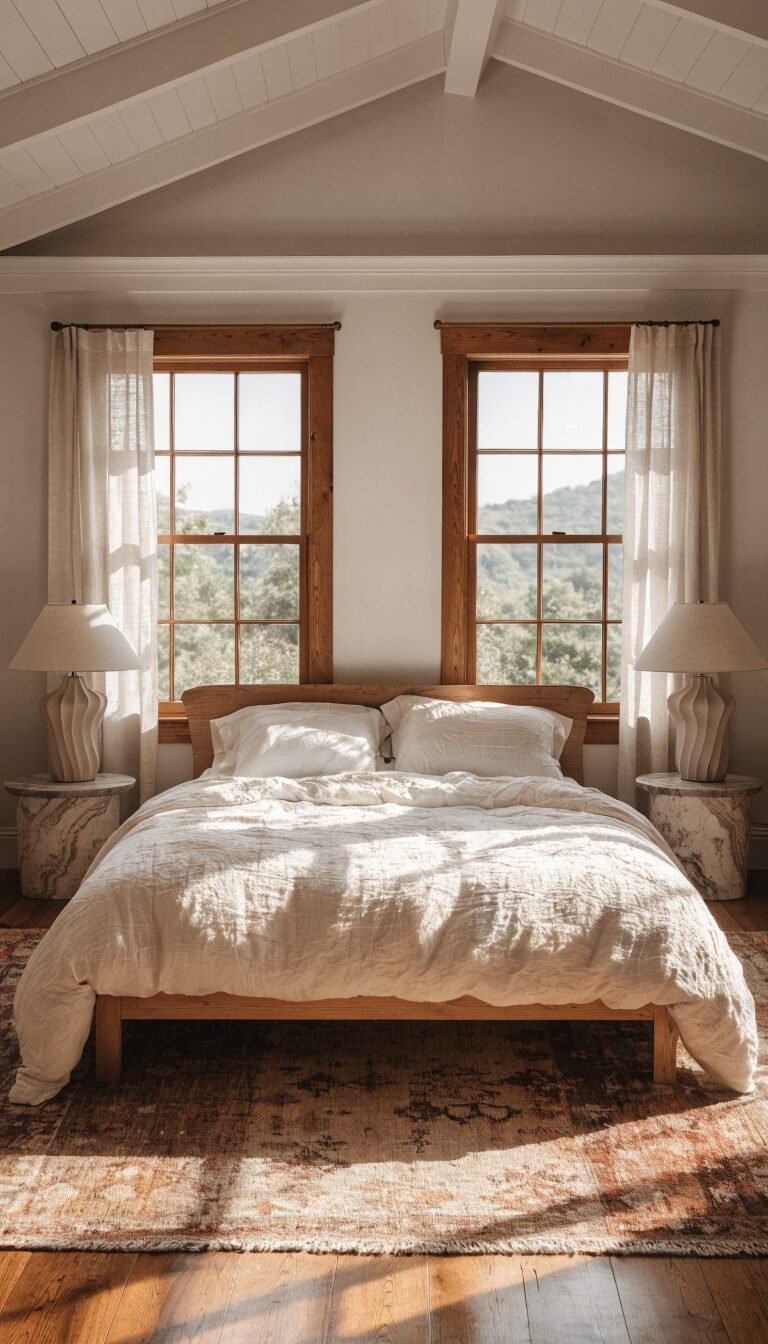
Sometimes you just want plug-and-play. Here are foolproof combos:
- Queen + 8′ x 10′ rug: Front two-thirds of the bed and both nightstands on the rug. About 12 inches reveal on each side and 10–14 at the foot.
- King + 9′ x 12′: Entire bed and nightstands on. Keep 12–18 inches side reveal; aim for 12–16 at the foot.
- Full + 6′ x 9′: Front legs on, nightstands off. Expect ~10 inches side reveal and 8–10 at the foot.
- Twin + two 2.5′ x 7′ runners: One on each side if the bed floats; or a single runner on the open side if the bed hugs a wall.
Quick Math Cheats (So You Don’t Overthink It)
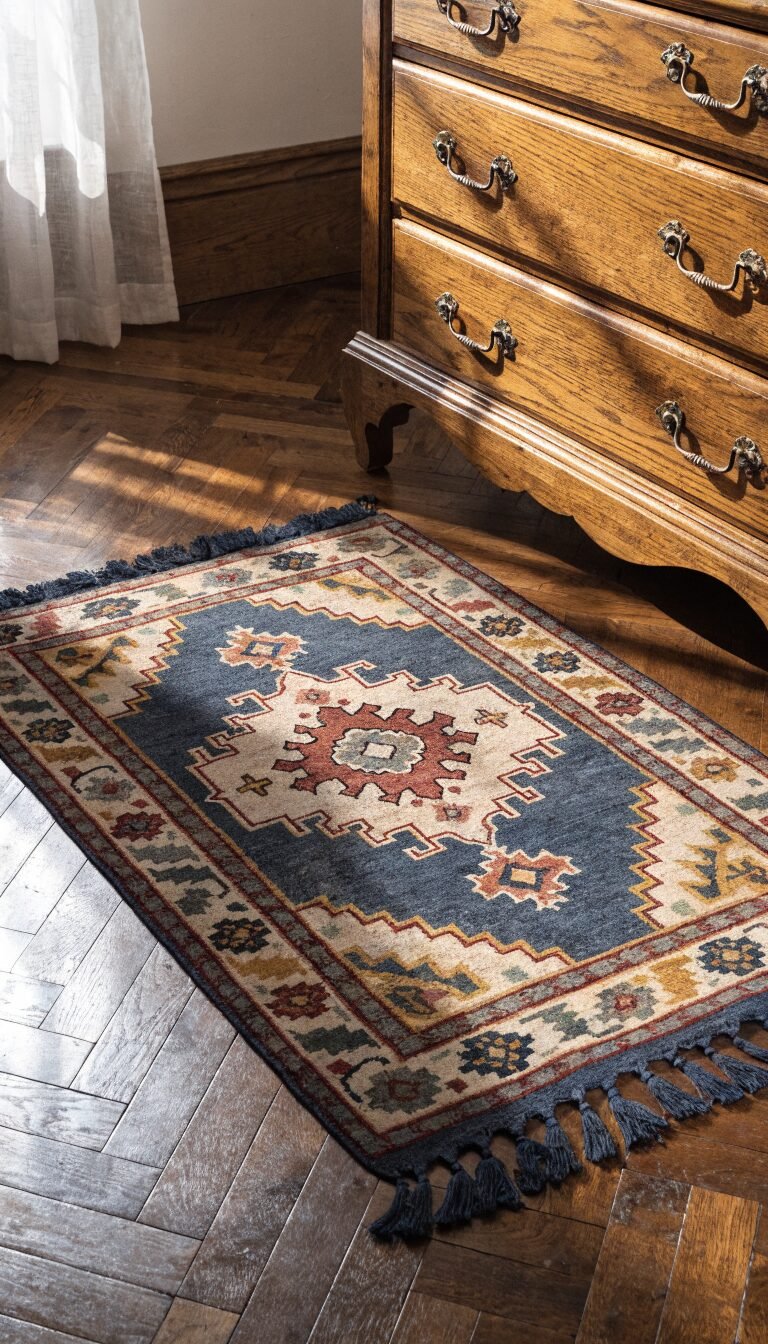
When in doubt, run these numbers:
- Side reveal target: Mattress width + 20–36 inches = ideal rug width.
- Foot reveal target: Mattress length + 12–36 inches = ideal rug length.
- Clearance buffer: Leave 6–12 inches between rug edge and walls or door swings.
- Nightstand test: If nightstands land half-on, size up or slide the rug down until they’re fully off.
FAQ
Should the rug go under the nightstands?
It depends on the look you want and your rug size. If your rug feels tight, keep nightstands off and slide the rug down to start just below them. For a luxe hotel vibe, put nightstands on—but make sure the rug extends beyond their outer edges so it doesn’t look stingy.
Can I use a 5′ x 8′ under a queen bed?
You can, but it’ll look skimpy. You’ll end up with tiny side reveals and probably no rug at the foot. If 5′ x 8′ is what you have, push it forward so only the lower third of the bed sits on it and treat it like an accent layer.
What about platform beds or beds with footboards?
Platform beds visually weigh more, so they like bigger rugs. Footboards reduce your visible foot reveal, so compensate by sliding the rug further forward or sizing up to keep some rug breathing room at the end.
How do I stop the rug from bunching under the bed?
Use a dense felt pad and place the rug first, then the pad, then the bed. Smooth from the center out. If your frame has center support legs, align the rug to avoid a crease line right under them.
Is a round rug under a bed a bad idea?
Not bad—just tricky. Round rugs work best with twin or full beds and when the bed doesn’t have nightstands crowding the circle. Center the arc under the lower half of the bed and keep plenty of floor showing so it reads intentional, not like a pizza under your box spring.
Do I need a rug if I have carpet?
Layering a rug over carpet actually looks great. It adds definition, color, and texture. Choose a low-pile rug on top and a thin pad to prevent creeping. Bonus: it protects the carpet in high-traffic zones.
Conclusion
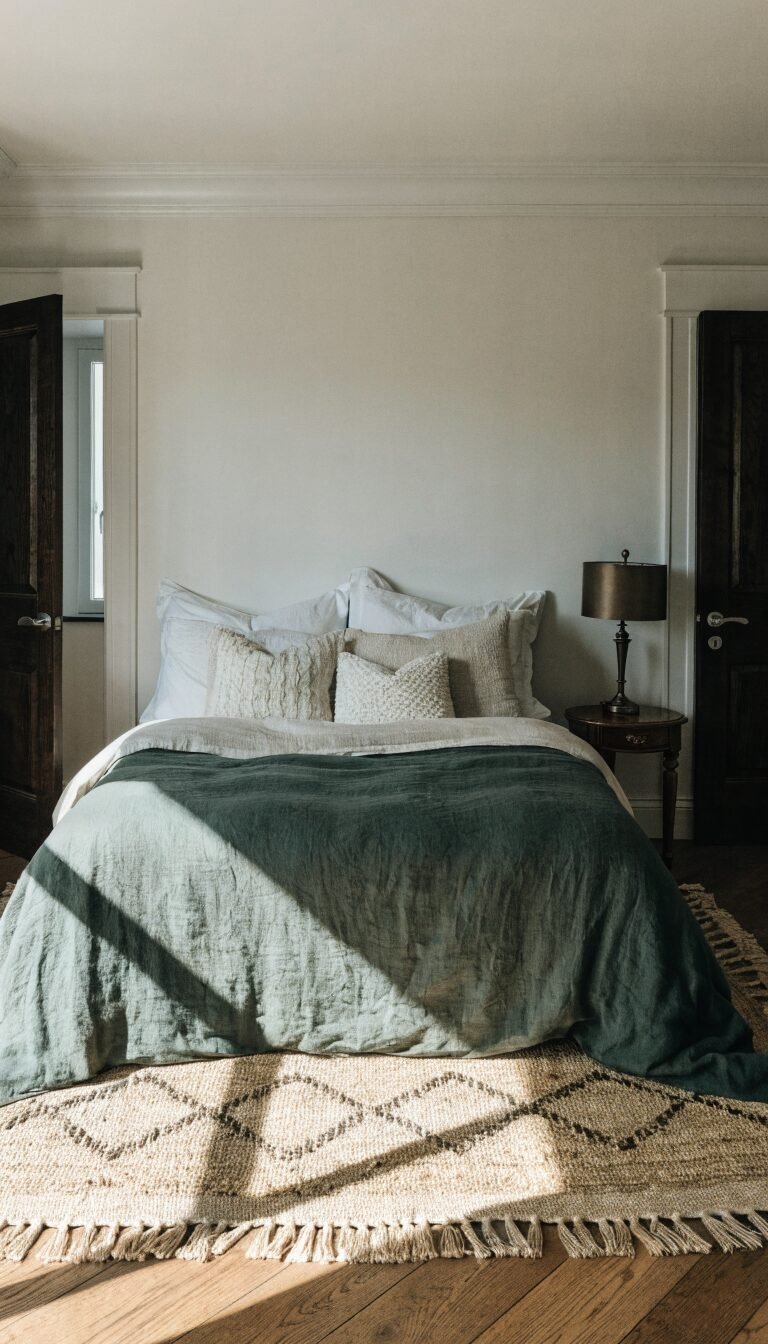
You don’t need a showroom or a spirit level to nail rug placement—just reliable ratios and a little nerve. Prioritize side and foot reveals, decide if nightstands live on or off, and keep door swings and walls in mind. Then trust your eye. If it feels balanced and your toes hit softness in the morning, congrats—you just aced the mattress-to-rug math, IMO.