
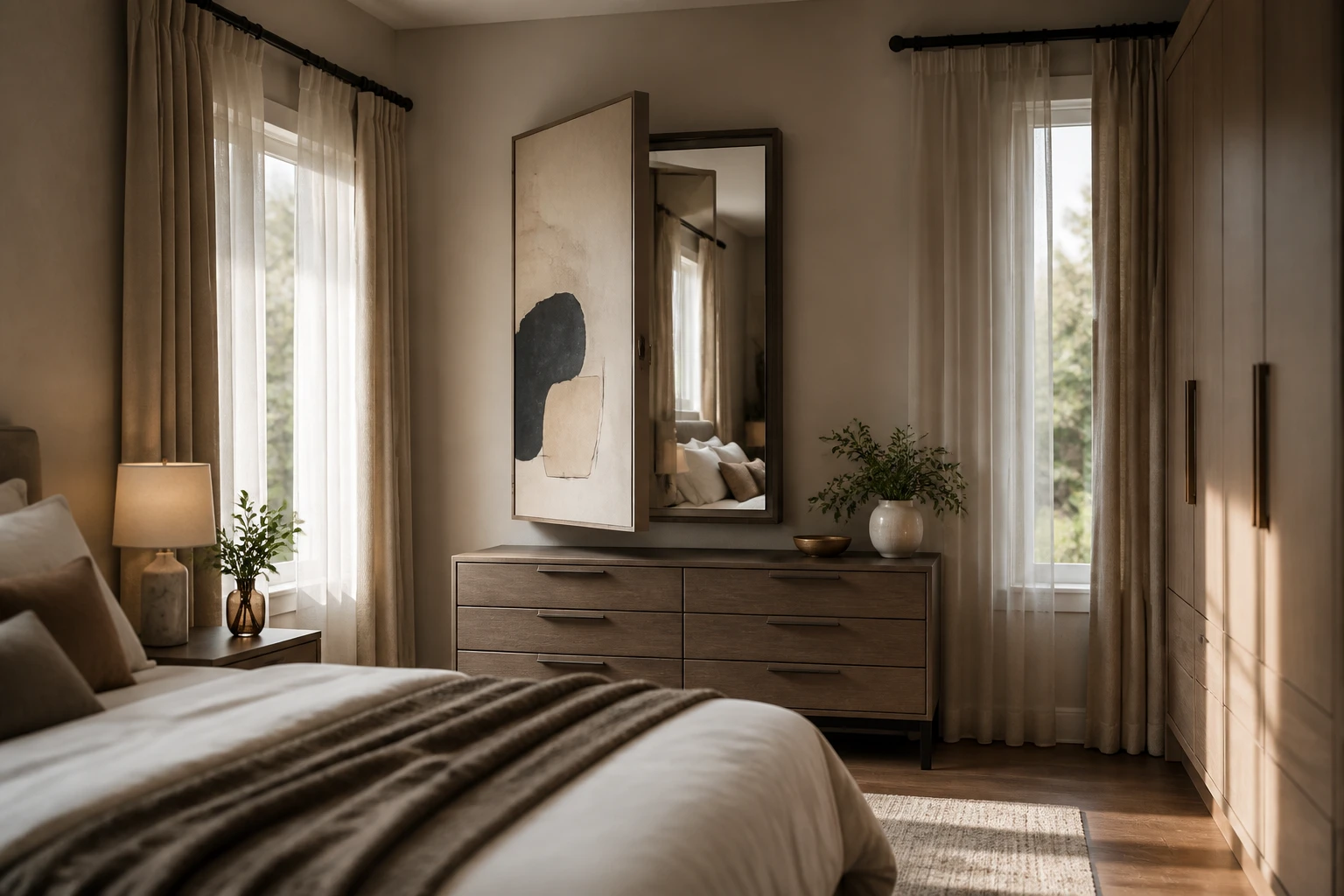
You want a mirror in your bedroom, but you don’t want it shouting “LOOK AT ME” every time you walk in? Totally fair. Hidden mirrors solve all the practical stuff—light, depth, last-minute outfit checks—without killing the vibe. Let’s sneak them into your decor in ways that feel clever, intentional, and kinda magical. Ready to play hide-and-seek with reflections?
Slide It Behind Art (Yes, Really)

Hide a slim mirror behind a framed art piece on a hinge or sliding rail. You get gorgeous wall art 99% of the time, and a mirror when you need it. Think: gallery wall by day, glam station by night.
How to pull it off
- Use a shallow frame with a lightweight print to keep everything easy to move.
- Install soft-close cabinet hinges or a barn-style mini rail so it glides smoothly.
- Mount the mirror securely to studs or use heavy-duty anchors. Safety first, vanity second.
Best spots
- Next to the closet entrance
- Above a low dresser
- Between windows where light’s already decent
Pro tip: Frost the mirror edges or pick a frame that overlaps the mirror border to hide seams. It looks custom, and IMO it’s worth the extra 20 minutes.
Make Your Closet Door Do Double Duty

No one said your closet door has to be boring. Add a full-length mirror to the inside, or go stealth with a panel that flips out from the side. You’ll never know it’s there—until you need it.
Three smart approaches
- Inside-mounted mirror: Classic. Cheap. Effective. Perfect if your door clears clothing.
- Flip-out panel: Install a narrow mirror on a piano hinge along the door jamb. It tucks away like a secret.
- Sliding pocket mirror: Build a shallow cavity beside the door where a mirror panel slides in. High effort, high reward.
FYI: If your closet light sucks, mount a magnetic LED strip above the mirror. Instant glow-up (literally).
Bedside Panels With a Hidden Shine

Create sleek vertical panels behind your nightstands, then hide mirrors within them. The trick? Use slatted wood, fabric-wrapped panels, or decorative screens and inlay the mirror behind a cutout. It reflects light but doesn’t scream “mirror.”
Design moves that look designer
- Slatted wood + mirror backing: Light bounces between slats for a soft shimmer—so pretty at night.
- Fabric panel with a crisp cutout: Upholster MDF, then frame a clean rectangle to reveal mirror.
- Antiqued mirror for a muted, luxe vibe—zero glare, all ambiance.
Bonus: This makes small rooms feel taller because your eye reads vertical lines and reflections as height. Sneaky and effective.
Disguise It As Décor: Trays, Doors, and Nooks

Mirrors don’t need to be giant to be useful. Tuck small reflective surfaces where you naturally pause—then watch your room brighten without any obvious “mirror energy.”
Small-but-mighty ideas
- Mirrored tray on a dresser: Not a “mirror,” right? But it reflects light, jewelry, candle flicker—instant glow.
- Mirrored cubby back: Line the back of a shelf or niche. It multiplies your decor and looks expensive for almost no cost.
- Inside-a-cabinet mirror: Mount a small mirror inside a wardrobe or vanity door. Subtle and super practical.
IMO: A mirrored shelf back might be the highest ROI move here. Cheap, fast, and very “wait, why does this look so good?”
Let Your Headboard Hide the Goods

Integrate a mirror panel into your headboard—but keep it hidden behind sliding fabric or wood screens. You’ll get function when you stand beside the bed, not glare when you’re trying to sleep. Your eyeballs will thank you.
Execution details
- Split-headboard design: Think two panels with a narrow mirror between them, covered by a sliding slat or fabric door.
- Side-access mirror: Place mirrors on the outer edges of the headboard—great for checking hair or earrings.
- Use matte finishes around the mirror to keep reflections controlled and cozy.
Pro tip: Avoid direct line-of-sight from bed to mirror. If you see movement while half-asleep, you’ll definitely invent ghosts.
Built-In Mirror Drawers and Secret Vanities

Hide a mirror flat inside a drawer or behind a flip-top vanity. You open it, it pops up, and boom—mini makeup station, zero clutter. Like a spy gadget but less dramatic.
What you’ll need
- Flip-up hardware with stay-open hinges so you don’t wrestle the lid.
- Shatter-resistant acrylic if you’re rough on drawers or in a small space.
- Compartment dividers for brushes, watches, or that one lip balm you keep losing.
FYI: Run a cable grommet to the back for a hidden outlet and stash a rechargeable task light inside. Small luxuries = big mood.
Mirror Magic Without the Obvious Shine

You can still get the benefits without installing a traditional mirror. Use finishes that bounce light softly, so everything feels brighter but not blinding.
Low-key reflective alternatives
- Plexi with a light tint: Softer reflection, less glare.
- Bronze or smoky mirrors: Moody, grown-up, and less “mall dressing room.”
- Mirrored tile mosaics tucked into a niche: Sparkle without a big reflective slab.
IMO: Smoky glass panels make any bedroom feel boutique-hotel chic. Pair with dimmable sconces and pretend you live in a design magazine.
FAQ

Will a hidden mirror make my room feel bigger?
Yes, if you place it thoughtfully. Aim it toward windows or lighter walls to bounce brightness and create depth. Just avoid reflecting clutter—no one wants double laundry piles.
How do I keep hidden mirrors from feeling gimmicky?
Blend them into existing architectural lines. Use materials that match your room—same wood tone, same fabric family, same hardware finish. When it looks like it belonged there all along, it reads intentional, not “Pinterest panic project.”
What size mirror works best in a bedroom?
For function, full-length rules. For subtlety, go narrow and tall or small and strategic. If you only have space for a tiny mirror, place it eye-height near good light and you’ll still use it daily.
Are antiqued or tinted mirrors worth it?
Totally. They soften reflections, hide fingerprints better, and add warmth. If your bedroom skews cozy or moody, tinted mirrors blend in while still doing their job.
Any safety tips for installing hidden mirrors?
Use proper anchors, mount into studs when possible, and choose tempered or acrylic mirrors in high-traffic spots. Add edge banding or frames to protect corners. If it moves—hinges, sliders, flip-tops—test the mechanism 20 times before calling it done.
Can I DIY these ideas without fancy tools?
Many, yes. Hinged art, inside-door mirrors, and mirrored trays rank beginner-friendly. Sliding panels, pocket mirrors, and built-ins need better tools and patience. When in doubt, bribe a handy friend with pizza.
Wrap-Up: Hide the Mirror, Keep the Magic


You don’t need a giant reflective slab to make your bedroom feel brighter, bigger, and more functional. Tuck mirrors into doors, panels, art, and nooks, and let them quietly do their thing. Blend materials, mind your sightlines, and keep it playful—because design should be fun, not fussy. Now go hide a mirror like a decor ninja.