
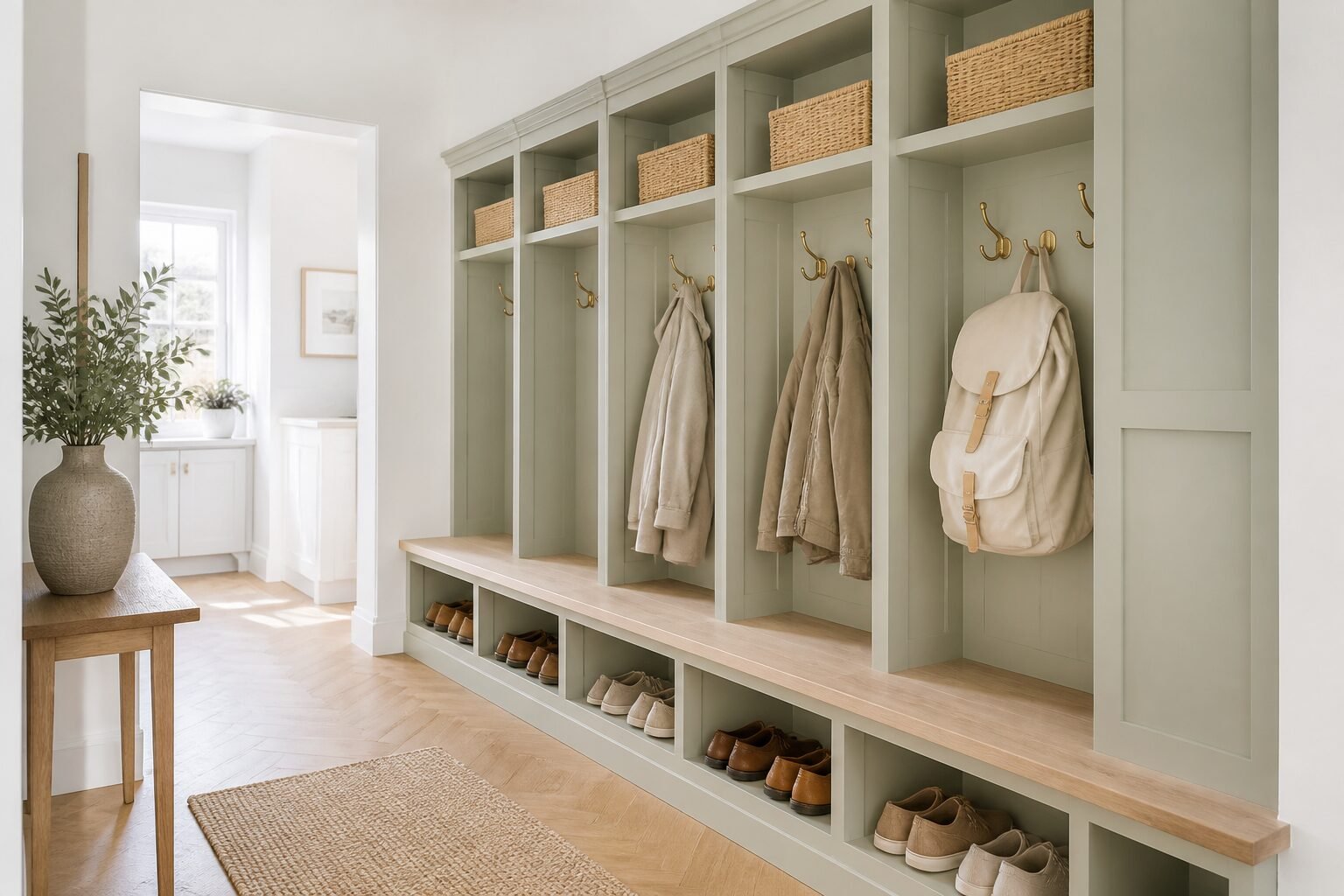
Mudrooms swallow clutter for breakfast—until they don’t. Tiny entryways collect shoes, backpacks, keys, and the occasional mystery sock, and then boom: chaos. The fix? Smart, compact lockers that create designated drop zones without eating your floorplan. Let’s tour ten brilliant locker ideas that actually work in small spaces—and look good doing it.
Why Drop-Zone Lockers Save Your Sanity

You don’t need a full room to nail a mudroom vibe. You need structure and a little strategy. Drop-zone lockers give every item a “home,” so you stop dumping everything on the nearest chair (we’ve all done it).
Big win: You can customize lockers to your family, your stuff, and your weirdly narrow hallway. Because yes, the hallway deserves storage too.
1) Slim Shaker Cubbies With Hooks

Clean lines. Zero visual noise. Slim Shaker-style lockers slide into tiny entryways and look intentional, not bulky.
- Width sweet spot: 14–18 inches per locker
- Depth: 12–15 inches so doors don’t hog space
- Hardware: double hooks for bags + coats
Pro tip: The triple-tier trick
Divide each locker into three zones:
- Top cubby: baskets for hats and gloves
- Middle: hooks for daily gear
- Bottom: shallow bin for shoes
You get more function with less bulk. IMO, this layout wins for families.
2) Bench-Locker Hybrids (AKA, Sit-Down-Please Stations)

You need a place to sit while wrestling boots. Add a bench with built-in lockers above and drawers below.
- Seat height: 17–19 inches for easy on/off
- Drawer depth: 18–21 inches for bulky shoes
- Vent the drawers: slatted fronts keep things fresh-ish
Drawer vs. basket?
– Drawers: smooth, hidden, great for tight walkways
– Baskets: quick access, breathable, charming but less sleek
3) Narrow Hallway Lockers With Sliding Doors

Swing-out doors can block tiny walkways. Swap them for sliders and save your shins.
- Track style: recessed top track + floor guide (low profile)
- Panel design: tongue-and-groove or perforated metal for airflow
- Bonus: add integrated finger pulls to avoid hardware snags
FYI: Sliding doors hide mess fast. When company arrives, it’s a swoosh-and-smile situation.
4) Locker Columns That Stop Short of the Ceiling

Go vertical, but not all the way. Leave a 6–12 inch gap up top for lightness and stash overflow bins.
- Why it works: keeps the room feeling taller
- Good for: tiny apartments and entry nooks
- Materials: painted MDF or birch ply for a budget-friendly build
What to store up top
– Seasonal gear
– Rarely used tools
– Beach bags (manifest summer)
5) Metal Mesh “Team Locker” Vibes

Want durability and a little industrial attitude? Metal lockers with mesh doors look cool and breathe well.
- Finish ideas: matte black, olive, or powder-coated white
- Inside: add shelf + center hook + bottom tray
- Floor saver: add rubber boot trays to catch drips
IMO: great for teens, sports families, and dog owners with endless leashes.
6) Wall-Mounted Lockers Over a Slim Shoe Cabinet

No floor space? Float the lockers. Mount shallow cubbies with hooks, then pair with a 7–9 inch deep shoe cabinet below.
- Clearance: 12–14 inches between cabinet top and cubbies—perfect for keys
- Safety: use heavy-duty anchors or hit studs
- Bonus: makes the room feel bigger thanks to the open toe-kick area
Hidden tech shelf
Run a slim power strip inside a cubby for charging. Park phones and earbuds, hide the cables, reclaim sanity.
7) Family-Zoned Lockers With Color Coding

If you share a small entry, make it obvious where stuff goes. Assign each person a color and label.
- Color picks: muted tones (sage, slate, sand, denim) keep it calm
- Labels: engraved tags or magnetic nameplates
- Add-ons: clipboards inside doors for permission slips and mail
Result: No more “Mom, where’s my backpack?” You’ll actually know.
8) Pocket-Door Mud Niche

Got a weird recess by the door? Turn it into a micro-mudroom with pocket doors that disappear when open.
- Inside layout: 2 hooks + single shelf + drop tray
- Depth target: 14–16 inches so coats fit
- Finish: same color as the wall so it blends
Acoustic bonus
Pocket doors muffle the “thunk” of backpacks. Your hallway stops sounding like a gym locker room.
9) Glass-Front Lockers for Visual Accountability

Want everyone to put things back? Make contents visible. Frosted or ribbed glass doors keep it tidy-looking without hiding everything.
- Glass type: reeded, fluted, or satin-etched for privacy
- Frame: slim stile-and-rail looks clean
- Inside: use matching bins for a uniform vibe
FYI: Transparent-ish doors nudge better habits. People behave when the mess shows.
10) Modular Lockers You Can Reconfigure
You’ll move. Kids will grow. Seasons will shift. Modular units adapt without drama.
- Stackable cubes: mix doors, drawers, and open slots
- Mounting rail: French cleats let you swap pieces in minutes
- Future-proof: add a pet station, umbrella slot, or mail sorter later
Material mix that lasts
– Plywood carcasses
– Hardwood face frames
– Durable enamel paint or laminate interiors
It wears well and wipes clean. Your future self will thank you.
Smart Space Tricks That Make Small Entryways Work
Because the layout matters as much as the locker design.
- Lighting: sconces or LED strips under shelves so you can see the black mitten in a black cubby
- Flooring: porcelain tile or LVP; add a washable runner with a grippy pad
- Hooks: mount double hooks at two heights—grownups up, kids down
- Drip control: boot trays with absorbent liners; swap seasonally
- Door swing: reverse hinges if your main door fights the lockers
Budget and DIY Notes
You don’t need custom millwork to get a built-in look. Hack it.
- Flat-pack base: use cabinet boxes, add a wood top and face frames
- Paint color: match the walls for “built-in” magic
- Hardware: oversized hooks and long pulls feel upscale
- Time estimate: a weekend for paint and install, longer if you add doors
When to call a pro
– Uneven walls or floors
– Electrical in the way
– Pocket door or built-in lighting
A carpenter can save your weekend and your sanity, IMO.
FAQ
How deep should a mudroom locker be in a small entry?
Aim for 12–16 inches deep. Twelve inches works for hooks and slim baskets; 14–16 inches handles bulkier coats without door bulge. Keep aisles at least 36 inches wide so you don’t shoulder-check your storage daily.
What’s the best material for durability and easy cleaning?
Painted plywood or MDF with a tough enamel finish looks crisp and wipes clean. Add metal hooks and vinyl- or laminate-lined bottoms for wet shoes. If you want indestructible, powder-coated metal lockers shrug off scuffs like champs.
How do I keep the entry from smelling like wet dog and gym socks?
Ventilation and absorbency. Use mesh or slatted doors, add silica gel or charcoal sachets in each locker, and line boot trays with washable mats. Crack a window or add a small, quiet fan if the space traps moisture.
Can I make lockers work behind a door that opens into the space?
Yes—pick shallow units, mount them on the hinge side of the door swing, or choose sliding doors. If the door still clashes, reverse the swing or install a barn-style slider. Sometimes the cheapest fix is moving the conflict, not the cabinet.
How many hooks per locker do I need?
Two minimum, three ideal. One high for coats, one mid for bags, and an extra for scarves or lanyards. Double hooks count as two and save space—small entry MVPs.
Do I need doors, or will open cubbies look fine?
Open cubbies feel lighter and faster to use. Doors hide chaos and keep dust down. In tight spaces, I like a hybrid: doors for adult lockers, open cubbies for kids so they actually use them, FYI.
Wrapping It Up
Small entryways don’t need to suffer. With smart, slim lockers and a few layout hacks, you’ll corral shoes, coats, and daily drop-offs without sacrificing precious square footage. Pick a style—Shaker, mesh, modular—and tailor the inside to your routines. Do that, and your doorway becomes a calm launchpad instead of a daily obstacle course. Now go claim that drop zone like a storage superhero.